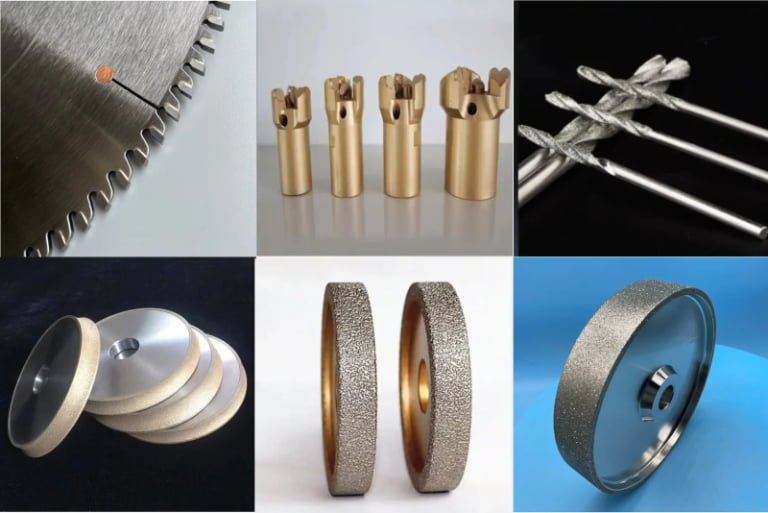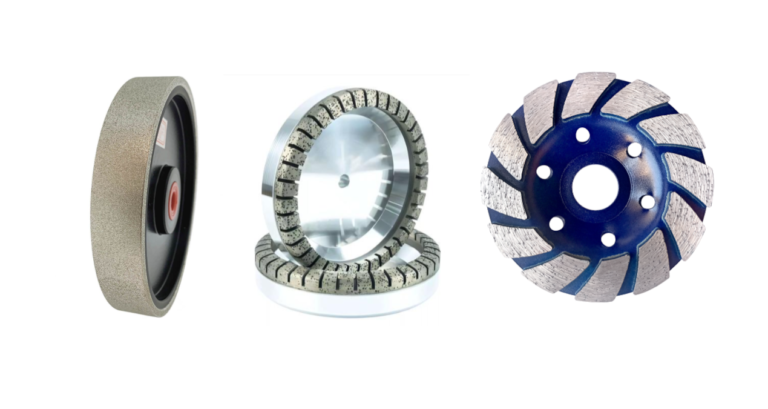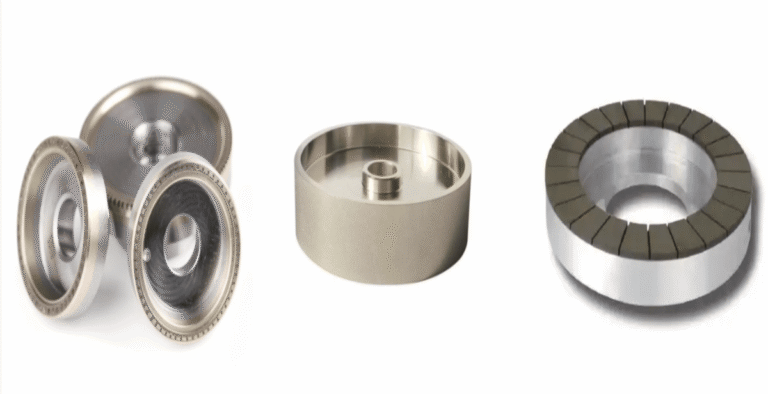
Introduction
CBN is widely used for precision grinding and honing of hardened steels and other difficult-to-grind ferrous materials[^1]. Selecting the correct CBN grade requires matching the abrasive properties to the tool construction, workpiece material and required processing results.
Precision grinding uses CBN grinding wheels for controlled material removal, dimensional accuracy and surface finishing. Honing uses abrasive stones or sticks to refine bore geometry, surface texture and dimensional tolerances. These differences affect the selection of CBN particle size, crystal strength, morphology and bond compatibility.
This guide explains how to evaluate CBN grit and CBN micron powder for different grinding and honing applications.

Why Is CBN Used in Precision Grinding and Honing Applications?
CBN grit and CBN micron powder combine high hardness, wear resistance and thermal stability, making them suitable for abrasive tools used to machine hardened steels and other difficult-to-grind ferrous materials.
In precision grinding, these properties support cutting efficiency, abrasive durability and dimensional accuracy under demanding grinding conditions.
In honing, CBN's hardness and wear resistance help maintain the abrasive cutting surface during repeated contact with the workpiece[^2], supporting controlled material removal, bore geometry correction and consistent surface finishing throughout the honing cycle.
What Factors Affect CBN Selection for Precision Grinding and Honing?
CBN selection depends on the workpiece material, tool construction and requirements of the grinding or honing operation[^3]. The following factors determine the abrasive specification.
Workpiece material and hardness
The CBN grade must suit the workpiece hardness, material condition and cutting loads. Precision grinding requires consideration of grinding allowance, wheel contact conditions and dimensional accuracy. Honing selection must also account for bore geometry, honing allowance and the required surface texture.
Particle size and particle size distribution (PSD)
In precision grinding, particle size is selected according to material removal requirements, wheel construction and surface finish. Honing requires a suitable abrasive size for the specified honing allowance, bore finish and stone construction.
A controlled PSD supports consistent abrasive distribution within the tool[^4]. Oversized particles are particularly important in fine grinding and precision honing, where unwanted scratches can compromise the required surface finish.
Crystal strength and friability
Grinding operations with high abrasive loads require sufficient crystal strength to resist premature grain fracture. Where controlled grain fracture is needed to renew cutting edges, friability becomes important[^5].
Honing requires grain characteristics that maintain a consistent cutting surface during repeated abrasive contact. The balance between strength and friability must suit the bond system and honing conditions.
Crystal morphology
Crystal shape influences abrasive retention, grain exposure and contact with the bond material. Blocky, well-developed crystals provide different retention and cutting characteristics from more irregular or angular grains.
The preferred morphology depends on the grinding wheel or honing stone construction, bond system and required abrasive behaviour.

How Does the Bond System Affect CBN Selection for Precision Grinding and Honing?
The bond system determines how CBN grains are retained, exposed and renewed. Resin, vitrified, metal and electroplated tools require different combinations of crystal strength, friability and morphology.
Resin Bond
Resin-bond CBN grinding wheels require sufficient crystal strength to withstand grinding loads while allowing controlled grain fracture for cutting-edge renewal. For resin-bond honing stones, CBN selection must also support consistent abrasive exposure and controlled stone wear during repeated contact.
Vitrified Bond
Vitrified-bond CBN grinding wheels require crystal strength and morphology compatible with the wheel structure, bond retention and dressing behaviour. For vitrified honing stones, prioritise grain integrity and controlled abrasive exposure to maintain consistent cutting performance.
Metal Bond
Metal-bond tools provide strong abrasive retention and resistance to bond wear. Prioritise high-strength CBN crystals with good integrity to resist premature fracture during prolonged grain retention. For metal-bond honing stones, cutting-edge sharpness and abrasive exposure must also support efficient material removal.
Electroplated Bond
Electroplated CBN tools retain grains in a deposited metal layer, usually with a single abrasive layer. Unlike bonded wheels that progressively expose new grains, electroplated tools depend on the durability of their initially exposed abrasives.
Prioritise high-strength CBN crystals with consistent particle sizing and morphology suitable for secure anchoring. Grain protrusion and fracture resistance are particularly important because premature abrasive damage reduces cutting performance and tool life.

How to Select CBN Grit or Micron Powder for Different Grinding and Honing Applications?
The choice between CBN grit and micron powder depends on the tool manufacturing specification, bond system and processing requirements.
CBN mesh grit is used in grinding wheels and honing stones specified with mesh-size abrasives, including tools requiring controlled grain protrusion and material removal.
CBN micron powder is used in fine-abrasive grinding wheels and honing stones requiring micron-sized particles and controlled abrasive distribution for precision finishing.
CBN Selection for Precision Grinding Applications
External cylindrical grinding
- Bearing raceway grinding: Prioritise CBN grit with sufficient strength and wear resistance to maintain consistent cutting performance, dimensional accuracy and the required raceway finish.
- Camshaft and crankshaft grinding: Select CBN grit with good crystal integrity and resistance to premature fracture under changing contact conditions, supporting wheel profile retention and consistent cutting.
Profile and form grinding
- Gear tooth grinding: Prioritise CBN grit with sufficient strength and bond retention to withstand concentrated grinding loads while maintaining tooth profile accuracy.
- Precision profile grinding: For fine-abrasive wheel constructions, select CBN micron powder with consistent particle sizing and controlled oversized particles to support fine profile accuracy and surface finish.
Internal and fine grinding
- Internal grinding of hardened components: Select CBN grit with sufficient strength and cutting ability for small-diameter wheels, where restricted wheel dimensions and contact conditions can increase abrasive loading.
- Fine grinding of hardened components: Select fine CBN grit or micron powder according to the wheel formulation and required finish. Prioritise particle-size consistency and suitable fracture behaviour to limit unwanted scratches and excessive abrasive breakdown.
Cutting tool grinding
- Grinding hardened cutting tools: Select CBN grit with cutting-edge durability and controlled fracture behaviour to maintain accurate tool geometry, balancing grinding efficiency with abrasive wear.
More information on CBN grit selection can be found in our CBN grit selection guide.
CBN Selection for Honing Applications
Honing stones or sticks maintain controlled abrasive contact during repeated working strokes. CBN selection must support the required bore geometry, material removal and surface texture while accounting for stone construction and wear.
Honing hardened steel bores
For bonded CBN honing stones, prioritise grit with sufficient strength, wear resistance and retention to maintain consistent material removal and bore geometry under repeated abrasive contact.
Precision honing of hydraulic components
For fine-abrasive honing stones, select CBN micron powder with a narrow, controlled PSD and minimal oversized particles to limit scratches and maintain a uniform finished surface.
Fine honing of precision bores
Select fine CBN grit or micron powder according to the honing stone formulation and target surface texture. Prioritise consistent abrasive distribution and controlled grain exposure during final finishing.
More information on CBN micron powder selection can be found in our CBN micron selection guide.
CBN grit and micron powder are not interchangeable based solely on the application. Their suitability depends on the abrasive tool's manufacturing method and specification.

Common Problems in CBN for Precision Grinding and Honing Selection
When a CBN tool fails to meet its performance requirements, the abrasive grade should be evaluated alongside the bond system, tool construction and operating conditions. Several different causes can produce similar symptoms.
Poor cutting performance: Check abrasive size, grain exposure, bond behaviour and operating conditions. For grinding wheels, review dressing condition and wheel loading. For honing stones, examine abrasive exposure and stone wear.
Premature grain fracture: Review CBN crystal strength and friability against the grinding or honing loads. Insufficient grain strength or inadequate bond support can result in premature abrasive breakdown.
Excessive grain loss: Examine bond compatibility, crystal morphology, grain retention and operating conditions. Premature grain loss can reduce tool life and affect processing consistency.
Inconsistent surface finish: Check particle-size distribution, abrasive distribution and tool wear. In grinding, wheel condition and process stability are important. In honing, examine abrasive size consistency, stone contact and the resulting bore surface texture.
Crownkyn CBN Grade Selection and Technical Support
To help us recommend the most suitable CBN grade for your application, please provide the following details:
| Information | Details to Provide |
|---|---|
| Workpiece material | Hardened steel type and grade, if known |
| Processing method | Grinding, honing, lapping, or fine finishing |
| Tool or bond system | Resin, vitrified, metal, electroplated, or other tool type, if applicable |
| Current CBN specification | CBN type, grit size, grade, coating, or PSD, if known |
| Processing conditions | Material removal requirements and relevant grinding or processing conditions |
| Current problem or target | Cutting ability, abrasive wear, surface quality, grain retention, wheel life, or other performance requirement |
For new applications or CBN grade replacement, we can recommend candidate grades for sample testing. Particle-size and PSD data, grade information, and technical support can also be provided to support product evaluation and comparison.
Contact Crownkyn to discuss your CBN requirements or request a sample for testing.
Frequently Asked Questions About CBN for Precision Grinding and Honing
Can CBN grit be used for both internal and external grinding?
Yes. CBN grit is used in wheels for both internal and external grinding of hardened steel components. Internal grinding requires consideration of bore diameter, wheel dimensions and contact conditions, while external grinding selection depends on the component geometry, stock removal and required finish. In both cases, grit size and grain strength must suit the wheel design and grinding conditions.
How do I select CBN grit strength for precision grinding wheels?
Select grain strength according to grinding loads, wheel bond and operating conditions. Higher grain strength can help resist premature fracture under demanding grinding conditions, while friability influences how grains fracture and expose fresh cutting edges. The objective is to balance grain retention, wear and self-sharpening for the specific operation.
Is CBN micron powder suitable for manufacturing honing stones?
Yes. CBN micron powder can be used to manufacture honing stones for precision finishing of hardened steel bores. The powder's particle size, grain properties and compatibility with the bond system affect abrasive distribution and tool performance. The selected grade must meet the honing stone manufacturer's formulation and process requirements.
How do I select CBN micron powder for honing hardened steel bores?
Start with the honing stone's required abrasive size and bond formulation. Select particle size according to the honing allowance and target surface finish. Control the upper end of the particle-size distribution to limit oversized particles that could cause unwanted scratches. Grain characteristics and batch consistency should also meet the tool manufacturing and honing requirements.
References
[1] The study of dry grinding of steel cams using cubic boron nirtride - Harvard. Supports: CBN is widely used for precision grinding and honing of hardened steels and other difficult-to-grind ferrous materials.
[2] Influence of Different Grades of CBN Inserts on Cutting Force - PMC. Supports: CBN's hardness and wear resistance help maintain the abrasive cutting surface during repeated contact with the workpiece.
[3] Grinding Wheel Selection - Purdue. Supports: CBN selection depends on the workpiece material, tool construction and requirements of the grinding or honing operation.
[4] An investigation into the effects of excipient particle size - PMC. Supports: A narrow, controlled particle size distribution helps maintain consistent abrasive distribution in the tool.
[5] Grinding and Other Abrasive Processes - MSU. Supports: When controlled grain fracture is needed to renew cutting edges, friability becomes an important selection factor.
Drafted by: Gareth Bayley
Technical Review & Editing: Ashley Wei