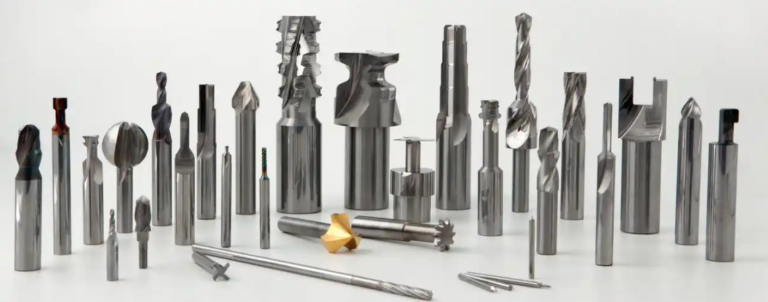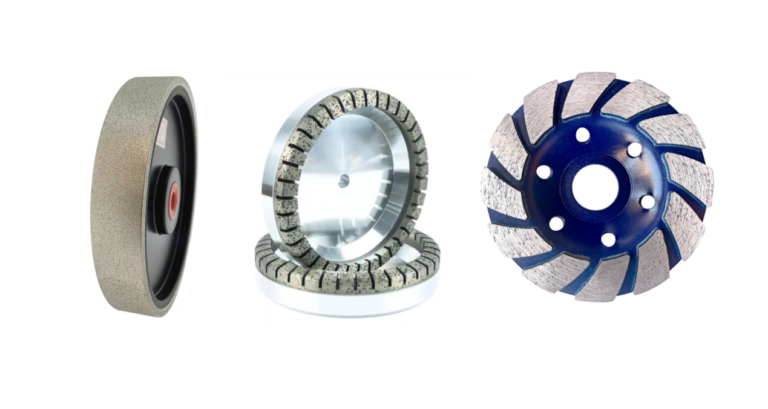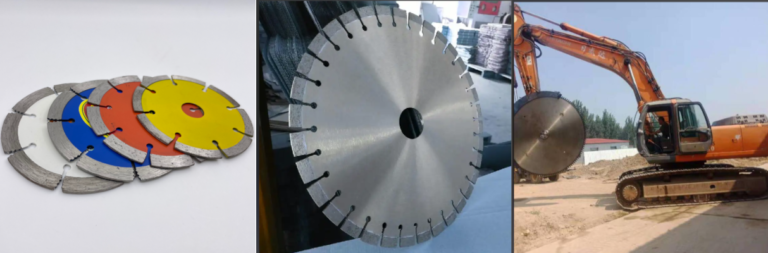
Introduction
No single diamond abrasive performs optimally across all cutting and grinding applications. Cutting, rough grinding, fine grinding, and form grinding each place different demands on the diamond abrasive.
This guide provides a structured, step-by-step approach to selecting synthetic diamond grit for cutting and grinding applications. Each step focuses on the factors that have the greatest influence on tool life, material removal efficiency, and workpiece quality.
Understand Your Application
Selecting the right diamond abrasive starts with understanding your application, not choosing a product. Before comparing different grades, define the following process requirements:
Cutting or Grinding?
Cutting and grinding place different mechanical loads on diamond particles. Cutting generally involves higher impact forces and requires greater particle toughness, while grinding emphasizes wear behavior, cutting consistency, and surface quality.[^1] Identifying the process determines the basic performance requirements for the diamond powder.
Roughing or Finishing?
Roughing prioritizes material removal and productivity, while finishing focuses on dimensional accuracy and surface quality. This choice directly influences the required particle size, crystal strength, and friability.
Tool Life or Cutting Efficiency?
Applications that prioritize tool life generally require tougher diamond particles, while those focused on cutting efficiency often benefit from controlled friability and self-sharpening. The ideal balance depends on your production priorities.
Dry or Wet?
Dry machining generates higher temperatures and places greater demands on thermal stability, while wet machining reduces heat through cooling and lubrication.[^2] The operating condition influences the required thermal performance of the diamond powder.
Once these requirements are defined, selecting the appropriate diamond powder becomes a step-by-step process rather than trial and error.
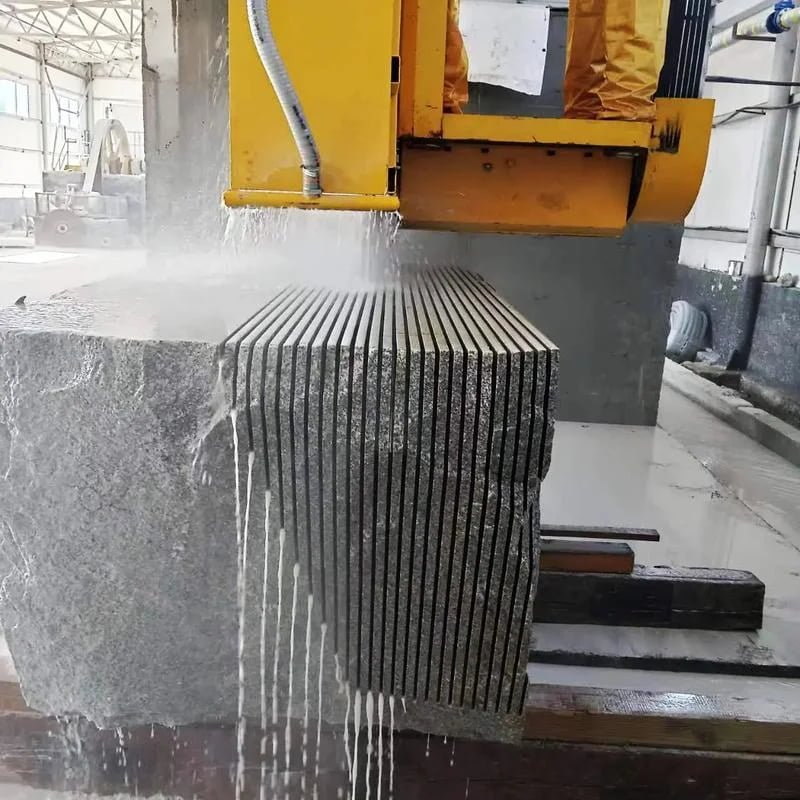
Choose the Appropriate Crystal Strength
Once the application has been defined, crystal strength becomes the first technical parameter to consider. The appropriate balance of toughness, friability, and thermal toughness should match the mechanical and thermal demands of your cutting or grinding process.
High Toughness recommended for:
- High impact loads are expected during cutting or grinding.
- Maximum tool life and particle retention are the primary objectives.
- Hard or highly abrasive workpiece materials accelerate particle wear.
- Metal-bond tools operate under high pressure.
Medium Toughness recommended for:
- General-purpose cutting or grinding is required.
- Tool life and cutting efficiency need to be balanced.
- Working conditions are moderate and stable.
High Friability recommended for:
- The application benefits from continuous exposure of fresh cutting edges
- Surface finish requirements are tight and subsurface damage must be minimized
- The application requires the tool to self-sharpen rather than retain dull particles
High Thermal Toughness recommended for:
- Dry cutting or grinding generates high temperatures.
- High-speed machining produces significant frictional heat.
- Thermal degradation is a major cause of particle failure.
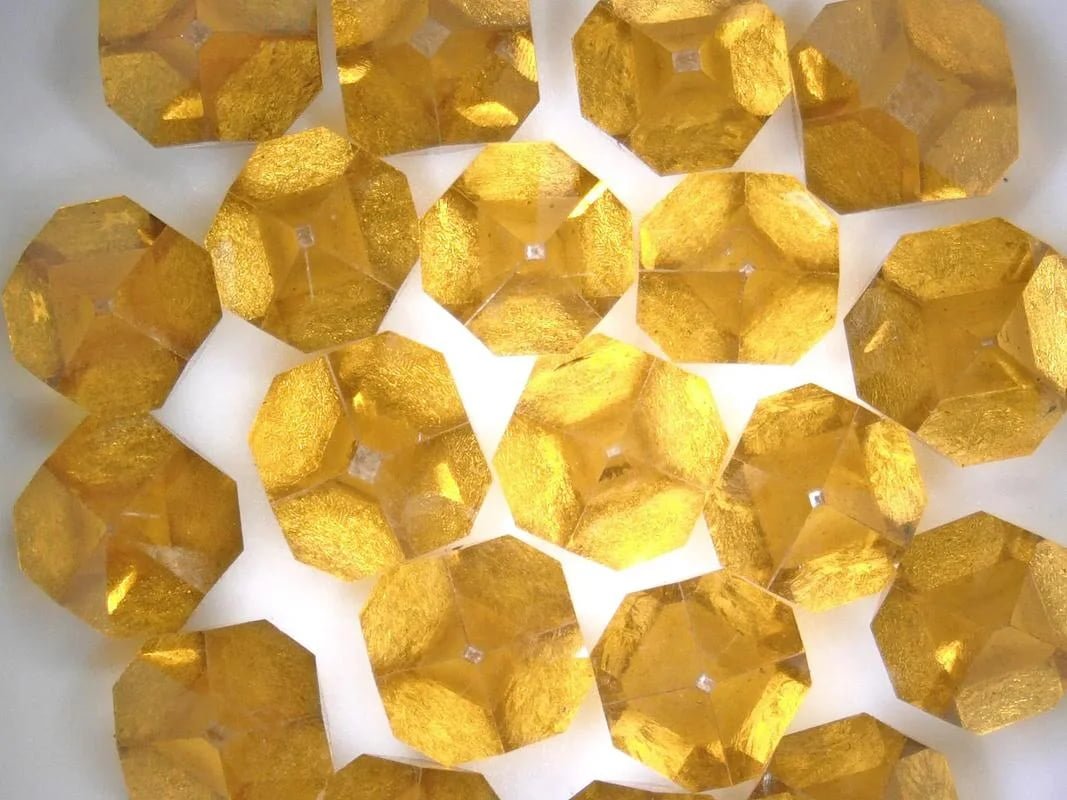
Crystal strength should always be selected together with the bond system, operating conditions, and thermal environment identified in Step 1.
For detailed definitions and test methods of Toughness (TI), Friability, and Thermal Toughness (TTI), please refer to the Synthetic Diamond Powder Properties Guide.
Match the Bond System
Even the highest-quality diamond abrasive grit will not perform well if it is mismatched with the bond system. Different bond systems require different combinations of toughness, friability, and thermal stability to achieve the desired balance between particle retention and self-sharpening.
Choose the bond system according to the mechanical and thermal demands of your application.
Resin Bond Diamond Tool
Resin bonds provide moderate particle retention and rely on controlled self-sharpening during grinding. More friable diamond particles are generally preferred because they continuously expose fresh cutting edges, helping maintain cutting efficiency and surface quality.
Vitrified Bond Diamond Tool
Vitrified bonds require a balance between toughness and friability. Diamond particles must withstand the manufacturing temperature while still providing controlled self-sharpening during high-speed precision grinding.
Metal Bond Diamond Tool
Metal bonds operate under high loads and provide strong particle retention.[^3] They typically require high-toughness diamond particles that resist premature fracture and maintain cutting performance under demanding conditions. High thermal stability is also important because of the elevated temperatures generated during manufacturing and machining.
Electroplated Bond Tool
Electroplated tools use a single layer of exposed diamond particles.[^4] Consistent particle size, shape, and high toughness are essential to ensure uniform cutting performance, as there is no bond wear to expose new abrasive particles.
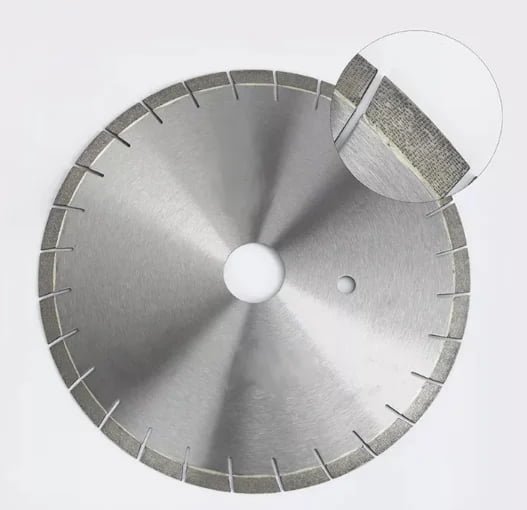
Bond Type Summary Table
| Bond Type | Recommended Diamond Powder | Typical Applications |
|---|---|---|
| Resin Bond | Medium-strength, friable diamond powder | Finish grinding, precision grinding, carbide grinding |
| Vitrified Bond | Medium- to high-strength diamond powder with balanced friability | Precision grinding, profile grinding, high-speed grinding |
| Metal Bond | High-strength, thermally stable diamond powder | Cutting, rough grinding, form grinding, high-load applications |
| Electroplated Bond | High-strength diamond powder with uniform particle size and shape | Saw blades, drills, wafering, single-layer cutting tools |
Bond selection should be determined early, as it directly influences the required diamond strength, particle behavior, and, in some applications, the need for surface coatings.
Select the Right Particle Shape
Particle shape influences cutting behavior, material removal, and surface quality during cutting and grinding.[^5] Selecting the appropriate particle shape helps balance cutting efficiency, tool life, and workpiece finish for different applications.
Blocky particles recommended for:
- High material removal and cutting efficiency are required.
- Maximum particle retention and tool life are priorities.
- Metal- or vitrified-bond tools operate under high loads.
- Cutting or rough grinding subjects the particles to significant impact.
Angular particle recommended for:
- Sharp cutting edges improve material removal.
- General or intermediate grinding requires efficient cutting action.
- A balance between cutting efficiency and tool life is needed.
Irregular particles recommended for:
- General-purpose grinding does not require a specific particle geometry.
- Stable grinding performance is more important than maximum cutting efficiency.
- Cost-effective abrasive performance is preferred.
Near-Spherical particles recommended for:
- Surface finish is the primary objective.
- Scratch depth and subsurface damage must be minimized.
- Fine grinding or polishing requires consistent surface quality.
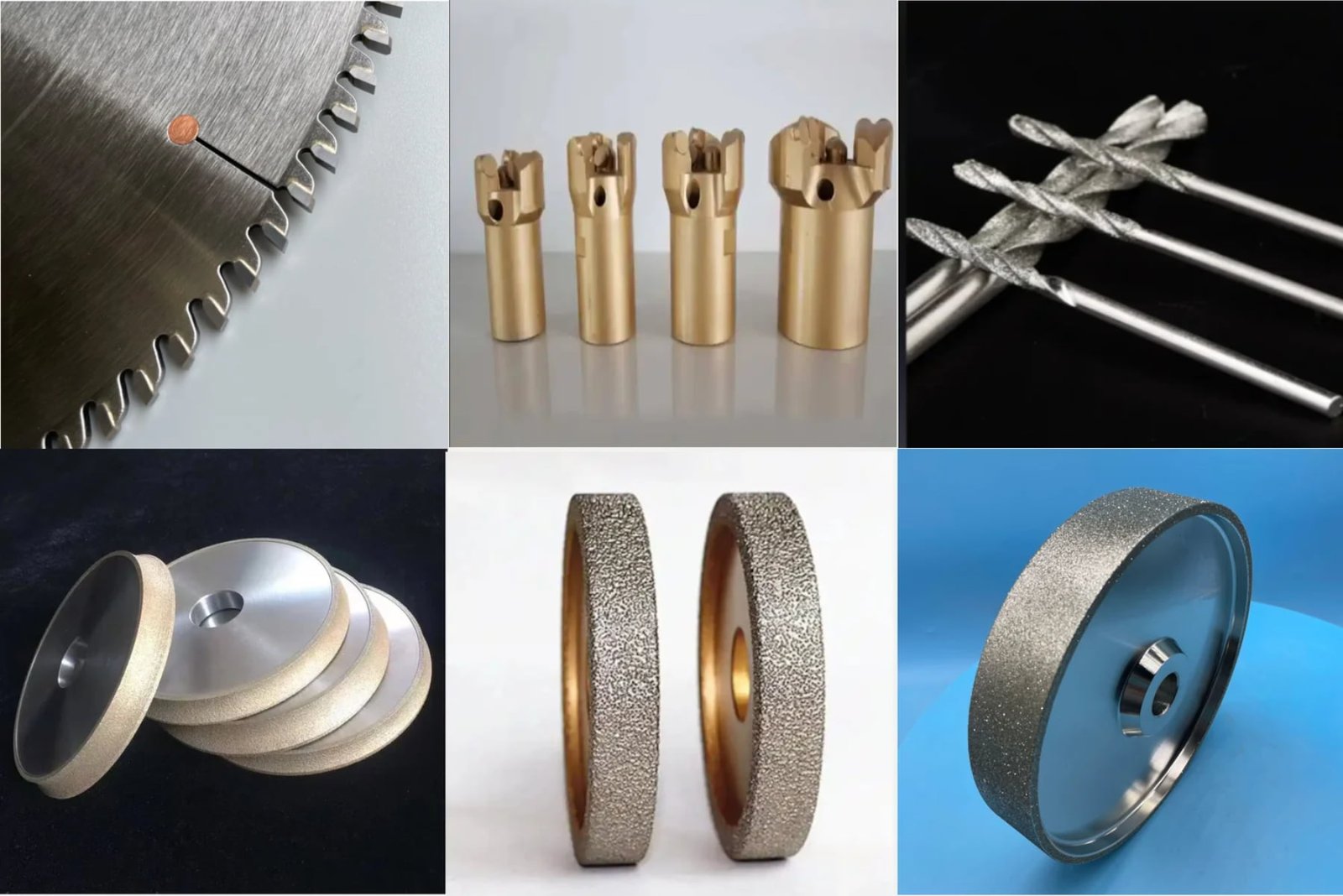
Particle Shape Summary
| Particle Shape | Recommended Applications | Key Characteristics |
|---|---|---|
| Blocky | Cutting, rough grinding, form grinding, high-load operations | High toughness, excellent particle retention, long tool life |
| Angular | General grinding, intermediate grinding, stock removal | Sharp cutting edges, aggressive cutting action |
| Irregular | General-purpose grinding, cost-sensitive applications | Stable performance, economical choice |
| Near-Spherical | Fine grinding, precision grinding, delicate materials | Low scratch depth, consistent surface quality |
Particle shape should be selected according to the grinding objective rather than a single performance characteristic. The optimal choice depends on the workpiece material, bond system, and the required balance between cutting efficiency, tool life, and surface quality.[^6]
Choose the Appropriate Particle Size & Particle Size Distribution (PSD)
Particle size has the greatest influence on material removal rate and surface finish.[^7] Coarser particles remove material faster, while finer particles produce smoother surfaces. Selecting the appropriate particle size depends on the balance between productivity and surface quality required by the application.
Coarser Particle Sizes
Recommended for:
- Rough cutting and rough grinding
- High material removal rates
- Applications with subsequent finishing operations
- High-load conditions where durability is important
Finer Particle Sizes
Recommended for:
- Finish grinding and precision grinding
- Hard and brittle materials
- High dimensional accuracy
- Applications requiring superior surface finish
For further information on particle sizing please refer to the Diamond Powder Particle Size Guide: Mesh, Micron and Nano.
Recommended Particle Sizes by Application
The table below provides practical guidance on which grit ranges are recommended for different cutting and grinding operations.
| Application | Typical Particle Size | Primary Objective |
|---|---|---|
| Sawing & Drilling | 30/35–70/80 mesh | High cutting efficiency and long tool life |
| Rough Grinding | 70/80–170/200 mesh | High material removal and stock removal |
| General Grinding | 170/200–325/400 mesh | Balanced cutting efficiency and surface quality |
| Precision Grinding | 325/400–500/600 mesh | Controlled material removal and improved surface finish |
Understanding Grit Size Standards Across Different Countries
Different countries use different grit size standards. Although the particle size ranges are broadly comparable, the same nominal grit number may represent slightly different sizes depending on the standard used.
| Standard | Region | Typical Application |
|---|---|---|
| GB/T 6406 | China | National standard for diamond and CBN grain sizes |
| ISO 6106 | International | International standard for abrasive grain sizes |
| FEPA | Europe | Federation of European Producers of Abrasives standard |
| ANSI B74 | USA | American National Standard for diamond abrasive grain |
| JIS B 4130 | Japan | Japanese Industrial Standard for diamond/CBN grain sizes |
While these standards share common principles, they are not identical. The same nominal grit number may represent slightly different particle size ranges depending on which standard is used.
Particle Size Distribution (PSD)
Particle size distribution (PSD) affects the consistency of cutting and grinding performance. A narrow PSD provides more uniform material removal, improved surface finish, and stable tool performance[^8], while a broader PSD is generally more suitable for heavy-duty cutting and rough grinding[^9].
- Broad PSD – Suitable for rough cutting and rough grinding where high material removal is the primary objective.
- Narrow PSD – Recommended for precision grinding and finishing applications requiring consistent surface quality and dimensional accuracy.
As machining progresses from roughing to finishing, a tighter PSD is generally recommended to improve process consistency and surface quality.
Consider the Crystal Structure
For most cutting and grinding applications, monocrystalline diamond grit remains the industry standard because of its high strength, predictable fracture behavior, and excellent bond retention.
Polycrystalline diamond powder is primarily used in applications requiring superior self-sharpening, lower grinding forces, or improved surface finish. Although coarse polycrystalline diamond products are available for certain high-performance applications, they currently represent a relatively small share of the cutting and grinding market.
| Diamond Type | Typical Applications | Main Advantages |
|---|---|---|
| Monocrystalline | Saw blades, grinding wheels, drills, electroplated tools | High strength, predictable fracture, excellent bond retention, long tool life |
| Polycrystalline | Precision grinding, difficult-to-machine materials, specialty grinding | Self-sharpening, lower grinding forces, improved surface finish |
For most industrial cutting and grinding applications, monocrystalline diamond powder remains the preferred choice. Polycrystalline diamond powder is typically selected only when its self-sharpening characteristics provide a clear performance advantage for specific materials or machining conditions.
Quick Selection Guide
The table below provides a quick reference to the key decisions involved in selecting diamond powder for cutting and grinding applications.
| Selection Step | Decision | Typical Recommendation |
|---|---|---|
| 1. Define the Application | Cutting or grinding? Roughing or finishing? Dry or wet? | Identify the machining process and performance priorities first. |
| 2. Choose Crystal Strength | Tool life or cutting efficiency? | High toughness for heavy-duty cutting; higher friability for finish grinding. |
| 3. Match the Bond System | Resin, vitrified, metal, or electroplated bond? | Select diamond powder compatible with the bond characteristics. |
| 4. Select Particle Shape | Material removal or surface finish? | Blocky for heavy cutting; angular for general grinding; near-spherical for fine grinding. |
| 5. Choose Particle Size & PSD | Required stock removal and surface quality | Coarser grits for rough machining; finer grits with tighter PSD for precision grinding. |
| 6. Confirm the Crystal Structure | Standard or specialized application? | Monocrystalline for most cutting and grinding; polycrystalline for selected high-performance applications. |
Typical Selection by Application
The following examples illustrate how the selection process is typically applied to common cutting and grinding applications.
| Application | Strength | Bond | Shape | Typical Grit |
|---|---|---|---|---|
| Saw Blades | High | Metal Bond | Blocky | 30/35–50/60 mesh |
| Diamond Wire (Stone) | High | Resin / Metal Bond | Blocky | 40/45–70/80 mesh |
| Rough Grinding | High | Metal Bond | Blocky | 70/80–170/200 mesh |
| General Grinding | Medium | Vitrified / Resin Bond | Angular | 170/200–325/400 mesh |
| Precision Grinding | Medium | Resin Bond | Near-Spherical / Angular | 325/400–500/600 mesh |
Conclusion
Selecting the right synthetic diamond powder is a step-by-step process rather than choosing the highest-strength or most expensive grade. Successful selection begins with understanding the application, then matching the appropriate crystal strength, bond system, particle shape, particle size, and crystal structure to the machining requirements.
Following this structured approach helps improve cutting efficiency, tool life, surface quality, and overall process consistency. If you need assistance selecting the right diamond powder for your application, Crownkyn Diamond can provide technical recommendations based on your workpiece material, tool design, and machining process.
Reference
[1] Manufacturing Engineering and Technology
Supports the relationship between cutting, grinding, particle toughness, and machining performance.
[2] A Review on Cutting Fluids Used in Machining Processes
Supports the influence of dry and wet machining on heat generation, cooling, and thermal stability.
[3] Fabrication and Use of Cu–Cr–Diamond Composites
Supports the performance of metal-bond diamond systems under high-load conditions.
[4] A Review on Replacement of Conventional Grinding Wheels with Superabrasive Grinding Wheels
Supports the characteristics and applications of resin, metal, vitrified, and electroplated bond systems.
[5] Effects of Abrasive Grit Shape on Grinding Performance
Supports the influence of particle shape on grinding behavior, material removal, and surface finish.
[6] Investigation of Tool Wear in Grinding Processes
Supports the relationship between abrasive wear behavior, tool life, and grinding performance.
[7] Experimental Investigation on Material Removal Process for Micro-Grinding of Single Crystal Silicon
Supports the influence of particle size on material removal rate and grinding performance.
[8] Characterization of Diamond Abrasives
Supports the importance of particle size distribution (PSD) for grinding consistency and surface quality.
[9] Grinding and Other Abrasive Processes
Supports the application of different particle size distributions in rough and precision grinding.
Drafted by: Gareth Bayley
Technical Review & Editing: Ashley Wei