
Thermally Conductive Diamond Powder: A Practical Guide for Thermal Management Materials

As electronic devices continue to move toward higher computing power, artificial intelligence (AI), and advanced semiconductor systems, thermal management has become a critical challenge for next-generation electronics. Increasing heat density requires materials with higher heat dissipation capability and improved thermal reliability.
Diamond, traditionally known as a superhard material for cutting and polishing applications, is also gaining attention as an advanced thermal material. Its unique thermal properties create new possibilities for applications such as thermal interface materials, electronic packaging, and diamond-based composite materials.
However, thermally conductive diamond powder is selected based on different criteria from abrasive diamond powder. This guide explains the applications, selection factors, and material considerations of diamond powder for thermal management systems.
What Is Thermally Conductive Diamond Powder?
Thermally conductive diamond powder is an engineered synthetic diamond material designed for heat transfer applications rather than abrasive processing. Unlike abrasive diamond powder, which is selected mainly for hardness, wear resistance, and cutting performance, thermal diamond powder is developed as a functional material for advanced thermal management systems.
In thermal applications, diamond powder is typically used as a high-performance thermal conductive diamond filler[^1] or reinforcement phase in polymer, metal, and ceramic matrices. The diamond particles help create efficient thermal conduction pathways and improve heat transfer within composite materials.
The key characteristics of thermally conductive diamond powder include:
- High Thermal Conductivity: Provides excellent heat transfer capability for advanced thermal composites.
- High Purity: Helps maintain stable thermal performance and reduce potential interface-related issues.
- Thermochemical Stability: Supports reliable performance under demanding thermal conditions.
- Controlled Particle Characteristics: Particle size and morphology influence packing behavior, dispersion, and thermal pathway formation.
Therefore, thermal diamond powder is selected not for its abrasive cutting ability, but for its ability to improve heat transfer performance within a complete material system.
Why Is Diamond Used for Thermal Management?
Conventional thermal fillers, including aluminum oxide (Al₂O₃), aluminum nitride (AlN), silicon carbide (SiC), and boron nitride (BN), are widely used in thermal interface materials and composite systems. However, increasing power density in electronic devices creates demand for materials with higher heat dissipation capability.
Diamond provides unique advantages as a thermal filler due to its extremely high thermal conductivity, low coefficient of thermal expansion (CTE), and excellent thermochemical stability. The thermal conductivity of diamond powder makes it attractive for high-performance applications such as thermal interface materials, electronic packaging, and advanced thermal composites.
Thermal Conductive Filler Comparison
| Filler Material | Thermal Conductivity (W/m·K) | Electrical Insulation | CTE (ppm/K) | Relative Cost |
|---|---|---|---|---|
| Synthetic Diamond Powder | 1000–2000+ | Excellent | ~1.0 | High |
| Aluminum Nitride (AlN) | 150–220 | Excellent | ~4.5 | Medium |
| Boron Nitride (BN) | 200–300 (in-plane) | Excellent | 1.0–12.0 | Medium |
| Silicon Carbide (SiC) | 120–270 | Semiconducting | ~4.0 | Low–Medium |
| Aluminum Oxide (Al₂O₃) | 30 | Excellent | ~7.2 | Low |
Among commonly used thermal fillers, diamond provides the highest thermal conductivity, making it suitable for applications where maximum heat dissipation is required.
However, the final performance of diamond-based thermal materials depends not only on the intrinsic properties of diamond, but also on particle characteristics, surface treatment, and interface bonding with the matrix[^2].
Therefore, selecting diamond powder for thermal applications requires consideration of the complete material system rather than thermal conductivity alone.
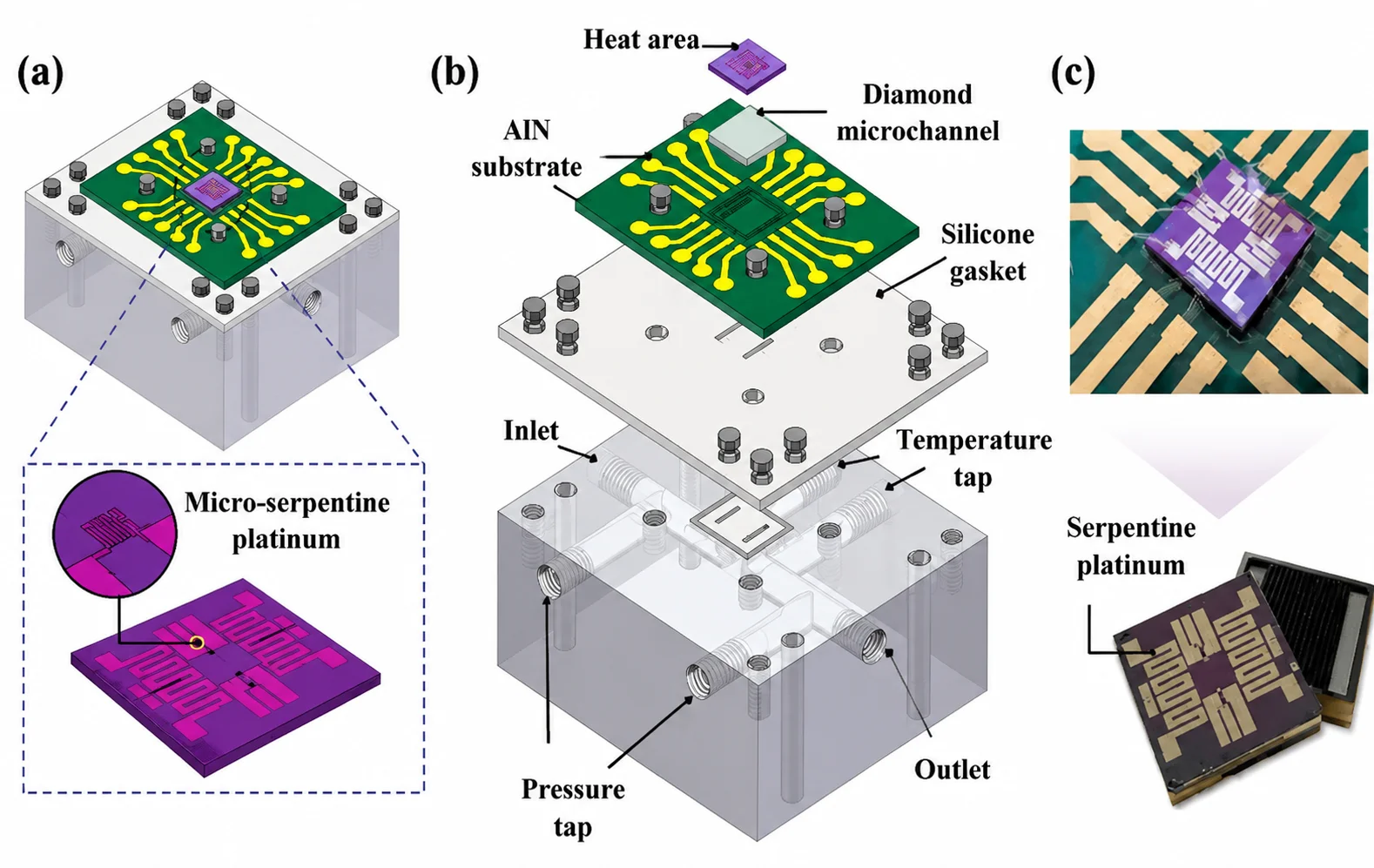
Abrasive Diamond Powder vs Thermally Conductive Diamond Powder
Although both products are based on synthetic diamond, they utilize different properties of diamond for different industrial purposes.
Abrasive diamond powder uses diamond’s hardness, wear resistance, and cutting ability for material removal processes such as grinding, lapping, polishing, and diamond tools.
Thermally conductive diamond powder uses diamond’s thermal properties for heat transfer applications. It is selected based on factors such as purity, particle size, morphology, surface treatment, and interface compatibility with the target matrix.
| Category | Abrasive Diamond Powder | Thermally Conductive Diamond Powder |
|---|---|---|
| Main Function | Material removal and surface finishing | Heat transfer and thermal management |
| Key Property | Hardness, wear resistance, cutting performance | Thermal conductivity, purity, interface performance |
| Selection Focus | Particle size, toughness, crystal morphology, friability | Particle size distribution, morphology, purity, surface coating, matrix compatibility |
| Typical Applications | Cutting tools, grinding, lapping, polishing, slurry | TIM, electronic packaging, diamond composites, thermal materials |
The same diamond material can provide different value depending on the application. Abrasive diamond focuses on controlled material removal, while thermal diamond focuses on efficient heat transfer and reliable material performance.
What Applications Use Thermally Conductive Diamond Powder?
In thermal management applications, diamond powder is mainly used as a high-performance thermal filler or reinforcement material. By adding diamond particles into polymer, metal, or ceramic matrices, it helps improve heat transfer efficiency and thermal performance.
The suitable diamond powder grade depends on the application system, including the matrix material, particle size requirement, and interface performance.
Thermal Interface Materials (TIM)
Diamond powder for thermal interface materials (TIM) is used as a high-performance filler in materials such as thermal grease, thermal pads, and thermal adhesives. Its high thermal conductivity helps improve heat transfer between heat-generating components and cooling structures, especially in applications requiring higher thermal performance.
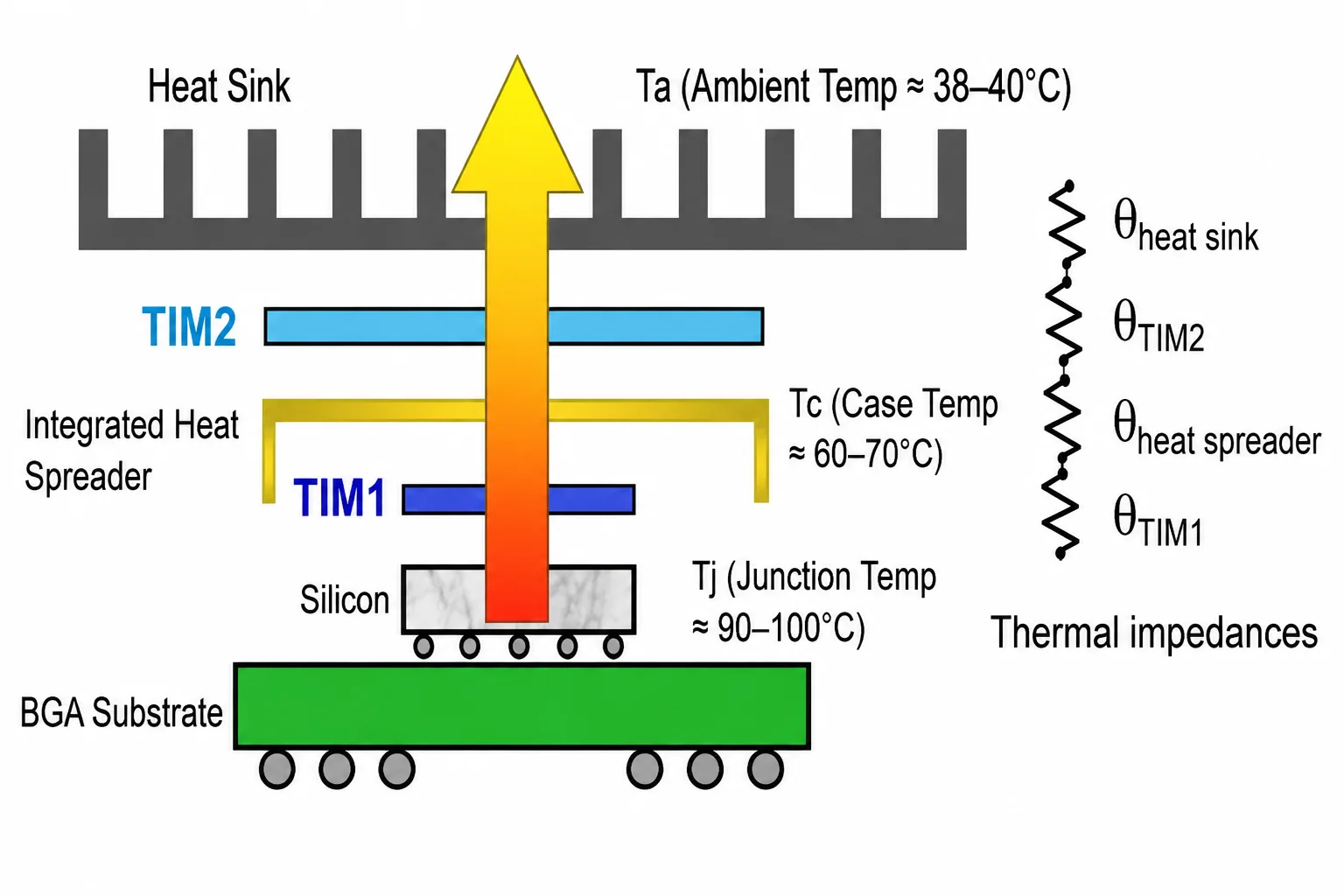
Diamond-Copper Composite Materials
Diamond-copper composites combine the excellent thermal conductivity of diamond with the processing advantages of copper[^3]. As a type of metal matrix composite material, diamond-copper composites use diamond particles as a thermal reinforcement phase to create efficient heat transfer pathways for applications such as heat spreaders, electronic packaging, and high-power devices.
Because diamond and copper have different surface properties, coating technologies such as Cu, TiC, or W coating are often used to improve interface bonding, wettability, and thermal transfer efficiency.
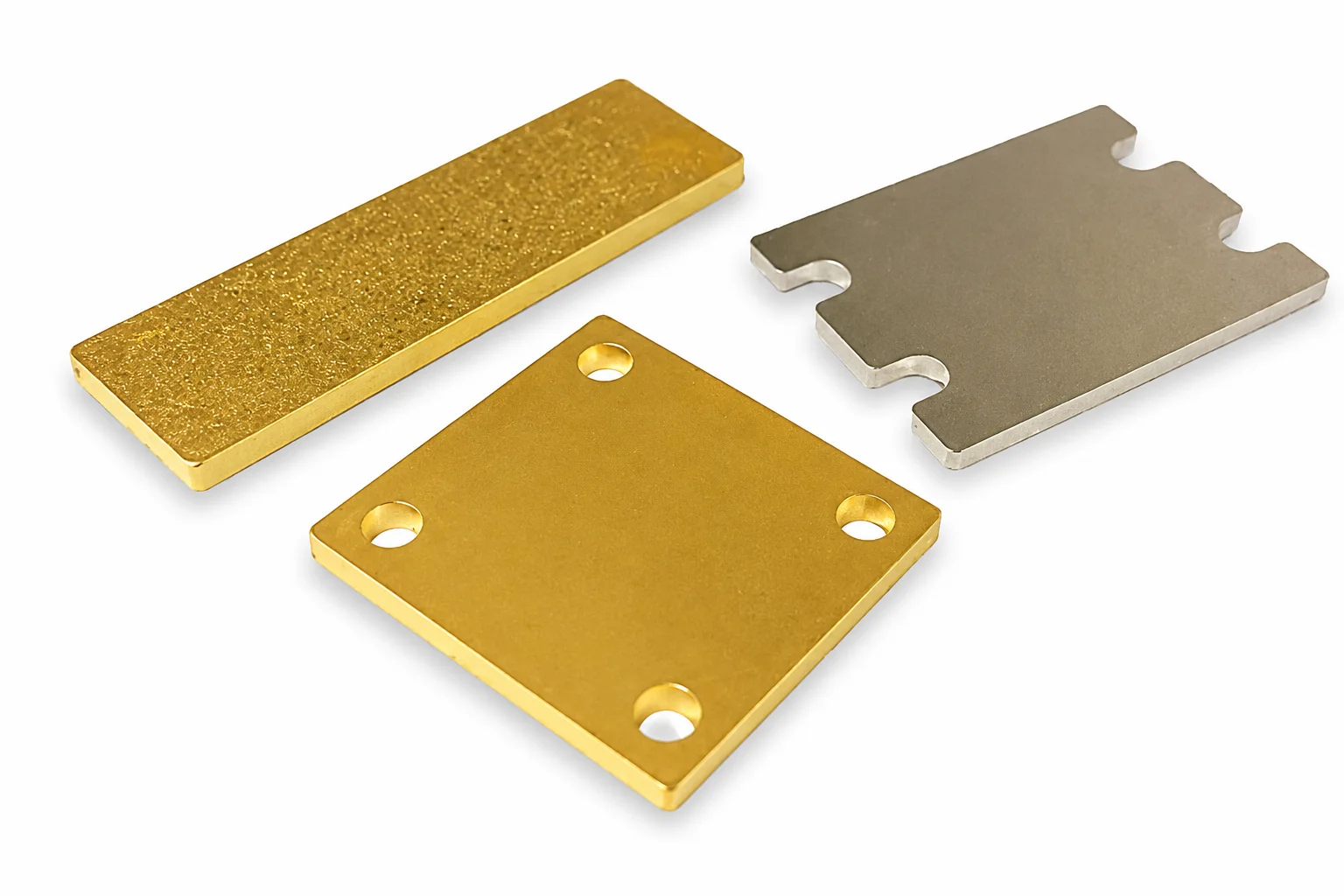
Electronic Packaging and Heat Dissipation Components
The increasing power density of semiconductor devices creates higher requirements for thermal management materials. Thermally conductive diamond powder can support advanced electronic packaging solutions by improving heat dissipation performance in high-power electronic systems.
Typical applications include:
- Semiconductor packaging
- Power electronics
- High heat flux components
Polymer and Ceramic Thermal Composites
Diamond powder for thermal management can also be incorporated into polymer systems such as epoxy and silicone-based thermal composites where both thermal conductivity and material stability are required.
In these systems, diamond particles help improve thermal conductivity while maintaining the advantages of the original matrix material, making them suitable for advanced thermal management applications.
Why Is Coated Diamond Powder Important for Thermal Conductive Materials?
Although diamond has excellent thermal conductivity, the overall performance of a diamond-based composite depends greatly on the interface between diamond particles and the surrounding matrix. Poor bonding between diamond and metals, polymers, or ceramics may increase interfacial thermal resistance and limit heat transfer efficiency[^4].
Surface coating provides a practical solution by improving diamond-matrix compatibility, enhancing particle dispersion, strengthening interface bonding, and supporting more efficient thermal transfer. Different coating systems are selected according to the target matrix and application requirements.
TiC Coated Diamond Powder
TiC coated diamond powder is commonly used for metal matrix composites where stronger diamond-matrix bonding and improved interface stability are required. It is suitable for systems involving carbide or metal-based materials.
W Coated Diamond Powder
W coated diamond powder provides a stable interface layer between diamond and high-temperature metal matrices. It is suitable for thermal applications requiring reliable bonding and improved high-temperature stability.
SiC Coated Diamond Powder
SiC coated diamond powder is used as an interface modification layer in ceramic-based and semiconductor-related composite materials. The SiC coating can improve chemical compatibility and interfacial bonding between diamond particles and ceramic or silicon-based matrices, supporting more efficient heat transfer.
Cu Coated Diamond Powder
Cu coated diamond powder is mainly used in diamond-copper composite materials. The copper coating improves the bonding between diamond particles and copper matrices, helping create more efficient heat transfer pathways for electronic packaging and heat spreader applications.
How to Choose Diamond Powder for Thermal Applications?
Selecting the right thermally conductive diamond powder requires more than considering diamond thermal conductivity alone. The optimal grade depends on the application requirements, matrix system, particle characteristics, and interface design.
Thermal Performance Requirement
The required thermal performance of the final material determines the diamond grade selection. High-performance applications, such as advanced electronic packaging and diamond-copper composites, may require higher-quality diamond grades, while other systems may focus on balancing thermal performance and cost.
Matrix Compatibility
The matrix material determines how diamond particles interact with the surrounding material and transfer heat within the composite.
- Copper Matrix: Coated diamond powder is often considered to improve bonding and wettability between diamond and copper.
- Polymer Matrix: Good dispersion and suitable particle size distribution are important for stable filler loading.
- Ceramic Matrix: Chemical stability and interface compatibility are critical for reliable thermal performance.
Particle Characteristics and Packing Density
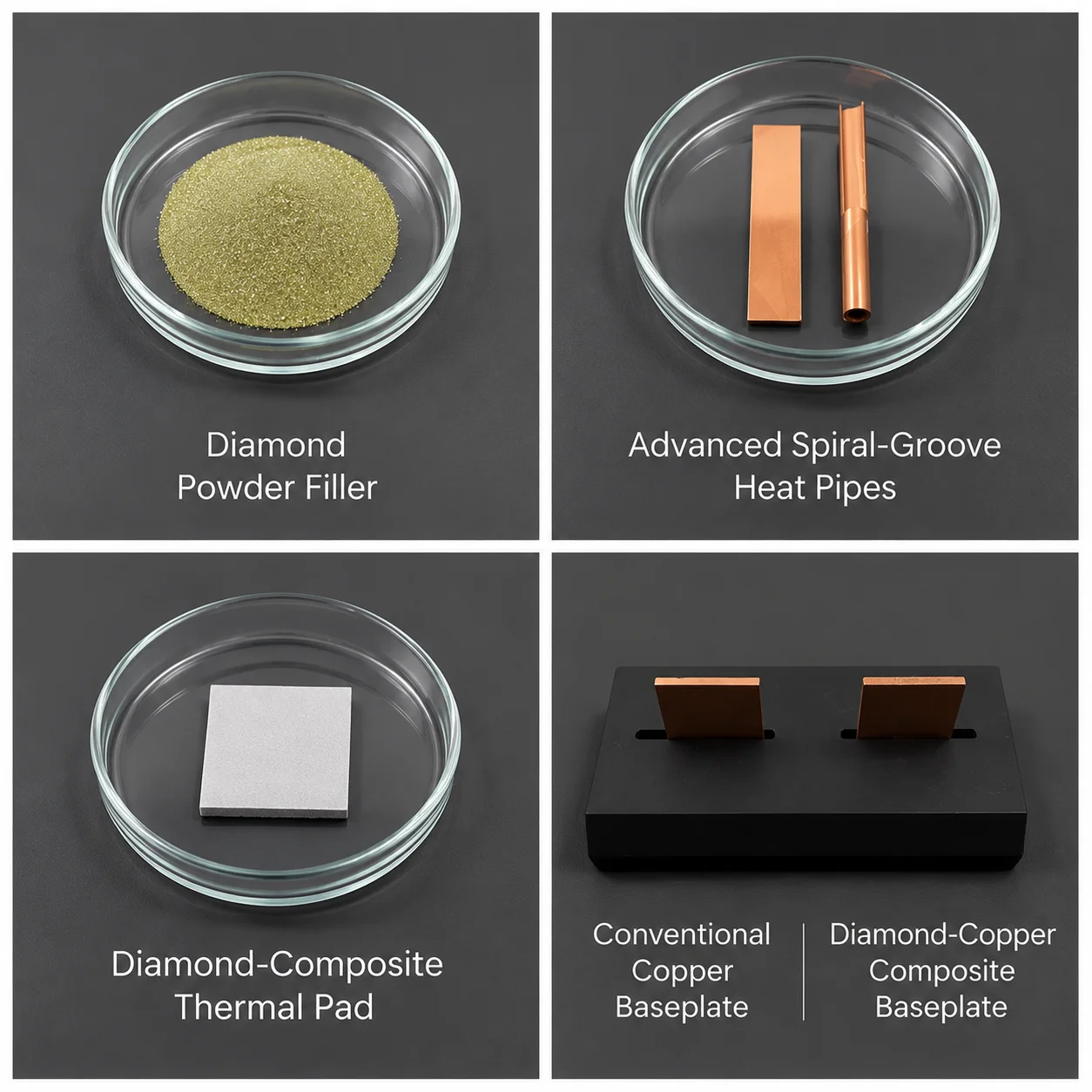
Particle characteristics, including size distribution and morphology, influence filler packing behavior and thermal pathway formation. Larger particles generally have a lower surface area-to-volume ratio, which can reduce the overall interface resistance within the composite and help establish more efficient heat conduction pathways.[^5]
In practical composite systems, particle size distribution needs to be optimized according to filler loading, processing method, and target thermal performance.
Purity and Surface Treatment
For advanced thermal applications, diamond purity and surface condition are important factors. High-purity diamond and suitable surface treatments help improve thermal performance and interface reliability.
How to Select Particle Size for Thermally Conductive Diamond Powder?
Particle size plays an important role in the thermal performance of diamond powder composites. Unlike abrasive applications, where particle size mainly affects cutting performance, thermal applications focus on packing efficiency, thermal pathway formation, and heat transfer within the matrix.
Larger diamond particles can help establish continuous thermal conduction pathways, while smaller micron diamond particles can fill gaps between larger particles to improve packing density and particle contact. The thermal conductivity of micron diamond powder depends not only on particle size itself, but also on particle distribution, packing behavior, and interaction with the surrounding matrix.
In practical thermal interface materials and composite systems, mixed particle size distributions (such as bimodal or multimodal systems) are often used[^6] to achieve better filler packing and thermal transport performance.
Key Effects of Particle Size
- Thermal Pathway Formation: Larger particles help establish longer and more continuous heat conduction paths.
- Packing Density: Smaller micron diamond particles fill gaps between larger particles, increasing filler utilization and improving thermal network continuity.
- Dispersion and Processing: Fine diamond particles support better dispersion and are suitable for polymer-based composites, thermal pastes, and systems requiring controlled filler distribution.
Typical Particle Size Selection for Thermal Applications
| Particle Size | Typical Application |
|---|---|
| 1–5 μm | Fine dispersion systems, polymer composites, and gap-filling applications |
| 5–20 μm | Thermal interface materials and composite fillers, often combined with larger particles |
| 20–100 μm | High-loading thermal composites requiring efficient thermal pathways |
| Larger particles | Diamond-copper composites and advanced thermal composite materials |
In practical thermal applications, the optimal particle size is usually determined by the balance between thermal conductivity, filler loading, dispersion, and processing requirements. A combination of coarse and micron diamond powder often provides better performance than a single particle size.
Diamond Powder vs Other Thermal Conductive Fillers
Diamond is one of several thermal conductive fillers used in advanced composite materials. Conventional fillers such as aluminum nitride (AlN), silicon carbide (SiC), and aluminum oxide (Al₂O₃) are still widely used because of their cost advantages, electrical properties, and processing flexibility.
The selection of thermal filler depends on the required balance between thermal performance, cost, electrical properties, and application conditions.
| Material | Main Advantages | Main Limitations |
|---|---|---|
| Diamond Powder | Extremely high thermal conductivity and excellent chemical stability for high-performance thermal composites | Higher material cost and requires optimized interface design |
| Aluminum Nitride (AlN) | Good thermal conductivity with electrical insulation properties | Lower thermal conductivity compared with diamond |
| Silicon Carbide (SiC)[^7] | High-temperature stability and good mechanical properties | Lower thermal conductivity compared with diamond-based materials |
| Aluminum Oxide (Al₂O₃)[^8] | Cost-effective, widely available, and easy to process | Limited performance for high heat flux applications |
| Boron Nitride (BN)[^9] | Electrical insulation and good thermal performance | Performance depends on orientation and structure |
For applications requiring maximum heat dissipation, such as advanced electronic packaging and high-performance thermal composites, thermally conductive diamond powder provides unique advantages. However, the final performance still depends on proper material selection, filler loading, and interface design.
Common Selection Mistakes in Thermal Management Applications
Selecting thermally conductive diamond powder requires considering more than thermal conductivity alone. Particle characteristics, matrix compatibility, surface treatment, and diamond quality all affect the final thermal performance.
Choosing Only by Particle Size
Particle size is important, but it should not be considered alone. Thermal performance also depends on particle distribution, packing density, and the formation of continuous thermal pathways.
Ignoring Coating Compatibility
Poor interface bonding between diamond and the matrix can increase thermal resistance. Coated diamond powder can improve wettability, bonding, and compatibility in systems such as diamond-copper composites[^10].
Selecting Diamond Powder Without Considering the Matrix
Different matrix systems require different diamond powder characteristics. Copper, polymer, and ceramic matrices may require different particle sizes, surface treatments, and interface solutions.
Confusing Abrasive Diamond Powder with Thermal Diamond Powder
Although both are synthetic diamond materials, their selection criteria are different. Abrasive diamond focuses on cutting performance, while thermal diamond focuses on purity, thermal properties, and interface performance.
Choosing Lower-Grade Diamond Powder Only for Cost Reasons
Cost is an important factor, but Lower-grade diamond powder may contain higher impurity levels or crystal defects, resulting in reduced thermal performance. For high-performance thermal applications, diamond quality should be balanced with cost and target requirements.
Crownkyn Thermally Conductive Diamond Powder Solutions
Crownkyn provides thermally conductive diamond powder solutions for advanced thermal management applications, including thermal interface materials, diamond-copper composites, electronic packaging, and high-performance composite materials.
Our solutions include:
- Customized Particle Size Selection: Controlled particle size and distribution for different thermal filler requirements.
- Diamond Grade Selection: Suitable diamond grades based on thermal performance targets and cost requirements.
- Coated Diamond Powder Solutions: TiC, W, SiC, and Cu coated diamond powders for improved interface bonding and matrix compatibility.
- Application-Based Material Support: Technical support for diamond selection according to matrix systems, processing methods, and thermal requirements.
With experience in synthetic diamond materials and industrial applications, Crownkyn provides customized thermally conductive diamond powder solutions based on matrix requirements, particle size selection, surface treatment, and thermal performance targets, supporting customers from material selection to application optimization.
Conclusion
Thermally conductive diamond powder is becoming an important material option for advanced thermal management applications where efficient heat dissipation and long-term reliability are required.
Unlike abrasive diamond powder, which focuses on cutting and polishing performance, thermal diamond powder is selected based on its ability to improve heat transfer within different material systems.
It is important to note that the thermal performance of a diamond-based composite is not determined only by the intrinsic conductivity of diamond. The interface between diamond particles and the surrounding matrix plays a critical role in heat transfer efficiency. Therefore, surface coating and interface modification are often as important as the diamond powder itself.
The successful application of diamond-based thermal materials depends on selecting the right combination of diamond grade, particle characteristics, surface treatment, and matrix compatibility. As demand for high-power electronics and advanced thermal solutions continues to grow, diamond powder is expected to play an increasingly important role in next-generation thermal management technologies.
References
[1] Thermal Conductivity of Diamond Composites – PMC Supports the use of diamond particles as thermally conductive fillers or reinforcement phases in polymer, metal, and ceramic matrices to improve effective thermal conductivity.
[2] Interface Optimization and Thermal Conductivity of Cu–Diamond Composites – PMC Supports that the thermal performance of diamond-based composites depends on particle size, morphology, filler loading, surface treatment, and interfacial bonding between diamond and the matrix.
[3] Cr–Diamond/Cu Composites with High Thermal Conductivity – PMC Supports the application of diamond-copper composite materials for high thermal conductivity systems, including electronic packaging and heat spreader applications.
[4] Theoretical Strategy for Interface Design and Thermal Conductivity Enhancement – PMC Supports the importance of interface engineering in thermal composites, where weak filler–matrix bonding can increase interfacial thermal resistance and reduce heat transfer efficiency.
[5] Fillers and Methods to Improve the Effective Thermal Conductivity of Composites – PMC Supports that filler particle size and specific interfacial area influence thermal transport performance, where larger particles can help reduce the relative effect of interface resistance and improve heat conduction pathways under suitable conditions.
[6] Thermal Conductivity Modeling Beyond the Dilute Limit Using a Body-Centered Cubic Model – PMC Supports the use of bimodal and multimodal filler size distributions to improve packing efficiency and thermal transport performance in particle-filled composite systems.
[7] Material Properties of a Sintered α-SiC – NIST Supports that silicon carbide provides high-temperature stability, mechanical strength, and good thermal performance, while generally having lower thermal conductivity than high-quality diamond materials.
[8] Hybrid Alumina–Silica Filler for Thermally Conductive Epoxidized Composites – PMC Supports the use of aluminum oxide as a widely available, electrically insulating thermal filler with good processing characteristics but lower thermal performance compared with advanced fillers.
[9] Enhancing Thermal Conductivity in Polymer Composites through Boron Nitride Fillers – PMC Supports that boron nitride provides electrical insulation and thermal conductivity in composite materials, with performance influenced by filler structure and orientation.
[10] High Thermal Conductivity Diamond–Copper Composites – PMC Supports that coated diamond particles can improve wettability, interfacial bonding, and compatibility between diamond and copper matrices for thermal composite applications.