Introduction
Diamond slurry and diamond paste are widely used diamond polishing suspensions for precision polishing applications. Although both products contain synthetic diamond particles, their different suspension formats provide different abrasive delivery characteristics.
Selecting the suitable diamond polishing suspension requires consideration of the polishing process, including abrasive delivery requirements, equipment configuration, surface finish targets, material removal objectives, and process stability.
This article compares diamond slurry and diamond paste, explains their differences in polishing behaviour, and discusses the factors that should be considered when selecting the appropriate diamond polishing suspension.
The Differences of Diamond Slurry vs Diamond Paste
Both synthetic diamond slurry and diamond paste use synthetic diamond particles as the active abrasive component. The primary difference is the carrier system used to deliver and maintain the abrasive during polishing.
What Is Diamond Slurry
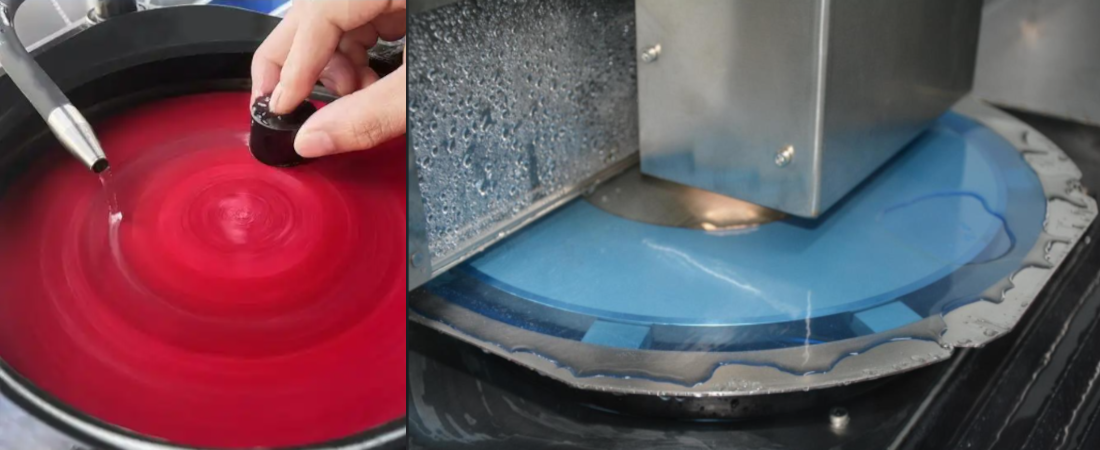
Diamond slurry is a liquid suspension containing diamond particles uniformly dispersed in a low-viscosity carrier.[^1] The carrier helps maintain particle dispersion and enables the abrasive to be delivered continuously during polishing.
Diamond slurry formulations typically use water-based or oil-based carriers. The carrier influences abrasive mobility, lubrication behaviour, and the consistency of diamond particle distribution at the polishing interface.
Unlike loose diamond powder, diamond slurry provides a pre-dispersed abrasive system in which diamond particles are combined with a liquid carrier to support controlled abrasive delivery[^2].

What Is Diamond Paste
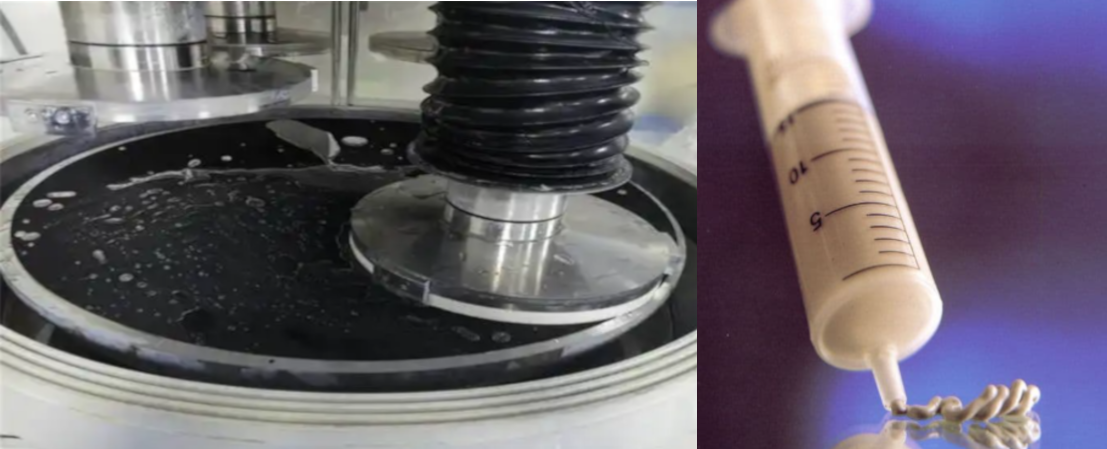
Diamond paste, commonly known as diamond polishing compound, is a concentrated diamond abrasive product in which synthetic diamond particles are suspended in a high-viscosity carrier.
The high-viscosity[^3] carrier retains diamond particles at the polishing interface and limits particle movement compared with diamond slurry. This allows the abrasive to remain concentrated within the applied area instead of being continuously supplied by a flowing liquid.
Compared with diamond slurry, diamond paste provides a more concentrated abrasive medium designed for controlled abrasive placement and localized polishing.
Diamond Slurry vs Diamond Paste Comparison Table
| Factor | Diamond Slurry | Diamond Paste |
|---|---|---|
| Abrasive distribution | Maintains dispersed diamond particles throughout the polishing process, supporting consistent abrasive availability across the polishing interface | Maintains concentrated diamond particles at the applied area, supporting controlled abrasive contact |
| Abrasive retention | Relies on suspension stability and continuous supply to maintain abrasive availability | Provides higher abrasive retention due to the higher-viscosity carrier |
| Abrasive movement | Allows greater particle mobility within the carrier, supporting continuous abrasive interaction during polishing | Provides limited particle movement, helping maintain abrasive concentration at a specific location |
| Material removal control | Supports controlled removal through adjustable concentration and abrasive delivery conditions | Supports controlled removal through direct application and retained abrasive concentration |
| Surface finishing behaviour | Supports uniform polishing conditions where consistent surface generation is required | Supports localized finishing where controlled abrasive placement is required |
| Process stability | Influenced by particle dispersion, carrier properties, and dispensing consistency | Influenced by carrier viscosity, application consistency, and abrasive retention |
How Does Diamond Slurry or Paste Improve Polishing Performance
The performance of a diamond polishing process depends not only on diamond particle characteristics, but also on how effectively the abrasive is delivered and maintained at the polishing interface.
Diamond slurry and diamond paste function as abrasive delivery systems that influence particle distribution, abrasive availability, and the stability of polishing conditions. A suitable suspension helps maintain consistent abrasive behaviour, allowing manufacturers to achieve controlled material removal and repeatable surface results.
Abrasive Distribution and Cutting Consistency
During precision polishing, consistent distribution of diamond particles is required to maintain stable cutting conditions.
Diamond slurry maintains diamond particles in a dispersed suspension[^4], supporting uniform abrasive availability throughout the polishing process. This helps reduce variations caused by uneven particle distribution and supports consistent surface generation.
Diamond paste maintains a concentrated abrasive medium at the polishing location, allowing controlled abrasive contact where localized polishing or targeted finishing is required.
Surface Quality and Process Control
The suspension system influences how diamond particles interact with the workpiece surface during polishing.
By controlling abrasive movement, retention, and contact conditions, diamond slurry and paste help manufacturers balance material removal efficiency with surface finish requirements[^5].
This is particularly important in precision polishing processes where excessive abrasive activity, unstable particle behaviour, or inconsistent abrasive supply can affect surface quality.
Process Stability and Repeatability
For industrial polishing applications, process stability is a key factor in maintaining consistent production results.
The carrier system influences abrasive mobility, lubrication behaviour, cleaning characteristics, and compatibility with polishing equipment.
A well-matched diamond suspension helps maintain predictable polishing conditions, reducing process variation and supporting repeatable results across production cycles[^6].
How to Choose the Right Diamond Polishing Product
Selecting the right diamond polishing product involves more than choosing between diamond slurry and diamond paste. The optimal solution depends on the polishing process, workpiece material, particle size, abrasive concentration, carrier system, and production requirements.
In most applications, the selection process begins by determining the appropriate suspension format, followed by optimizing the diamond abrasive characteristics for the specific polishing task.
Suspension Format Selection
The choice between diamond slurry and diamond paste depends primarily on how the abrasive needs to be delivered during polishing.
| Process Requirement | Recommended Product |
|---|---|
| Automated polishing equipment | Diamond Slurry |
| Continuous abrasive supply | Diamond Slurry |
| High process repeatability | Diamond Slurry |
| Large-area precision polishing | Diamond Slurry |
| Localized polishing | Diamond Paste |
| Manual precision finishing | Diamond Paste |
| Complex geometries requiring controlled application | Diamond Paste |
After selecting the suspension format, particle size, diamond type, and carrier system should be optimized according to the polishing requirements.
In general, diamond polishing slurry is preferred for automated polishing systems where continuous abrasive supply and stable particle distribution are essential. Diamond paste is more suitable for localized polishing operations where abrasive retention and precise application are required.
Particle Size Selection
Particle size determines the balance between material removal rate and achievable surface finish.
Coarser micron diamond particles are generally selected for rough polishing and higher stock removal, while finer particle sizes are preferred for finishing applications requiring lower surface roughness and improved surface consistency.
The optimal particle size should always be selected together with the suspension format to achieve the required polishing performance.
Whether using diamond polishing slurry or diamond paste, particle size remains one of the most important factors affecting polishing efficiency, surface roughness, and process stability.
Diamond Type Selection
The choice between monocrystalline and polycrystalline diamond depends on the polishing objective.
Monocrystalline diamond slurry and monocrystalline diamond paste provides stable cutting behavior and predictable surface generation, making it suitable for precision finishing and controlled polishing.
Polycrystalline diamond slurry and polycrystalline diamond paste provides self-sharpening characteristics and is often selected where improved cutting efficiency and material removal are required.
The selected diamond type should also be compatible with the suspension formulation to achieve consistent polishing performance throughout the process.
Workpiece Material and Surface Finish
Different workpiece materials require different polishing strategies.
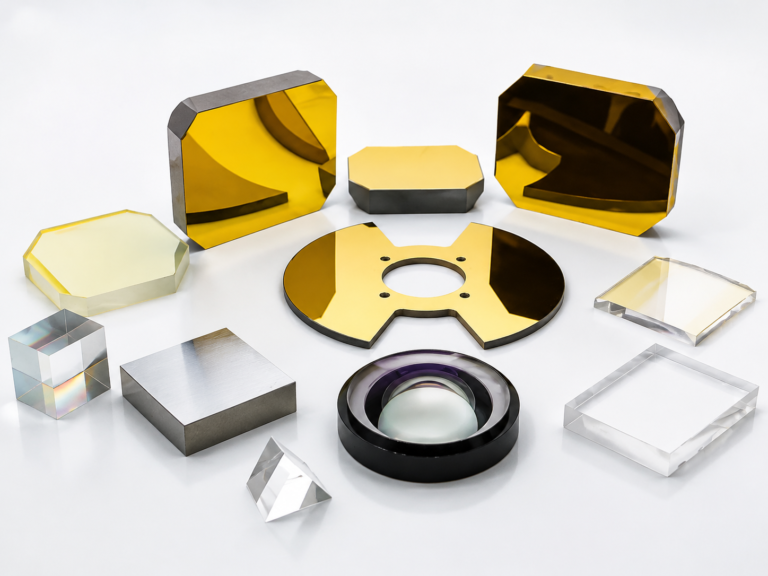
Hard and brittle materials such as sapphire, ceramics, silicon carbide, and optical glass generally require controlled abrasive action to achieve efficient material removal while maintaining surface integrity.
Applications requiring extremely low surface roughness usually benefit from finer particle sizes, stable abrasive distribution, and carefully controlled polishing conditions.
The polishing process should therefore be optimized as a complete system, considering the workpiece material, suspension format, and diamond abrasive characteristics together rather than individually.
Abrasive Concentration and Carrier System
Diamond concentration influences cutting activity and material removal efficiency, while the carrier system affects particle dispersion, lubrication, and polishing stability.
-
Water-based slurry is commonly used where easy cleaning and continuous abrasive supply are important.
-
Oil-based slurry provides additional lubrication and longer abrasive retention.
-
Diamond paste uses a high-viscosity carrier that keeps abrasive particles concentrated at the polishing location, making it suitable for localized finishing.
Both water-based diamond slurry and oil-based diamond slurry can provide excellent polishing performance when properly matched to the workpiece material and processing conditions. The carrier should be selected according to the lubrication, cleaning, and process stability requirements of the application.
Production Requirements
For production polishing, consistency is often as important as polishing performance.
The best polishing solution is achieved by selecting the appropriate combination of suspension format, particle size, diamond type, concentration, and carrier system to match the complete polishing process.
For high-volume manufacturing, consistent abrasive performance and repeatable polishing results are often more valuable than maximizing material removal alone. Selecting the right diamond suspension helps improve process stability while reducing polishing variation between production batches.
Polishing Applications
The choice between diamond slurry and diamond paste depends on the requirements of the polishing process rather than the material being polished alone.
The same workpiece material may require different suspension formats depending on polishing equipment, production method, surface finish requirements, and whether the process requires continuous abrasive supply or controlled abrasive placement[^7].
| Application | Suspension Consideration | Selection Reason |
|---|---|---|
| Semiconductor wafer polishing | Diamond slurry is commonly selected | Wafer polishing requires highly uniform abrasive conditions across large surface areas, making consistent particle distribution and controlled abrasive supply important |
| Optical component finishing | Diamond slurry is commonly selected | Optical surfaces require controlled material removal and minimal surface variation, where stable abrasive behaviour supports consistent finishing results |
| Precision lapping | Diamond slurry or diamond paste depending on process requirements | Large-area precision lapping commonly uses slurry for controlled abrasive supply, while paste may be considered for smaller areas or specific finishing operations |
| Precision mechanical component polishing | Diamond slurry or diamond paste depending on process requirements | Component geometry and production method determine whether continuous abrasive delivery or controlled abrasive placement provides better process control |
| Cutting tool finishing | Diamond slurry or diamond paste depending on process requirements | Automated tool finishing may benefit from slurry consistency, while edge preparation or localized finishing may require paste application control |
| Mold and die polishing | Diamond paste is commonly selected | Mold and die surfaces often require localized correction and controlled finishing of specific areas, where retained abrasive placement is beneficial |
These examples show that suspension selection is mainly determined by the polishing process rather than the material alone. Automated, large-area, and high-repeatability processes generally favour slurry, while localized or manually controlled finishing often favours paste.
Mistakes To Avoid
Selecting a diamond polishing product based only on individual specifications can result in poor process performance. The abrasive system should always be evaluated as a complete solution.
Selecting Based Only on Diamond Concentration
A higher concentration does not automatically produce better polishing results.[^8]
Excessive abrasive loading may reduce surface control, increase scratching risk, or create unstable polishing conditions.
Concentration should be optimized based on the complete polishing process.
Choosing Particle Size Without Considering the Polishing Stage
Diamond particle size must match the objective of each polishing stage.
A multi-stage polishing approach is often required to achieve both efficient removal and final surface quality.
Ignoring Carrier Compatibility
The carrier influences lubrication, abrasive behavior, cleaning requirements, and process stability.
Selecting the correct diamond powder without considering the carrier system may result in inconsistent polishing performance.
Ignoring the Complete Abrasive System
Diamond polishing performance depends on the interaction between:
- diamond type
- particle size
- concentration
- carrier system
- polishing equipment
- process parameters
A product that performs well in one application may not provide the same results under different polishing conditions.
Quick Selection Guide: Diamond Slurry vs Diamond Paste
If you're unsure which diamond polishing product to choose, the following guide provides a quick reference based on common polishing requirements.
| If Your Priority Is... | Recommended Product | Why |
|---|---|---|
| Automated polishing and continuous processing | Diamond Slurry | Provides continuous abrasive supply and consistent particle distribution. |
| Large-area precision polishing | Diamond Slurry | Ensures uniform polishing performance across the entire surface. |
| High process repeatability | Diamond Slurry | Easy to dispense and maintain stable polishing conditions. |
| Manual polishing or mold repair | Diamond Paste | High-viscosity carrier keeps the abrasive where it is applied. |
| Localized polishing or edge finishing | Diamond Paste | Allows precise abrasive placement with minimal spreading. |
| Complex geometries | Diamond Paste | Better control when polishing small or difficult-to-access areas. |
| Clean, automated production lines | Water-Based Diamond Slurry | Easy cleaning and compatible with most automated polishing systems. |
| Higher lubrication and abrasive retention | Oil-Based Diamond Slurry | Provides extended lubrication and longer polishing duration. |
Tip: After selecting the appropriate suspension format, optimize the particle size, diamond type (monocrystalline or polycrystalline), abrasive concentration, and carrier system according to the workpiece material and required surface finish.
Crownkyn Diamond Powder Polishing Solutions
Crownkyn supplies synthetic diamond powder for precision polishing, diamond slurry, diamond paste, and suspension applications. Our products are suitable for hard and brittle materials such as sapphire, ceramics, silicon carbide, optical glass, and tungsten carbide, where controlled material removal, stable polishing performance, and fine surface quality are required.
In polishing applications, selecting the correct diamond abrasive requires consideration of more than the abrasive grade alone. Our team considers factors such as the workpiece material, polishing stage, target surface finish, suspension format, carrier system, and dispersion requirements when recommending a suitable diamond powder solution.
If you are selecting diamond powder for a polishing slurry, paste, or suspension application, contact us with your workpiece material, target surface finish, current abrasive size, and process requirements, and our team can help suggest a suitable diamond grade.
Conclusion
Diamond slurry and diamond paste for polishing are not simply different forms of the same product. They represent different methods of delivering diamond abrasive to the polishing interface.
The correct selection depends on the requirements of the polishing process, including abrasive delivery method, surface finish targets, material removal requirements, equipment configuration, and production conditions.
Diamond slurry is commonly selected where process control, abrasive consistency, and repeatability are critical. Diamond paste is commonly selected where controlled application, localized finishing, and abrasive retention are more important.
For precision polishing applications, the best results are achieved by selecting the complete diamond abrasive system rather than evaluating slurry or paste alone.
References
[1] A slurry is a liquid carrier containing suspended abrasive particles
Diamond slurry is a liquid suspension containing diamond particles dispersed throughout a carrier system.
[2] The Effects of Friction and Temperature
Diamond slurry is commonly integrated into precision polishing processes where controlled abrasive delivery and consistent processing conditions are required.
[3] The influence of co-solutes on tribology of agar fluid gels
The higher viscosity of diamond paste allows abrasive material to remain concentrated at the polishing area.
[4] Dispersal mechanism of different dispersants and its effect
Diamond slurry maintains diamond particles in a dispersed suspension.
[5] MECHANISMS OF MATERIAL REMOVAL IN THE CMP
Diamond slurry and paste can help manufacturers balance material removal efficiency with surface finish requirements.
[6] ESTIMATION OF THE POLISHING TIME
A well-matched diamond suspension can reduce process variation and support repeatable results across production cycles.
[7] FLAT SURFACE LAPPING: PROCESS MODELING
The same workpiece material may require different suspension formats depending on polishing equipment, production method, surface finish requirements, and abrasive-delivery requirements.
[8] Polishing Characteristics of YAG Ceramics
A higher concentration of diamond abrasive does not automatically produce better polishing results.
[9] Modeling of Material Removal Rate for the Fixed-Abrasive
Using coarse particles during final finishing may introduce unwanted surface defects, while using very fine particles during initial polishing may reduce productivity.
Drafted by: Gareth Bayley
Technical Review & Editing: Ashley Wei