
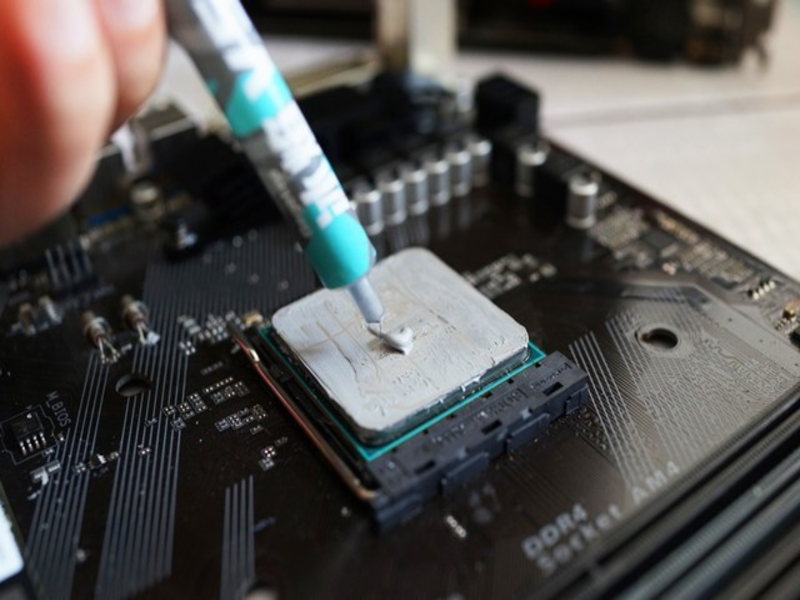
Thermal Management
APPLICATIONS

Thermal Management

Diamond Materials for Thermal Management & Heat Dissipation

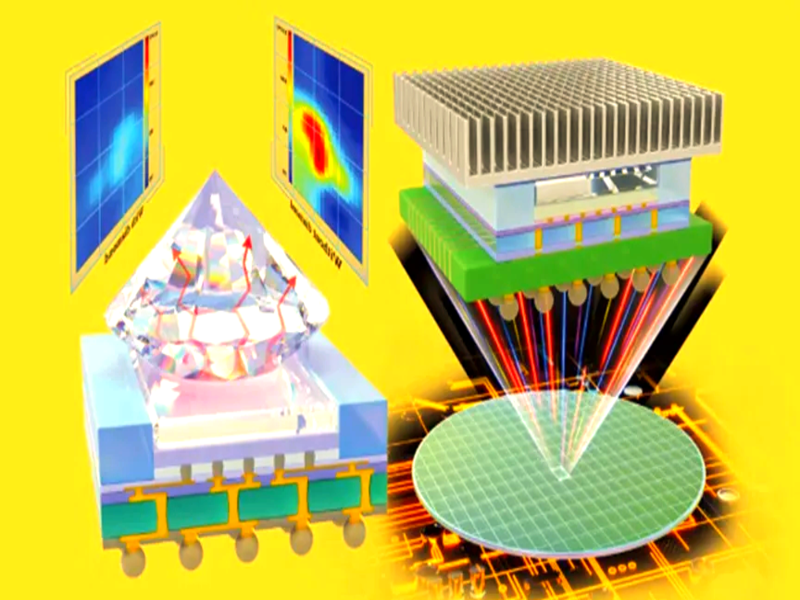
Thermal management materials require high thermal conductivity, stable particle characteristics and reliable integration with metal, ceramic or polymer matrices. Diamond is increasingly used as a thermal filler or reinforcement because of its excellent intrinsic thermal conductivity and electrical insulation.

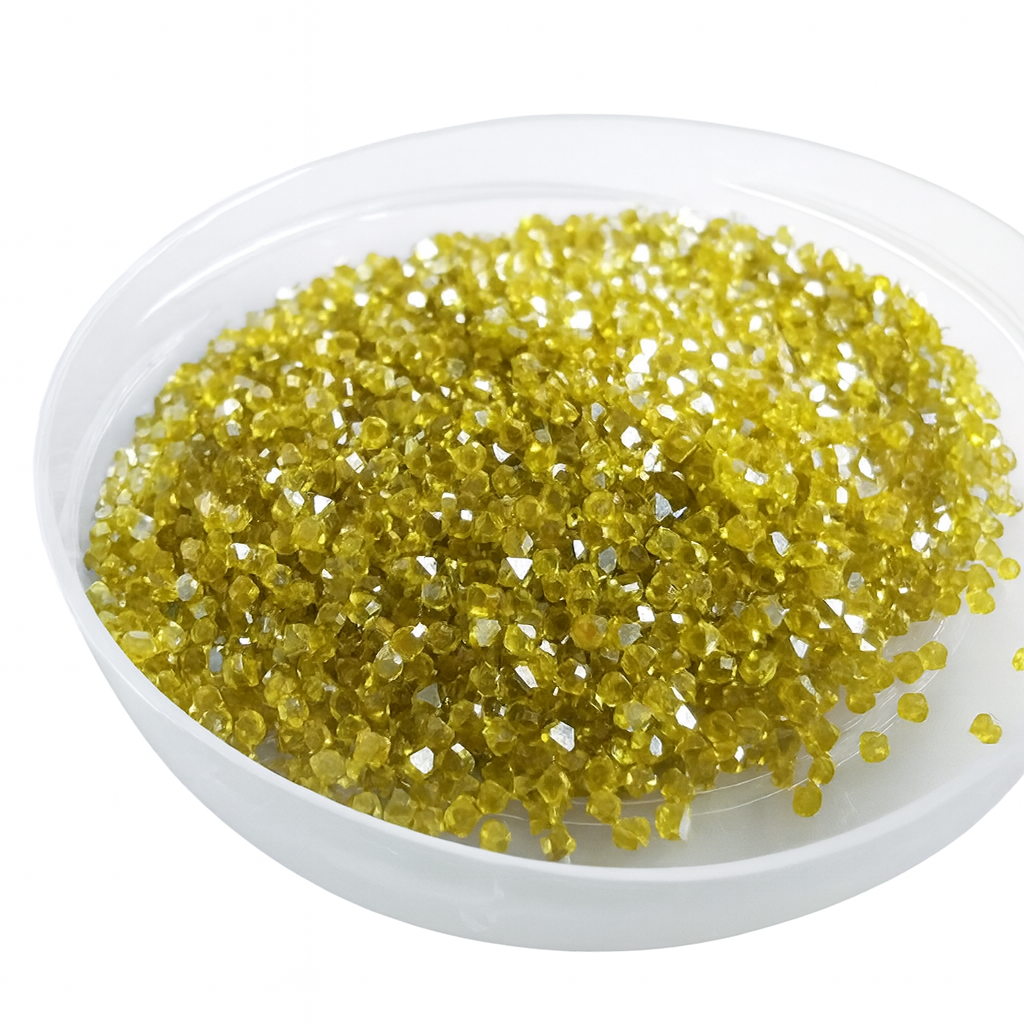
Crownkyn supplies synthetic diamond powders for thermal management applications, including controlled mesh and micron grades, high-purity blocky diamond and coated diamond materials for copper-, aluminum-, ceramic- and polymer-based composite systems.

Industry Challenges

Key processing challenges that influence abrasive selection and application performance.

Thermal Conductivity & Filler Loading

Diamond particle size, quality and loading level influence heat-transfer pathways and the thermal performance of composite materials.

  • Build efficient thermal pathways
  • Balance loading and processability
  • Control particle size distribution

Interface Bonding & Thermal Resistance

Poor interfacial contact between diamond and the matrix can increase thermal resistance and limit the performance of the composite.

  • Reduce interfacial thermal resistance
  • Improve diamond–matrix bonding
  • Match coatings to matrix systems

Particle Quality & Composite Consistency

Diamond purity, crystal quality, morphology and particle distribution influence composite processing and repeatable thermal performance.

  • Maintain high diamond purity
  • Control crystal shape and quality
  • Improve batch-to-batch consistency

Recommended Processing Stages

Diamond abrasive type, particle size and product form can be matched to different processing stages to balance removal efficiency, dimensional control and final surface quality.

Thermal Interface Materials

Thermal Interface Materials

Thermal interface materials use highly conductive fillers to improve heat transfer between electronic components and heat sinks. Diamond particle size, morphology and loading behavior influence thermal pathways, viscosity and processing stability.

<

  • General TIM formulations: Micron thermal conductive diamond for balancing heat transfer, dispersion and formulation stability.
  • High-loading systems: Controlled or rounded diamond particles can support improved packing and flow behavior.
  • Interface performance: Surface-modified diamond can be selected where improved filler–matrix interaction is required.

Typical applications: Thermal grease, thermal pads, gap fillers and phase-change thermal interface materials.
Thermally Conductive Polymer Composites

Thermally Conductive Polymer Composites

Diamond powder can be incorporated into polymer and resin systems to improve thermal conductivity while retaining the processing and electrical insulation characteristics required by many electronic applications.

  • Resin systems: Micron diamond fillers for thermally conductive epoxy, silicone and related polymer formulations.
  • Filler loading: Particle size and morphology can be selected to balance packing density, viscosity and thermal performance.
  • Dispersion control: Consistent PSD and surface characteristics support uniform filler distribution and formulation stability.

Typical applications: Thermally conductive adhesives, encapsulants, potting compounds and polymer thermal composites.

Electronic Encapsulation & Packaging

Electronic Encapsulation & Packaging

Electronic packaging materials require efficient heat dissipation together with stable processing and long-term material reliability. Diamond fillers can support thermal transport in encapsulation and packaging formulations for high-power electronic components.

  • Encapsulation: Thermally conductive diamond fillers for resin systems used around heat-generating electronic components.
  • Packaging materials: Controlled diamond powders for formulations requiring improved heat dissipation and electrical insulation.
  • Material consistency: Stable particle size, purity and morphology support repeatable formulation and thermal performance.

Typical applications: Power modules, LED packaging, electronic encapsulation and high-power electronic assemblies.

High-Performance Thermal Filler Systems

High-Performance Thermal Filler Systems

High-Performance Thermal Filler Systems

  • Particle engineering: Controlled particle sizes and morphologies can be combined to improve packing behavior.
  • Surface modification: Selected surface treatments can improve compatibility with specific matrix systems.
  • Material quality: High purity and consistent crystal characteristics support reliable thermal filler performance.

Typical applications: High-performance thermal compounds, thermal adhesives, encapsulation materials and specialty heat-dissipation formulations.

How to Select Diamond Fillers for Thermal Management

Thermally conductive diamond filler selection should consider the matrix system, particle size distribution, particle morphology, filler loading and surface characteristics. These factors influence thermal transport, packing behavior, dispersion, viscosity and formulation stability.

Selection Factor
Selection Guidance
Selection Factor Matrix System
Selection Guidance

Match diamond filler characteristics to silicone, epoxy, adhesive, encapsulant or other polymer systems according to processing conditions and thermal-performance requirements.

Selection Factor Particle Size & PSD
Selection Guidance

Select particle size and PSD according to the required thermal conductivity, filler loading, layer thickness and processing characteristics of the formulation.

Selection Factor Particle Morphology & Packing
Selection Guidance

Consider blocky, rounded or engineered particle shapes according to packing density, flowability and the formation of effective thermal pathways.

Selection Factor Filler Loading & Processability
Selection Guidance

Balance diamond loading with viscosity, dispersion and processing requirements, as higher filler content can improve thermal pathways but may reduce formulation flowability.

Selection Factor Surface Characteristics & Purity
Selection Guidance

Consider surface treatment, cleanliness and diamond purity where dispersion, matrix compatibility and consistent thermal performance are important.

Frequently Asked Questions

Common questions about selecting thermal conductive diamond fillers for thermal interface materials, polymer composites and electronic heat-dissipation applications.

Why is diamond used as a thermal conductive filler?

Diamond has very high intrinsic thermal conductivity and can improve heat transfer when used as a filler in suitable polymer, resin and thermal interface systems. Final thermal performance also depends on filler loading, particle contact, dispersion and matrix properties.

What particle size of diamond is suitable for thermal management applications?

The suitable particle size depends on the formulation thickness, filler loading, viscosity and required thermal performance. Fine micron diamond is often used where dispersion and thin-layer processing are important, while larger or multi-size particles may support improved packing in higher-loading systems.

How does diamond particle shape affect thermal filler performance?

Particle morphology influences packing density, flowability, filler contact and formulation viscosity. Blocky, rounded or engineered diamond particles can be selected according to the required balance between thermal pathways, loading level and processability.

How does filler loading affect thermal conductivity and processability?

Increasing diamond filler loading can help form more effective heat-transfer pathways, but it can also increase viscosity and make mixing or dispensing more difficult. The optimum loading depends on particle size distribution, morphology, matrix system and processing method.

When should surface-modified or coated diamond fillers be considered?

Surface-modified or coated diamond may be considered when improved dispersion, wetting or compatibility with a specific matrix is required. The appropriate surface treatment depends on the polymer or resin system, processing conditions and target thermal performance.

Need Help Selecting the Right Diamond Abrasive?

Share your application, processed material, current abrasive specification and target performance. Our team can recommend a suitable diamond product for evaluation.

Chat with us on WhatsApp