Introduction
Nano diamond powder is a functional synthetic diamond material with particle sizes in the nanometre range[^1]. Unlike conventional diamond abrasives mainly used for material removal, nanodiamond is used where surface interaction, dispersion behaviour, and integration with other materials are critical.
Due to its nanoscale particle characteristics and high surface activity, nano diamond powder is used in applications including precision polishing, lubrication, coatings, composite materials, and advanced functional systems.
This guide explains the key characteristics, applications, and selection considerations for choosing suitable nano diamond powder.
What Is Nano Diamond Powder?
Nano diamond powder is a specialised synthetic diamond material consisting of diamond particles typically measured in the nanometre range[^2]. Unlike conventional diamond powder, which is mainly used as an abrasive for cutting, grinding, and polishing, nano diamond is valued for its unique nanoscale particle behaviour and high surface activity.
At the nanoscale, the increased surface-area-to-volume ratio makes particle surface characteristics, dispersion behaviour, and interaction with surrounding materials important factors in determining performance. This allows nano diamond powder to be used as a functional material in advanced polishing, coating, composite, lubrication, and thermal management applications.
Nano diamond retains the inherent properties of diamond, including high hardness, chemical stability, wear resistance, and thermal conductivity. However, its primary value is not simply as a finer abrasive, but as an engineered diamond material designed for applications where nanoscale interactions influence the final performance.

How Nano Diamond Differs from Conventional Diamond Powder
Nano diamond powder and conventional diamond powder are both synthetic diamond materials, but they are developed for different performance requirements.
Conventional diamond powder is primarily selected for abrasive applications where controlled material removal, cutting efficiency, and surface finishing are required. Its performance is mainly influenced by factors such as particle size, hardness, crystal structure, and particle morphology.
Nano diamond powder differs because its nanoscale particles exhibit a much greater proportion of surface area relative to particle volume. This changes how the material interacts with surrounding systems and makes nanoscale behaviour an important consideration when evaluating performance.
| Characteristic | Nano Diamond Powder | Conventional Diamond Powder |
|---|---|---|
| Particle size | Nanometre scale | Micron and larger particle sizes |
| Primary role | Functional material and nanoscale additive | Abrasive material for cutting, grinding and polishing |
| Dominant performance factors | Surface characteristics, dispersion behaviour, particle interaction and material compatibility | Particle size, crystal structure, hardness, strength and cutting efficiency |
| Relative surface area | High surface-area-to-volume ratio with strong surface interaction | Lower relative surface area with performance mainly determined by particle geometry and mechanical properties |
| Material behaviour | Strongly influenced by surface chemistry, aggregation behaviour and interaction with surrounding materials | Primarily influenced by abrasive characteristics such as shape, strength and wear behaviour |
| Typical Applications | Precision polishing, lubricant additives, coatings, composite materials and advanced functional materials | Polishing, lapping, grinding, cutting tools and abrasive applications |

The difference between these two powders is therefore not based on one being superior to the other, but on how their characteristics align with the requirements of the intended application.
Key Characteristics of Nano Diamond Powder Performance
The performance of nano diamond powder depends on how its particle characteristics interact with the target application system. Unlike conventional diamond abrasives, nano diamond performance is strongly influenced by particle size, surface chemistry, dispersion behaviour, and compatibility with surrounding materials[^3].
Two nano diamond powders with similar particle sizes may provide different results because differences in surface properties, aggregation behaviour, and material compatibility can affect processing stability and final performance.
Particle Size and Surface Area Effects
Particle size is one of the most important factors influencing nano diamond powder performance.
As diamond particles are reduced to the nanoscale, the surface-area-to-volume ratio increases significantly, making surface interactions more influential during processing and material integration.
Smaller nanodiamond particles can provide stronger surface effects and better interaction with surrounding materials. However, smaller particle size does not always guarantee better performance, as extremely fine particles may create challenges related to aggregation, handling, and dispersion stability.
Therefore, particle size selection should be considered together with particle distribution, application requirements, and processing conditions.
Surface Chemistry and Functional Modification
Surface chemistry plays an important role in how nanodiamond interacts with different material systems.
Due to its high surface activity, the chemical groups present on nanodiamond surfaces can influence dispersion behaviour, compatibility, and bonding with surrounding materials[^4].
Surface modification can be used to adjust these characteristics for specific applications, including polymer composites, coatings, and liquid-based formulations.
The appropriate surface treatment should be selected according to the chemistry of the target system and the required interaction between nanodiamond and the surrounding material.
Dispersion Stability and Agglomeration Control
Dispersion stability is one of the key practical considerations when using nano diamond powder.
Because nanodiamond particles have high surface energy, they tend to form aggregates during storage or processing. Aggregation can reduce the effective nanoscale performance and affect the consistency of the final application.
Stable dispersion depends on particle surface properties, processing methods, dispersion medium, and compatibility with the surrounding system.
For this reason, evaluating dispersion behaviour is essential when selecting nanodiamond for liquid formulations, composites, or coatings.
Integration with Composite and Coating Systems
Nano diamond powder is often used as a functional additive or reinforcement phase in composite and coating systems[^5].
The objective is not only to introduce diamond properties such as hardness, wear resistance, or thermal performance, but also to achieve effective integration between nanodiamond particles and the surrounding matrix.
Successful application requires balanced control of particle distribution, interface compatibility, processing conditions, and material formulation. Proper integration allows nanodiamond to provide functional improvements without compromising system stability.
Nano Diamond Powder Applications
Nano diamond powder is used across applications where controlled particle behaviour, surface interaction, dispersion stability, and material compatibility are important.
The suitability of nano diamond powder depends on how effectively its particle characteristics align with the requirements of the specific application.
Nano Diamond Powder for Precision Polishing
Precision polishing is one of the most established applications for nano diamond powder.
In advanced polishing processes, the objective is often to achieve extremely smooth surfaces while minimising surface damage.Compared with larger diamond abrasives, nano diamond powder can be considered for ultra-fine finishing processes where nanoscale particle interaction and surface control are required.
Nano diamond powder for polishing is commonly used in slurry-based systems where surface quality, consistency, and controlled finishing performance are required.
Typical applications include:
- Optical components
- Semiconductor-related materials
- Advanced ceramics
- Hard engineered surfaces
The final polishing performance depends not only on particle size but also on particle distribution, dispersion stability, and processing conditions.

Nano Diamond as a Lubricant Additive
Nano diamond has attracted interest as a lubricant additive[^6] because it combines diamond's wear resistance with nanoscale particle behaviour.
Unlike conventional abrasives, nano diamond in lubrication systems is not intended primarily for material removal. Instead, appropriately dispersed particles can influence interactions between contacting surfaces and may contribute to improved wear performance.
The effectiveness of nano diamond lubricant formulations depends on factors such as particle dispersion stability, compatibility with the lubricant base, concentration, and operating conditions.
When effectively integrated, nanodiamond may contribute to:
- Reduced friction and surface wear under suitable conditions
- Improved wear resistance of contacting components
- Enhanced stability of lubricant formulations
The performance of a nanodiamond lubricant depends on the complete formulation rather than the presence of diamond particles alone.
Nano Diamond Coating and Surface Engineering
Nano diamond powder can be incorporated into coating systems as a functional additive to modify surface properties and improve coating performance. Rather than replacing conventional coating materials, nanodiamond is typically used to enhance selected characteristics of the coating structure.
Depending on the coating formulation and processing method, nanodiamond may contribute to improved wear resistance, surface durability, and protection in demanding environments[^7]. This makes nanodiamond suitable for applications where enhanced surface performance is required without significantly changing the original coating system.
The effectiveness of nanodiamond-based coatings depends on proper particle dispersion, compatibility with the coating matrix, and strong interaction between diamond particles and the surrounding material. Uniform integration is essential to achieve consistent performance and fully utilize the functional benefits of nanodiamond.
Nano Diamond Composite Materials
Nanodiamond composite materials combine diamond nanoparticles with polymer, ceramic, or other matrix materials to improve selected mechanical and functional properties.
As a nanoscale reinforcement phase, nanodiamond can contribute diamond-related properties such as hardness, wear resistance, and structural stability when effectively integrated into a suitable matrix.
Potential composite applications include:
- Polymer composites
- Ceramic materials
- Wear-resistant materials
- Advanced engineering composites
The performance of nanodiamond composites depends on effective particle distribution, interface bonding, processing conditions, and compatibility between nanodiamond and the surrounding matrix.
Thermal Management and Electronic Materials
Nano diamond powder is being explored in advanced thermal materials where interface modification and functional enhancement are required.
Unlike larger diamond particles used as primary thermal conduction fillers, nano diamond is typically incorporated as a functional additive to improve material properties such as interface interaction, thermal stability, and composite performance.
Potential applications include:
- Thermal interface materials
- Polymer-based thermal composites
- Heat dissipation coatings
- Electronic packaging materials
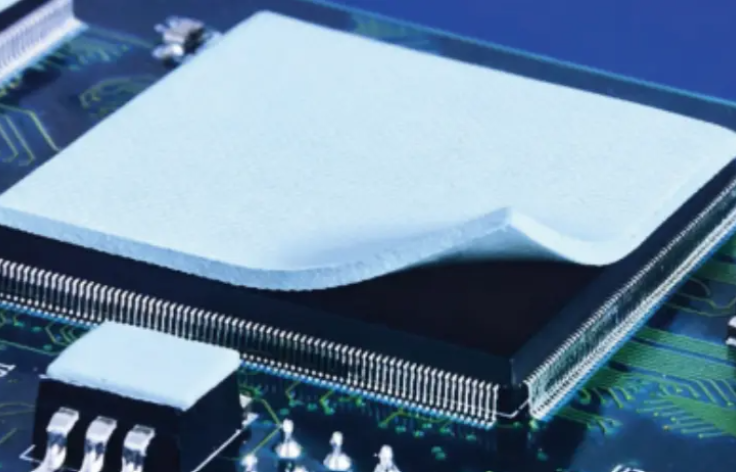
The final thermal performance depends not only on the intrinsic properties of nanodiamond, but also on particle dispersion, interface compatibility, loading level, and integration within the surrounding material system.
Selecting the Right Nano Diamond Grade
Selecting the appropriate nano diamond grade requires understanding how material characteristics influence performance within a specific application.
There is no single nano diamond powder suitable for every requirement. The correct selection depends on factors including the intended function, particle characteristics, surface requirements, processing environment, and required consistency.
The selection process should begin by defining the application requirements and then identifying the material characteristics needed to achieve the desired performance.
Application Requirements
The first step in selecting nano diamond powder is understanding the function it needs to provide within the target application.
Unlike conventional diamond abrasives, nano diamond is often used as a functional material rather than only as a cutting medium. Therefore, the selection process should begin by identifying the expected role of nanodiamond, the surrounding material system, and the required performance improvement.
Different applications require different priorities:
| Application Goal | Main Selection Focus |
|---|---|
| Precision polishing | Particle size, purity and surface consistency |
| Composite reinforcement | Surface modification, dispersion and matrix compatibility |
| Lubrication systems | Dispersion stability and compatibility with lubricant base |
| Functional coatings | Surface compatibility and particle integration |
| Thermal materials | Interface behaviour, dispersion and material compatibility |
The main selection considerations include:
- Purpose of incorporating nanodiamond
- Material system being modified
- Required performance improvement
- Processing conditions
- Final operating environment
Detonation Nanodiamond vs HPHT Synthetic Nanodiamond
Nano diamond powder can be produced through different synthesis routes, with detonation nanodiamond (DND) and HPHT nano diamond representing two important categories.
Although both materials contain diamond nanoparticles, differences in production methods influence particle characteristics, surface behaviour, and application suitability[^8].
| Comparison Factor | Detonation Nanodiamond (DND) | HPHT Synthetic Nanodiamond |
|---|---|---|
| Production method | Detonation synthesis | High-pressure high-temperature synthesis |
| Main characteristics | Very small particles, high surface activity, strong surface interaction | Controlled synthetic diamond characteristics and consistent particle properties |
| Primary selection factors | Surface chemistry, dispersion behaviour, aggregation control | Particle characteristics, structural requirements, application needs |
| Processing considerations | Often requires careful dispersion and surface management | Requires evaluation of compatibility with the target material system |
| Typical application areas | Precision polishing, coatings, composites, functional materials | Advanced composites and specialised engineered materials |
The choice between detonation nanodiamond and HPHT nanodiamond depends on the required performance rather than the production method alone. The most suitable material is the one that best matches the application requirements.
Particle Size Selection
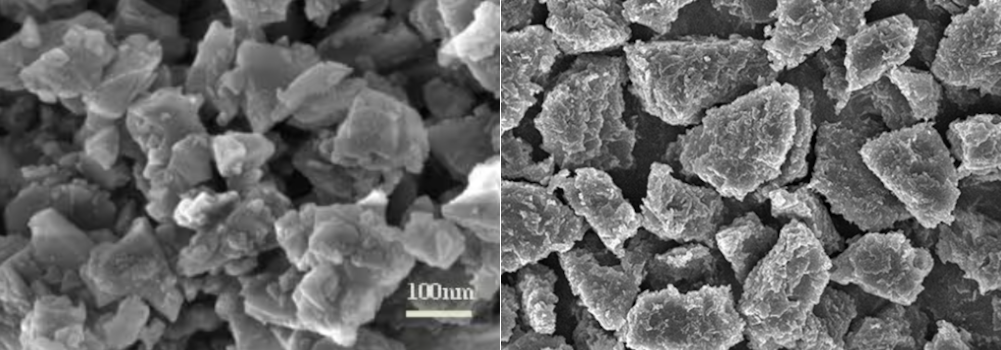
Particle size is one of the most important factors when selecting nano diamond powder because it influences surface area, particle interaction, dispersion behaviour, and processing performance.
At the nanoscale, smaller particles provide increased surface area and stronger interaction with surrounding materials. However, the smallest particle size does not always provide the best application result.
The appropriate particle size depends on the balance between nanoscale interaction, dispersion stability, processing requirements, and final application performance.
| Particle Size Consideration | Performance Influence | Application Consideration |
|---|---|---|
| Smaller nanodiamond particles | Higher surface-area-to-volume ratio and stronger surface interaction | Suitable where nanoscale effects are critical |
| Controlled particle distribution | More predictable behaviour and processing consistency | Important for precision applications |
| Larger nanoscale particles | Potentially easier handling and dispersion control | Suitable where processing stability is prioritised |
Particle size should always be evaluated together with surface characteristics and dispersion behaviour rather than considered as an independent specification.
Surface Modification Requirements
Surface modification is an important consideration when nano diamond powder must interact with another material system.
Because nanodiamond particles have high surface activity, their surface chemistry strongly influences dispersion behaviour, compatibility, and integration performance. Surface modification can be used to adjust how particles interact with liquids, polymers, coatings, and composite materials[^9].
Depending on the application requirements, nanodiamond surface modification may influence:
- Compatibility with surrounding materials
- Dispersion stability
- Interface interaction
- Processing behaviour
For example, nanodiamond used in a polymer composite may require different surface characteristics compared with nanodiamond dispersed in a liquid formulation. The appropriate surface treatment depends on the chemical and physical requirements of the host material.
Surface modification should therefore be selected according to the final application rather than treated as an independent product specification.
Purity and Product Consistency
Purity and consistency are important considerations when nano diamond powder is used in industrial applications requiring repeatable performance.
Unlike larger diamond powders, where mechanical properties may dominate performance evaluation, nanodiamond behaviour is strongly influenced by surface characteristics and particle interactions. Variations in material properties can therefore affect processing behaviour, formulation stability, and final application performance.
Important evaluation factors include:
- Particle characteristic consistency
- Controlled impurity levels
- Stable surface properties
- Batch-to-batch reproducibility
The most suitable nano diamond powder is not necessarily the material with the highest individual specification. It is the material whose characteristics consistently match the requirements of the intended application.
Nano Diamond Product Forms and Processing Options
Nano diamond powder can be supplied in different physical formats depending on how the material will be processed and incorporated into the final system.
Although the underlying diamond material may have similar characteristics, the product format influences handling, dispersion preparation, formulation flexibility, and production efficiency.
Selecting the appropriate format is therefore an important part of successful nanodiamond integration.
Powder, Slurry, and Paste Options
Nano diamond powder can be supplied in different formats depending on the processing requirements and formulation method.
Nano diamond powder provides maximum flexibility for users who need to develop their own formulations. However, due to the high surface activity of nanodiamond particles, proper dispersion preparation is important before processing.
Nano diamond slurry provides a pre-dispersed format that can simplify handling and improve processing consistency, especially for liquid-based applications.
Nano diamond paste provides a concentrated format for applications requiring controlled material placement and localized application.

Nano Diamond Product Format Comparison
| Format | Main Advantage | Suitable For |
|---|---|---|
| Powder | Maximum formulation flexibility | Custom formulations and material development |
| Slurry | Pre-dispersed and easy to incorporate | Liquid polishing systems and dispersion-sensitive applications |
| Paste | Concentrated and controlled application | Localized finishing and high-concentration processes |
Matching Material Form with Processing Requirements
The choice between powder, slurry, and paste should be based on how the material will be incorporated into the final process.
- Powder format is generally suitable when maximum formulation control is required and the user has the capability to manage dispersion preparation.
- Slurry format may be preferred where consistent dispersion, reduced preparation time, and easier incorporation into liquid systems are important.
- Paste format may provide advantages where concentrated material delivery and controlled application are required.
Important selection considerations include:
- Existing production equipment
- Mixing and dispersion capability
- Required material concentration
- Processing method
- Storage and handling requirements
Common Selection Mistakes to Avoid
Selecting nano diamond powder requires considering the complete application system rather than individual product specifications. The following mistakes may lead to unstable processing results or reduced performance.
Selecting Particle Size Without Considering Application Requirements
Smaller particle size does not always provide better performance. Although nanoscale particles offer higher surface area and stronger surface interaction, they may also create challenges related to aggregation and dispersion. Particle size should be selected based on the intended application function and processing requirements.
Ignoring Dispersion Stability
Nanodiamond particles have high surface energy and tend to form aggregates during storage or processing. Evaluating only the nominal particle size without considering dispersion behaviour may result in unexpected performance differences during actual application.
Choosing Surface Modification Without Considering Material Compatibility
Surface treatment should be matched with the surrounding material system. A surface modification that improves compatibility in one application may not provide the same performance in another system, such as liquid formulations, polymer composites, or coating materials.
Assuming Higher Specifications Always Provide Better Results
Higher purity, smaller particle size, or more advanced specifications do not automatically guarantee better application performance. The optimal nano diamond grade depends on balancing particle characteristics, surface behaviour, processing conditions, and final performance requirements.
Selecting Product Format Without Considering Processing Requirements
Nano diamond powder, slurry, and paste formats are designed for different processing conditions. Selecting the appropriate product form requires considering the manufacturing process, dispersion requirements, handling method, and consistency needed for long-term production.
Nano Diamond Solutions from Crownkyn
Crownkyn supplies nano diamond powder solutions for advanced applications requiring controlled particle characteristics, stable dispersion, and reliable material consistency.
Our nano diamond products are available in different particle sizes and product formats, including powder, slurry, and paste options, with selection based on application requirements such as precision polishing, lubricant additives, coatings, composite materials, and advanced functional systems.
For nano diamond applications, product performance depends not only on particle size but also on surface characteristics, dispersion behaviour, and compatibility with the target material system. Our team works with customers to evaluate application requirements and recommend a suitable nano diamond grade and product format.
Contact us to discuss your nano diamond requirements, including particle size, surface modification, dispersion needs, and application objectives.
Conclusion
Nano diamond powder provides a way to incorporate diamond properties into applications where conventional diamond powders cannot provide the required level of particle interaction or material integration.
Successful use depends on selecting a material grade that matches the processing environment, application requirements, and desired performance outcome.
By understanding the relationship between particle characteristics, surface properties, and application demands, manufacturers can select nanodiamond materials more effectively for advanced industrial systems.
References
[1] Ultrasmall Nanodiamonds: Perspectives and Questions
Nano diamond powder is a functional synthetic diamond material with particle sizes in the nanometre range.
[2] Disaggregation of Nanodiamond Particles
Nano diamond powder is a functional synthetic diamond material with particle sizes in the nanometre range.
[3] Nanodiamonds in composites: polymer chemistry and tribology
Nanodiamond performance is strongly influenced by particle size, surface chemistry, dispersion behaviour, and compatibility with surrounding materials.
[4] Enhancing colloidal stability of nanodiamond
Chemical groups on nanodiamond surfaces influence dispersion behavior, compatibility, and bonding with surrounding materials.
[5] A critical review of nanodiamond based nanocomposites
Nanodiamond powder is often used as a functional additive or reinforcement phase in composite and coating systems.
[6] Nanodiamond as an effective additive in oil
Nanodiamond has attracted research interest as a lubricant additive because it can affect friction and wear behavior.
[7] Nanodiamond: a multifaceted exploration of electrospun
Nanodiamond in coating formulations may improve wear resistance, surface durability, and protective performance.
[8] Nanodiamond: A high impact nanomaterial
Production methods influence nanodiamond particle characteristics, surface behavior, and suitability for different applications.
[9] Advances in the Surface Functionalization of Nanodiamonds
Surface modification adjusts nanodiamond interactions with liquids, polymers, coatings, and composite materials.
Drafted by: Gareth Bayley
Technical Review & Editing: Ashley Wei