Introduction
Diamonds are often associated with rarity and symbolic value, but their most significant industrial role comes from their use as an engineered material. In modern manufacturing, synthetic diamonds are valued for their unparalleled physical properties and ability to be precisely controlled for specific applications. Unlike natural diamonds, synthetic diamond materials can be manufactured consistently and repeatedly to meet specific requirements, making them suitable for demanding industrial processes.
This guide explores the different types of synthetic diamond powder, their key characteristics, manufacturing considerations, and industrial applications.
What Is Synthetic Diamond Powder?
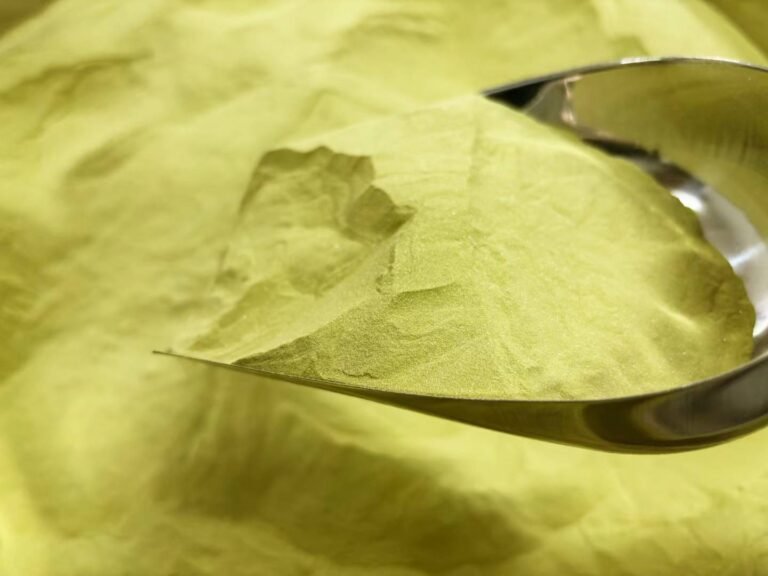
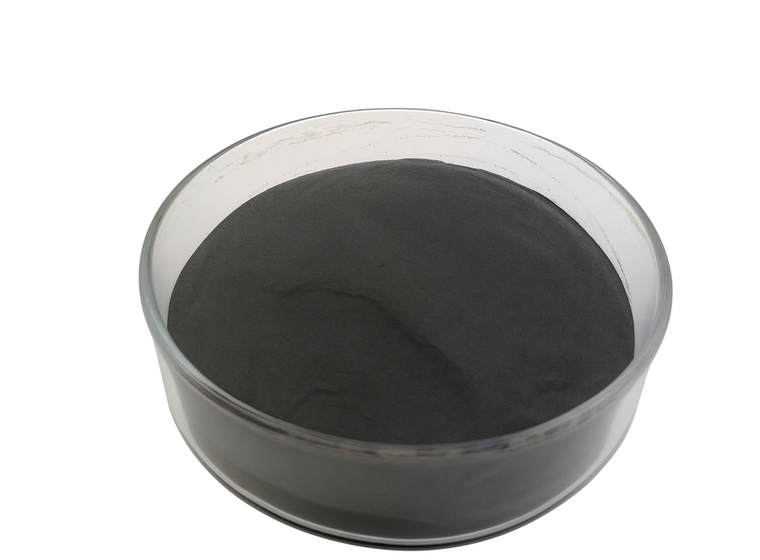
In particle form, synthetic diamond powder can be applied across a wide range of scales, from macroscopic grinding operations to nanoscale chemical interactions. By precisely controlling particle size distribution, morphology, crystallinity, and purity, engineers tailor synthetic diamond powder to meet the specific requirements of diverse applications.
From coarse grinding and cutting operations to precision lapping and polishing processes, synthetic diamond powder enables efficient processing of materials that are difficult to machine using conventional abrasives. Advanced ceramics, tungsten carbide, semiconductor materials, optical components, and other hard materials rely on diamond abrasives because of their ability to achieve high material removal efficiency while maintaining surface quality.
Beyond traditional abrasive applications, synthetic diamond powder is also used in advanced technologies including thermal management materials, composite coatings, and nanoscale applications. By combining exceptional physical properties with precise particle engineering, synthetic diamond powder has become an essential material supporting modern manufacturing and high-performance technologies.

Material Properties of Synthetic Diamond Powder
The exceptional performance of synthetic diamond originates from the unique structure of diamond itself. The strong covalent bonding between carbon atoms gives diamond outstanding hardness, wear resistance, and mechanical stability, forming the foundation of its industrial applications.
Hardness and Wear Resistance
Diamond’s extreme hardness allows synthetic diamond particles to cut, grind, and polish materials that are difficult to process using conventional abrasives. This property makes diamond powder widely used in applications involving tungsten carbide, ceramics, optical materials, semiconductor substrates, and other hard materials.
However, the performance of synthetic diamond powder is not determined by hardness alone. The behaviour of individual particles is also influenced by crystal structure, particle size, morphology, and fracture characteristics. These differences create distinct performance advantages between different types of synthetic diamond powder.
Thermal Properties
Synthetic diamond has exceptionally high thermal conductivity, allowing it to efficiently dissipate heat generated during abrasive processes. This is particularly beneficial in high-speed grinding and cutting operations where heat accumulation can affect tool performance and workpiece quality.
Diamond also has a low coefficient of thermal expansion, providing dimensional stability in precision applications where temperature variations may influence processing accuracy.
Despite these advantages, diamond has limitations under certain operating conditions. At elevated temperatures, particularly in oxygen-rich environments or when interacting with ferrous materials, diamond may undergo oxidation or graphitization. These factors must be considered when applying diamond powder in demanding processes.

Particle-Level Characteristics
When diamond is processed into powder, its industrial performance depends on how its inherent properties are expressed at the particle level. Unlike bulk diamond, abrasive performance is strongly influenced by particle characteristics.
Important characteristics include:
- Particle size: Determines the scale of material removal, ranging from coarse grinding applications to precision polishing processes.
- Crystal structure: Influences fracture behaviour and cutting performance. Monocrystalline and polycrystalline diamond powders exhibit different wear mechanisms.
- Particle morphology: Affects cutting ability, surface interaction, and polishing behaviour.
- Purity and surface condition: Influence performance consistency, especially in precision applications.
By controlling these characteristics, synthetic diamond powder can be produced in different forms to meet the requirements of diverse industrial applications.
Particle Size Classification & Typical Uses
| Size Range | Primary Applications |
|---|---|
| Coarse Diamond Grit (50–500 µm) | Grinding wheels, saw blades, drilling tools, hard material processing |
| Micro Diamond Powder (0.1–50 µm) | Lapping, polishing, optical finishing, semiconductor wafer processing |
| Nano Diamond Powder (2–100 nm) | CMP slurries, composite coatings, tribological applications, advanced surface engineering |
Monocrystalline Diamond Powder
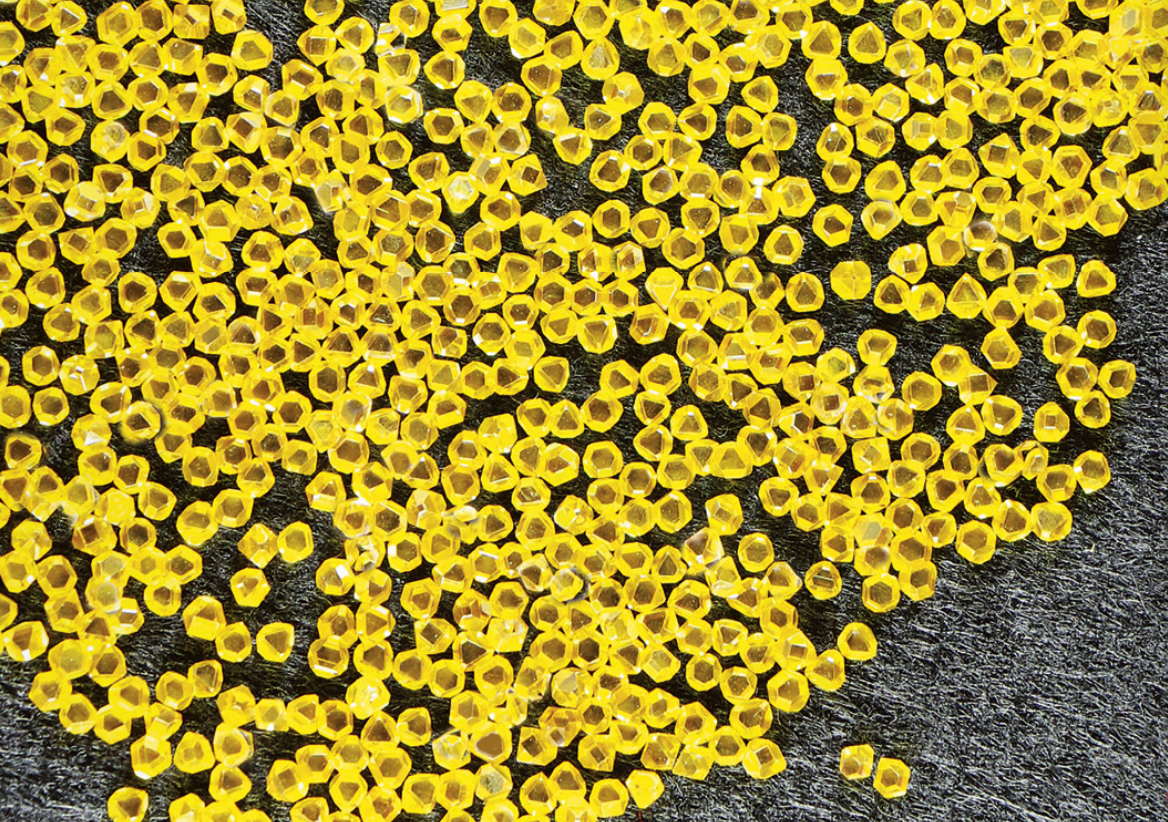
Monocrystalline diamond powder consists of individual diamond particles with a single crystal structure. Depending on the manufacturing process and application requirements, these particles can be engineered with different morphologies and fracture characteristics to provide specific abrasive performance.
One of the defining characteristics of monocrystalline diamond is its fracture behaviour. As single-crystal particles, monocrystalline diamonds can fracture along crystallographic planes when subjected to mechanical stress. This fracture behaviour can expose new cutting surfaces and influence abrasive performance during use. The balance between particle strength and fracture behaviour allows monocrystalline diamond powder to provide effective material removal in demanding abrasive applications.
The fracture behaviour and cutting characteristics of monocrystalline diamond make it suitable for applications where efficient material removal and consistent abrasive performance are required. It is widely used in grinding, cutting, and sawing applications involving tungsten carbide, ceramics, optical materials, and other difficult-to-machine materials.
In bonded abrasive tools, performance also depends on the interaction between diamond particles and the selected bonding system, which affects particle retention and abrasive efficiency.
However, depending on particle morphology and application conditions, the more aggressive cutting behaviour of monocrystalline diamond may increase the risk of surface scratches or subsurface damage in precision finishing applications. For this reason, monocrystalline diamond is generally more suitable for cutting, grinding, and material removal processes rather than final polishing stages.
Key Advantages
- High cutting efficiency through effective fracture behaviour
- Self-renewing cutting surfaces during abrasive operation
- Effective material removal for hard and difficult-to-machine materials
- Suitable for grinding, cutting, and sawing applications
- Compatible with various bonding systems including metal, resin, and electroplated tools
Limitations
- More aggressive cutting behaviour may increase surface damage in precision applications
- Less suitable for ultra-fine finishing processes
- Performance depends on particle size, morphology, fracture characteristics, and bond system compatibility
Polycrystalline Diamond Powder
Polycrystalline diamond powder consists of particles containing multiple diamond crystallites with different crystal orientations. Unlike monocrystalline diamond particles, which contain a single crystal structure, polycrystalline diamond exhibits more consistent mechanical behaviour compared with the directional fracture characteristics of single-crystal particles.
The multi-crystalline structure influences how polycrystalline diamond wears during abrasive processes. Instead of fracturing along large crystallographic planes, polycrystalline particles typically undergo controlled micro-fracture associated with crystallite boundaries. This produces a more gradual change in particle shape and helps maintain stable abrasive performance during precision processing.
This controlled wear behaviour makes polycrystalline diamond powder particularly suitable for applications where surface quality and process stability are more important than maximum material removal rate. Compared with more aggressive abrasive types, polycrystalline diamond can reduce the risk of deep scratches and surface defects during fine finishing operations.
Polycrystalline diamond powder is widely used in precision polishing applications, including optical components, molds, semiconductor materials, and other applications requiring controlled surface finishes. In diamond slurry based polishing processes, factors such as particle size distribution, concentration, and process parameters influence polishing efficiency and final surface quality.
Its stable abrasive behaviour also makes polycrystalline diamond suitable for advanced polishing processes where maintaining uniform surface characteristics is critical.
Key Advantages
- Controlled wear behaviour for stable abrasive performance
- Reduced risk of deep scratches and surface damage
- Suitable for precision polishing and surface finishing applications
- Effective for optical components, molds, semiconductor materials, and other high-quality finishing processes
- Provides reliable performance in slurry-based polishing systems
Limitations
- Lower cutting aggressiveness compared with monocrystalline diamond
- Less suitable for high material removal grinding applications
- Requires controlled particle size distribution and process conditions for consistent polishing performance
Micron Diamond Powder
Micron diamond powder refers to diamond particles typically ranging from sub-micron grades to several tens of microns in size. Unlike monocrystalline and polycrystalline diamond, which describe the internal crystal structure of the particles, micron diamond powder is classified primarily by particle size.
The performance of micron diamond powder depends on factors including particle size distribution, morphology, crystal structure, and surface condition. By controlling these characteristics, micron diamond powder can be engineered for applications ranging from material removal and grinding to precision lapping and polishing.
In bonded abrasive tools, micron diamond powder is incorporated into bonding systems such as resin, metal, and electroplated tools. The interaction between particle characteristics and the bonding system influences abrasive exposure, retention, material removal behaviour, and overall tool performance.
Micron diamond powder is also widely used in diamond slurry based polishing processes, where particles are dispersed in a liquid medium to provide controlled material removal. Particle size distribution, concentration, dispersion stability, and process conditions play important roles in determining removal efficiency and final surface quality.
Because of its broad size range and flexibility, micron diamond powder is used across many industries, including semiconductor processing, optical polishing, precision tooling, ceramics, and superhard material finishing. Different micron diamond powder specifications are therefore used to balance material removal efficiency and surface finish requirements across different applications.
Key Advantages
- Available in a wide range of particle sizes for different processing requirements
- Suitable for grinding, lapping, and precision polishing applications
- Compatible with bonded abrasive tools and slurry-based polishing systems
- Particle characteristics can be engineered for specific performance requirements
- Provides flexibility across many industrial applications
Limitations
- Performance depends strongly on particle size, morphology, and application conditions
- Larger particles provide higher removal rates but may increase surface roughness
- Smaller particles provide finer finishes but generally require longer processing times
- Requires careful specification control to achieve consistent results
Nano Diamond Powder
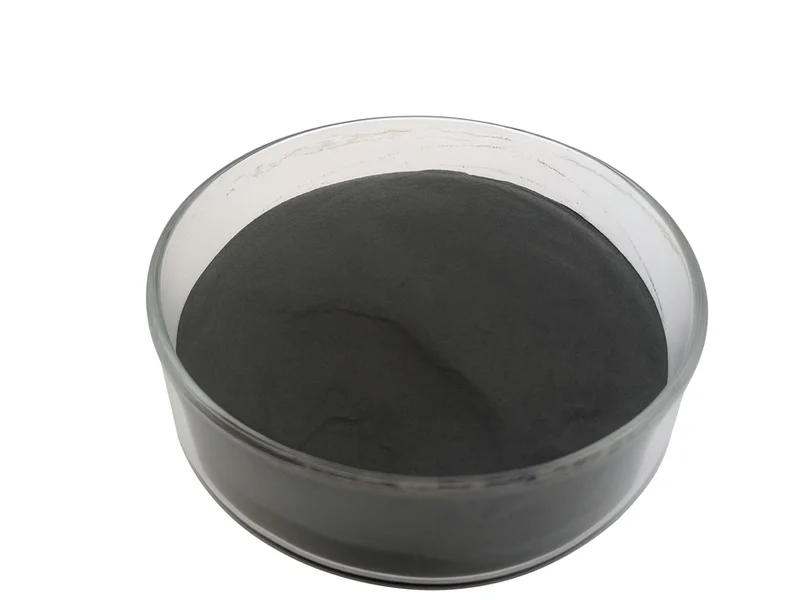
Nano diamond powder consists of diamond particle in the nanometer range, where surface properties become increasingly important compared with larger diamond particles. Due to their high surface area-to-volume ratio, nano diamond particles exhibit unique surface characteristics, including high surface energy and the ability to interact with surrounding materials.
These surface properties allow nano diamond powder to be modified or functionalized for specific applications. By controlling surface chemistry and particle dispersion, nano diamond can be incorporated into advanced materials to enhance properties such as wear resistance, hardness, and thermal performance.
In composite coatings, nano diamond particles can be added to metal or polymer matrices to improve properties such as hardness, wear resistance, and thermal stability. The effectiveness of these materials depends on factors including particle dispersion, surface treatment, and interaction between the diamond particles and surrounding matrix.
Nano diamond powder is also used in tribological applications, where its small particle size allows it to modify surface interactions, reduce friction, and improve wear resistance. These properties make it suitable for advanced lubrication systems and protective coatings.
Beyond industrial applications, nano diamond is also being explored for emerging technologies including electronics, biomedical applications, and other nanoscale applications. Its combination of diamond’s inherent physical properties and engineered surface behaviour continues to expand its potential uses.
Key Advantages
- High surface area enables unique surface interactions and functionalization
- Can improve hardness, wear resistance, and thermal properties in composite materials
- Suitable for advanced coatings, lubrication, and nanoscale applications
- Surface properties can be modified for specific performance requirements
- Suitable for applications where surface engineering and nanoscale interactions are critical
Limitations
- Requires careful control of surface properties and particle dispersion
- Not suitable for conventional bulk material removal applications
- Performance depends strongly on interaction with the surrounding material system
- Requires specialized processing methods compared with larger diamond powders
Future Uses for Synthetic Diamond Powder
The future development of synthetic diamond powder will be driven by increasing demand for higher performance materials in precision manufacturing, thermal management, and advanced technologies. Beyond traditional abrasive applications, diamond powder is being developed for applications that utilize its unique mechanical, thermal, and surface properties.
One key trend is the development of more specialized diamond grades, where particle characteristics are optimized for specific requirements. Advances in manufacturing control, particle processing, and surface modification will enable improved consistency and greater customization for demanding industrial applications.
Synthetic diamond powder and diamond-based materials are also expected to play an increasing role in thermal management applications as electronic systems continue to require more efficient heat dissipation solutions. Diamond’s exceptional thermal conductivity makes it a promising material for advanced thermal applications where conventional materials face performance limitations.
As industries continue to pursue higher precision, efficiency, and reliability, synthetic diamond powder will continue to evolve from a traditional abrasive material into a highly engineered material supporting future manufacturing and technology development.
Conclusion
Synthetic diamond powder is a highly engineered material that supports a wide range of industrial processes, from cutting and grinding to precision polishing, advanced coatings, and nanoscale technologies.
Although all synthetic diamond powders share the fundamental properties of diamond, their performance varies significantly depending on particle size, crystal structure, morphology, and surface characteristics. By controlling these properties, manufacturers can develop diamond powders designed for specific processing requirements.
The continued development of synthetic diamond powder technology will enable more precise, efficient, and reliable solutions across modern manufacturing industries.
Drafted by: Gareth Bayley
Technical Review & Editing: Ashley Wei