Introduction
Selecting the correct synthetic diamond grit for a grinding wheel is essential for achieving stable grinding performance, consistent wheel life, and the required surface quality[^1].
The wrong grit can lead to slow material removal, excessive diamond wear, premature grit pull-out, or poor surface finish[^2]. These problems often occur when the diamond grit size, strength, morphology, or surface characteristics are not well matched to the wheel bond, workpiece material, grinding stage, and operating conditions.
This guide explains how diamond grit size, grade characteristics, bond compatibility and workpiece requirements influence grinding wheel performance, helping users select suitable diamond abrasives for different applications.
3-Step Guide to Selecting Diamond Grit for Grinding Wheels
Selecting the right diamond grit requires balancing three core factors: workpiece material, grinding requirement and wheel bond system.
In practice, diamond grit selection can follow three steps:
- Define the application and workpiece — consider material hardness, brittleness, thermal sensitivity and the required grinding stage.
- Choose the particle size — use coarser mesh grit for higher material removal and finer mesh or micron diamond for greater surface control.
- Match the diamond grade to the bond — adjust strength, friability, morphology and coating according to resin, vitrified, metal or electroplated bond requirements.
| Selection Factor | Key Considerations | Diamond Selection Focus |
|---|---|---|
| Workpiece Material | Hardness, brittleness and thermal sensitivity | Strength, friability and thermal stability |
| Bond System | Grit retention, exposure and bond wear | Morphology, strength and surface coating |
| Grinding Requirement | Stock removal, wheel life and surface finish | Particle size and diamond grade |
| Operating Conditions | Speed, load, cooling and wet/dry grinding | Strength and thermal stability |
The final specification should balance these factors rather than optimise particle size or diamond strength alone.
How to Select Diamond Grit Size: Mesh vs. Micron
Diamond particle size strongly influences the balance between material removal rate and surface finish.
Coarse and medium mesh wheel grit diamond is generally selected for rough and general grinding where cutting efficiency and wheel life are important. As the process moves toward precision grinding and finishing, fine mesh or micron diamond powder provides greater control over dimensional accuracy and surface quality.
For micron diamond powder, particle size distribution (PSD) and oversize control become increasingly important because isolated coarse particles can affect scratch control and finishing consistency[^3].
Typical Diamond Grit Selection by Grinding Application
| Grinding Application | Typical Diamond Grit Range | Selection Considerations |
|---|---|---|
| Heavy stock removal / rough grinding | Coarse mesh grades (such as 30/40, 40/50, 50/60) | Prioritise cutting efficiency and wheel productivity |
| General grinding | Medium mesh grades (such as 60/80, 80/100, 100/120) | Balance material removal, wheel life and surface quality |
| Precision grinding | Fine mesh or micron diamond grades | Improve dimensional accuracy and surface control |
| Ultra-fine finishing | Fine micron or submicron diamond grades | Prioritise scratch control and surface refinement |
The actual grit size should be selected together with diamond strength, particle morphology, bond system and grinding conditions. A coarse grit with unsuitable strength or poor bond compatibility may result in premature grit loss rather than improved grinding efficiency.
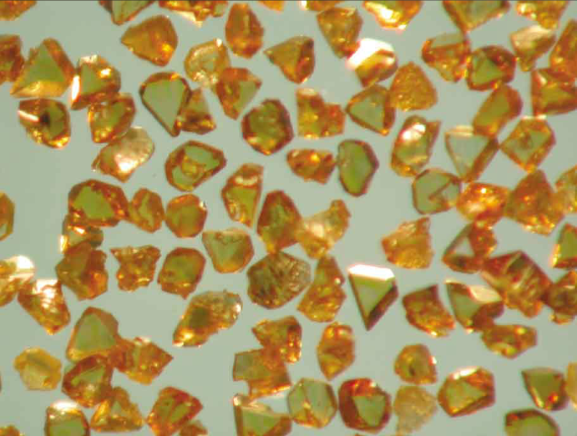
How to Match Diamond Grit to Grinding Wheel Bonds
The bond system determines how diamond particles are retained, exposed and released during grinding[^4]. Therefore, diamond grit selection should consider not only particle size, but also particle strength, morphology, friability and surface treatment.
A suitable match between diamond characteristics and bond behaviour helps maintain cutting efficiency, control wear and achieve stable wheel performance.
Diamond Characteristics for Bond Compatibility
Diamond strength affects resistance to fracture under grinding loads. Higher-strength diamonds are generally preferred for applications requiring longer wheel life and stable cutting performance, while more friable grades can provide faster renewal of cutting edges through controlled fracture.
Particle morphology influences cutting behaviour and bond interaction. Blockier particles generally provide stronger support and longer life, while sharper particles can provide more aggressive cutting action.
Friability is especially important in resin-bond and vitrified-bond wheels, where controlled micro-chipping helps expose fresh cutting edges and maintain grinding efficiency.
Surface treatments and coatings, such as nickel or titanium-based coatings, can improve diamond retention and thermal stability[^5]—particularly in resin-bond (nickel) and metal-bond (titanium/tungsten) systems where interface strength is critical.
Metal-Bond Grinding Wheels
Metal bonds provide strong diamond retention and are commonly used where long wheel life and wear resistance are required.
Diamond grit for metal bonds generally requires high strength, good thermal stability and suitable bond compatibility. Coated diamond, such as Ti, TiC or tungsten, may be selected when improved interface bonding, retention or thermal stability is required.
Resin-Bond Grinding Wheels
Resin bonds require diamond grit with a balance between cutting efficiency and controlled wear. Suitable friability and micro-chipping behaviour help maintain active cutting edges during grinding.
Nickel-coated diamond is commonly used where improved retention is required, helping strengthen the interface between diamond particles and the resin matrix and with improving wheel stability.
Vitrified-Bond Grinding Wheels
Vitrified bonds require diamond grit with consistent strength, morphology and fracture behaviour. The right level of friability allows controlled micro-fracture to maintain cutting activity, while excessive breakage may reduce wheel life and grinding stability.
Consistent particle quality and PSD control are also important for maintaining surface quality in precision grinding applications.
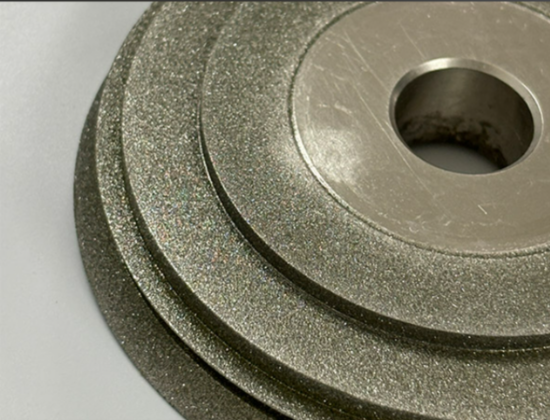
Electroplated and Single-Layer Wheels
Diamond selection therefore focuses on particle shape uniformity, consistent protrusion height and suitable strength, since each grit directly contributes to the cutting performance.
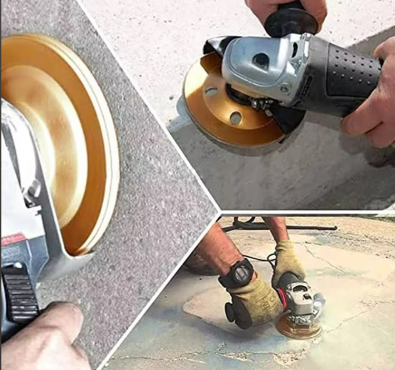
How to Select Diamond Grit by Workpiece and Grinding Stage
The following table summarises common diamond grit selection starting points for different workpiece materials.
| Workpiece | Grinding Stage | Key Diamond Grit Selection |
|---|---|---|
| Stone, concrete and construction materials | Rough grinding | Coarse grit, high impact resistance and good retention |
| Cemented carbide | Rough / general grinding | High-strength grit with good wear resistance |
| Sapphire and hard non-metallic materials | General / precision grinding | Controlled morphology and wear behaviour |
| Advanced ceramics | Rough / precision grinding | High strength with controlled fracture behaviour |
| Glass and optical materials | Finishing | Fine grit with controlled morphology and low damage |
| Semiconductor materials (silicon, SiC and related substrates) | Fine grinding | Consistent micron grit with tight PSD control |
Final grit choice also depends on the bond system, machine parameters, and required grinding performance.
Common Problems When Selecting Diamond Grit for Grinding Wheels
When diamond grit characteristics are not well matched to the grinding application, common issues may occur in efficiency, wheel life and surface quality.
Low grinding efficiency
Grit size, strength or morphology may not provide sufficient cutting performance for the workpiece.
Short wheel life
A mismatch between diamond wear behaviour and bond retention can lead to premature abrasive failure.
Premature diamond pull-out
Insufficient bond interaction or unsuitable particle characteristics may reduce diamond retention.
Poor surface finish
Unsuitable grit size, morphology or PSD control can increase surface defects and grinding marks.
Inconsistent grinding performance
Variations in diamond quality, particle distribution or process compatibility may affect stability.
Selecting diamond grit is therefore not only about particle size. Stable grinding performance depends on the combined balance between diamond characteristics, bond compatibility, workpiece requirements and operating conditions.
Crownkyn Diamond Grit Solutions for Grinding Wheels
Crownkyn supports customers with diamond grit selection based on particle size distribution, crystal characteristics, morphology and coating requirements.
Available solutions include crushed diamond grit, micron diamond powder and coated diamond for resin bond, metal bond, vitrified bond and precision grinding applications.
For grade selection, customers can provide:
- Workpiece material and application
- Grinding wheel bond system
- Required balance between removal rate, wheel life and surface finish
- Current grinding challenges, such as low efficiency, short wheel life or poor surface quality
Based on these parameters, Crownkyn can recommend a starting diamond grit size, grade, morphology and coating option for application testing.
If you are selecting diamond grit for a new grinding wheel or troubleshooting an existing wheel, contact Crownkyn with your workpiece, bond system, current grit specification and target grinding result.
Conclusion
Selecting the right diamond grit for grinding wheels requires considering more than particle size alone. Diamond strength, morphology, PSD control, bond compatibility and workpiece requirements all influence grinding efficiency, wheel life and final surface quality.
The most suitable diamond grit specification depends on the complete grinding process, including the material being processed, grinding stage and required performance balance. By matching diamond characteristics with the wheel bond and application conditions, manufacturers can achieve more stable grinding performance and consistent results.
References
[1] Handbook of Machining with Grinding Wheels
Provides fundamental guidance on how abrasive grain properties and grinding wheel specifications influence grinding forces, wheel wear and surface finish.
[2] Modeling of Material Removal Rate for Fixed-Abrasive Double-Sided Grinding
Examines the relationship between abrasive characteristics, material removal, tool wear and surface quality in fixed-abrasive grinding processes.
[3] Engis Micron Diamond and CBN Powders
Provides industrial guidance on micron diamond particle size distribution and abrasive characteristics for precision grinding, lapping and polishing applications.
[4] Grinding and Other Abrasive Processes
Explains the role of grinding wheel bonds in abrasive grain retention, exposure and release during the grinding process.
[5] The Fabrication of Porous Metal-Bonded Diamond Coatings
Discusses diamond–metal interface behaviour and the influence of bonded structures on diamond retention and grinding performance.
[6] Improved Performance of Electroplated Grinding Wheels
Examines single-layer electroplated grinding wheel structures and the influence of abrasive grain exposure and retention on grinding performance.
Drafted by: Gareth Bayley
Technical Review & Editing: Ashley Wei