Introduction
Selecting diamond powder for metal bond tools requires understanding how diamond particles interact with the metal matrix during tool operation. Unlike loose abrasive applications, diamond particles in metal bond tools must provide the right balance between retention, exposure, and abrasive renewal, while the wear of the metal matrix influences how effectively fresh diamond is exposed. Together, these factors affect cutting efficiency, tool life, and surface quality.
This guide explains how to select diamond powder and diamond grit for metal bond tools based on diamond strength, grit size, morphology, matrix behaviour, and application requirements for cutting, drilling, grinding, and precision processing.
What Are Metal Bond Diamond Tools?
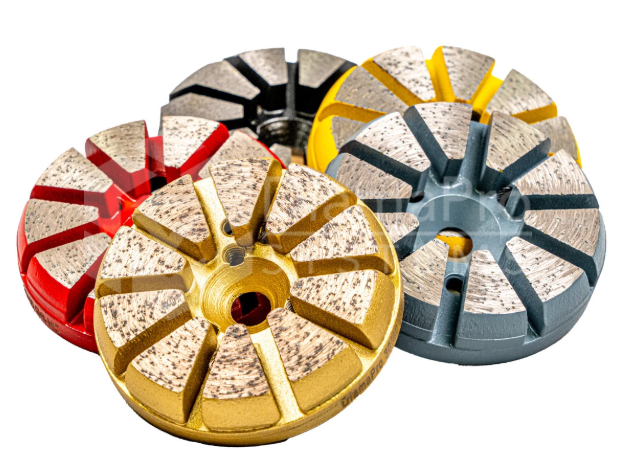
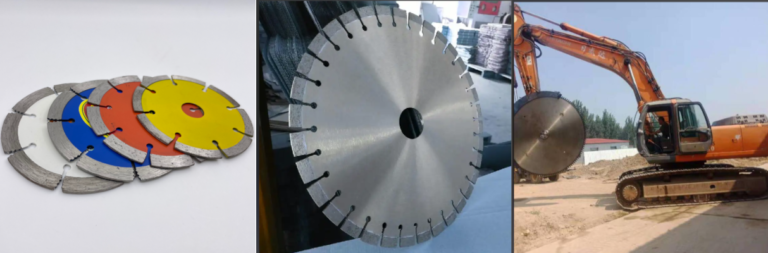
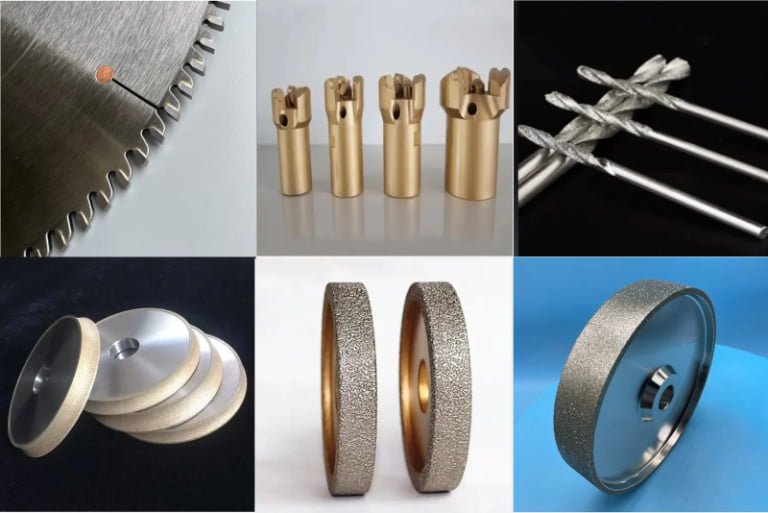
Metal bond diamond tools are bonded abrasive tools in which diamond abrasive grit is embedded within a metal matrix.They are widely used in diamond saw blades, segments, core drills, grinding wheels, and wire saw systems where strong abrasive retention and long tool life are required.
Compared with softer bond systems such as resin bonds, metal bonds generally wear more slowly and retain diamond particles for longer[^1]. This affects the rate at which worn diamond is removed and fresh cutting edges are exposed during tool operation.

What Diamond Characteristics Matter Most for Metal Bond Tools?
For metal bond diamond tools, selection should focus primarily on diamond strength, grit size, and particle morphology. The appropriate balance depends on how long the metal matrix retains the abrasive, the grinding or cutting load, and the required rate of diamond renewal. Coating can be considered for specific matrix systems but is not a primary requirement for every metal bond application.
Diamond Strength and Fracture Behaviour
Metal bond tools generally require medium- to high-strength diamond grit because the metal matrix retains abrasive particles for relatively long periods and may expose them to sustained mechanical loads. Adequate crystal strength helps reduce premature crushing and allows the abrasive to remain effective while the surrounding matrix gradually wears.
The highest-strength grade is not always the best choice. Diamond fracture behaviour should match the matrix wear rate and application[^2] so that worn cutting points can renew without excessive grit breakdown or glazing.
Grit Size
Diamond grit size for metal bond tools affects cutting aggressiveness, chip clearance, cutting-point density, and the resulting surface finish.[^3] Coarser grit generally supports higher material removal and better chip clearance, while finer grit provides more cutting points and is preferred for applications requiring tighter dimensional control and improved surface quality.
For metal bond tools, diamond grit is commonly specified by mesh size, with FEPA or U.S. mesh designations used depending on the market and tool manufacturer. When replacing an existing diamond grade, the actual particle-size range should be confirmed rather than relying only on the nominal mesh designation.
The final grit size should be selected together with the workpiece material, tool design, abrasive concentration, diamond protrusion, and matrix wear behaviour. For detailed mesh and micron size comparisons, refer to our diamond powder particle size guide.
Crystal Morphology
Particle morphology influences cutting-point geometry, particle stability, and how the diamond interacts mechanically with the surrounding matrix. More blocky particles generally provide greater structural stability, while sharper and more irregular morphologies can provide more active cutting edges.
Morphology should therefore be selected together with diamond strength, grit size, matrix characteristics, and the required balance between cutting aggressiveness and abrasive life.
When Is Coated Diamond Used in Metal Bond Tools?
Coated diamond can be considered in selected metal bond systems where improved diamond–matrix interaction or abrasive retention is required. Titanium and other active coatings may promote stronger interfacial bonding in compatible metal matrices, particularly during high-temperature tool manufacturing.
Coating should be selected only after the base diamond strength, grit size and morphology have been defined, as many metal bond tools use uncoated diamond successfully.
For a more detailed explanation of how diamond coatings influence abrasive performance, and bonding behaviour, refer to our coated diamond powder guide.
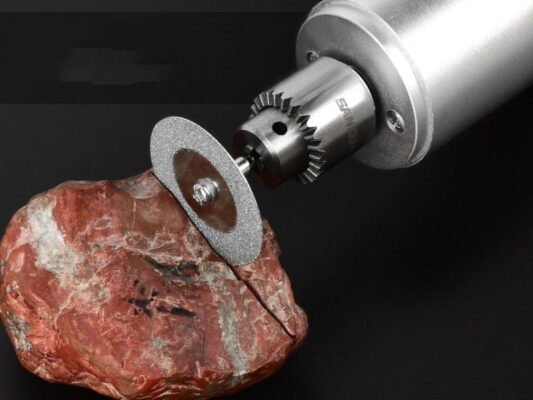
Crushed vs Monocrystalline Diamond for Metal Bond Tools
Both crushed diamond and monocrystalline diamond can be used in metal bond tools, but they provide different combinations of cutting aggressiveness, particle stability, fracture behaviour, and abrasive life. The appropriate type depends on the metal matrix, tool design, grinding or cutting load, and the required balance between cutting efficiency and tool life.
| Diamond Type | Typical Characteristics | Main Performance Direction | Typical Metal Bond Use |
|---|---|---|---|
| Crushed Diamond | Irregular, angular morphology with grade-dependent strength and controlled fracture behaviour | More active cutting and easier abrasive renewal | Grinding and other applications requiring a balance of cutting efficiency and controlled wear |
| Monocrystalline Diamond | More complete crystal structure with generally higher particle integrity and fracture resistance | Greater grit durability and longer abrasive life | Cutting, drilling, and higher-load applications where particle stability is a priority |
The choice should not be based on diamond type alone. Diamond strength, grit size, particle morphology, matrix wear rate, and operating load should be considered together. Crushed diamond may be preferred where more active cutting and controlled renewal are required, while monocrystalline diamond is generally more suitable where grit durability and resistance to premature fracture are higher priorities.

How to Choose Diamond Grit for Different Metal Bond Applications
The most suitable diamond powder for metal bond tools depends on the tool design, workpiece material, operating load, and required balance between cutting efficiency, abrasive life, and surface quality. Different applications place different demands on diamond strength, grit size, particle integrity, and abrasive renewal.
Saw blades, segments, and core drills generally require stronger diamond grit to withstand higher cutting loads[^4], while metal bond grinding wheels require a closer balance between grit durability and matrix wear. Wire saw applications place particular emphasis on particle integrity and consistent cutting performance throughout tool life.[^5]
Diamond Powder for Saw Blades, Segments and Core Drills
Diamond grit for saw blades and core drills generally requires medium- to high-strength grades capable of resisting premature fracture under cutting and impact loads. Grit size should be selected according to the workpiece material, cutting speed, tool design, and required balance between cutting efficiency and segment or drill life.
Coarser grit is commonly used for aggressive cutting and drilling, while medium sizes provide a more balanced cutting action. Crystal strength and morphology should also be matched to matrix wear[^6] so that the diamond remains effective without premature fracture or excessive wear flats.
Diamond Powder for Metal Bond Grinding Wheels
Diamond grit for metal bond grinding wheels must remain stable within the matrix while maintaining effective cutting action as the bond gradually wears. The appropriate strength and fracture behaviour therefore depend on grinding load, matrix retention, and the required rate of abrasive renewal.
Coarser grit is generally selected for higher material removal, while finer grit provides greater cutting-point density for dimensional control and improved surface finish. For precision grinding, consistent grit size, PSD, and particle quality become increasingly important for maintaining stable wheel performance.
Diamond Grit for Wire Saw Applications
Metal bond diamond wire saws require high-strength diamond grit with good particle integrity[^7] because individual particles must remain effective while being retained by the metal bead or matrix during continuous cutting.
Grit size and strength should be matched to the workpiece material, bead design, cutting load, and required wire life. Consistent particle morphology and size distribution also help maintain uniform cutting behaviour and reduce premature abrasive loss during sawing.

Metal Bond Diamond Powder Application Selection Table
| Application | Typical Diamond Direction | Typical Grit Size Direction | Main Selection Focus |
|---|---|---|---|
| Stone & concrete cutting | High-strength mesh diamond | Approx. 30/40–60/70 mesh | Impact resistance, retention, cutting life |
| Core drilling | High-strength mesh diamond | Approx. 30/40–80/100 mesh | Particle integrity, cutting efficiency |
| Stone calibration & grinding | Medium/high-strength grit | Approx. 60/70–170/200 mesh | Material removal, matrix wear, abrasive renewal |
| Precision grinding | Controlled-strength fine grit | Approx. 100/120–325/400 mesh | Dimensional accuracy, finish, wheel stability |
These ranges are practical starting points rather than fixed specifications. Final grit size should be matched to the workpiece material, tool design, metal matrix, grinding or cutting allowance, and required surface finish.
Common Problems in Metal Bond Diamond Tools
Metal bond diamond tool performance depends on the balance between diamond retention, matrix wear, abrasive exposure, and diamond fracture behaviour[^8]. When these factors are not well matched, several common problems can appear during grinding, cutting, or drilling.
Premature Diamond Pull-Out
Typical symptoms: rapid diamond loss, unstable cutting performance, and shorter-than-expected tool life.
Diamond particles may be released before their cutting potential is fully used when matrix retention or diamond–matrix interaction is insufficient[^9]. This increases diamond consumption and reduces the effective service life of the tool.
Glazing and Insufficient Diamond Exposure
Typical symptoms: reduced cutting speed, higher grinding or cutting forces, increased heat, and a smooth or glazed working surface.
If the metal matrix wears too slowly, worn diamond may remain buried or insufficiently exposed instead of being renewed at the working surface. As a result, material removal efficiency decreases and the tool gradually loses cutting ability.
Excessive Matrix Wear
Typical symptoms: rapid segment wear, premature grit loss, unstable diamond exposure, and shortened tool life.
If the metal matrix wears too quickly, diamond particles lose mechanical support and may be released before they are fully utilized. The result is excessive bond consumption and reduced tool life.
Premature Diamond Fracture or Wear
Typical symptoms: rapid loss of cutting efficiency, excessive grit breakdown, unstable cutting behaviour, or deteriorating surface quality.
Diamond that is too weak, too friable, or poorly matched to the operating load may fracture or wear before the surrounding matrix can fully utilize it. Excessive micro-fracture, crushing, or wear-flat formation can therefore reduce cutting stability and abrasive life.
Crownkyn Metal Bond Diamond Powder Solutions
Crownkyn supplies synthetic diamond grit for metal bond cutting, drilling and grinding tools, with controlled options for crystal strength, grit size, morphology, PSD and surface treatment. Both crushed and monocrystalline grades are available for different matrix systems and operating loads.
In practical grade selection, we normally confirm the tool type, workpiece material, current grit size and diamond grade, metal matrix, and the main performance issue before recommending a replacement. For metal bond tools, the objective is usually not simply to increase diamond strength, but to match grit durability and fracture behaviour with matrix wear and diamond exposure.
For new projects or grade replacement, Crownkyn can provide free samples for initial evaluation or comparative testing. Customers can compare cutting efficiency, abrasive retention, tool wear, and surface quality before confirming the production grade. Contact our team with your tool type, workpiece material, current diamond specification, matrix system, and target improvement for a grade recommendation.
Frequently Asked Questions
What Diamond Grit Is Used for Metal Bond Tools?
Metal bond tools generally use medium- to high-strength synthetic diamond grit with the grit size and morphology selected according to the tool type, workpiece material, metal matrix, and operating load.
Is Crushed or Monocrystalline Diamond Better for Metal Bond Tools?
Neither is universally better. Crushed diamond is suitable where active cutting and controlled abrasive renewal are required, while monocrystalline diamond is generally preferred where higher particle integrity and longer abrasive life are priorities.
What Diamond Grit Size Should Be Used for Metal Bond Grinding Wheels?
Metal bond grinding wheels use different diamond grit sizes depending on the grinding stage and required finish. Coarser grit supports higher material removal, while finer grit provides greater cutting-point density, dimensional control, and improved surface finish.
Does Metal Bond Diamond Require Coated Diamond?
No. Many metal bond tools use uncoated diamond successfully. Coated diamond is mainly considered for specific matrix systems where improved diamond–matrix interaction or abrasive retention is required.
Conclusion
Metal bond diamond selection should begin with the required diamond strength and grit size, followed by morphology and any application-specific surface treatment. The selected grit must remain stable long enough to utilize the strong retention of the metal matrix while still allowing effective abrasive renewal as the bond wears.
Matching these characteristics to the tool type, workpiece material and matrix wear behaviour provides a more reliable basis for grade selection than specifying diamond strength or coating alone.
Reference
[1] How to Choose the Right Diamond Bond Type – UKAM
Supports the general differences between metal and resin bond systems, including slower bond wear and stronger abrasive-grain retention in metal-bond tools.
[2] Manufacturing and Characterisation of Highly Porous Metal Bonded Diamond Grinding Wheels – ScienceDirect
Supports the relationship between diamond grain fracture, abrasive exposure, bond wear, and self-sharpening behaviour in metal-bond grinding wheels.
[3] Grinding and Other Abrasive Processes – MSU Engineers
Supports the influence of abrasive grit size on material removal, chip clearance, cutting-point density, and surface finish.
[4] Understanding the Wear Mechanisms of Diamond Circular Saw Blades – ScienceDirect
Supports the need for sufficient diamond grit strength and particle integrity in metal-bond saw blades and other high-load cutting applications.
[5] Recent Advances in Precision Diamond Wire Sawing – PMC
Supports the importance of abrasive-grain retention, particle integrity, and consistent cutting behaviour in diamond wire sawing.
[6] Wear Evolution of Metal Bond Diamond Tool in Grinding of Sapphire – ScienceDirect
Supports the interaction between diamond grit characteristics, bond wear, abrasive exposure, and tool performance in metal-bond grinding.
[7] Fixed Abrasive Diamond Wire Machining—Part II – University of Michigan
Supports the requirement for adequate diamond grit strength, integrity, and retention during continuous wire-saw machining.
[8] Wear Mechanism of Metal Bond Diamond Wheels Trued by Wire EDM – University of Michigan
Supports the role of matrix wear, diamond protrusion, grain retention, and abrasive fracture in the wear behaviour of metal-bond diamond wheels.
[9] Research Progress on Additively Manufactured Diamond Tools – PMC
Supports the relationship between diamond–matrix interaction, abrasive retention, and premature diamond pull-out in metal-bond diamond tools.
Drafted by: Gareth Bayley
Technical Review & Editing: Ashley Wei