Introduction
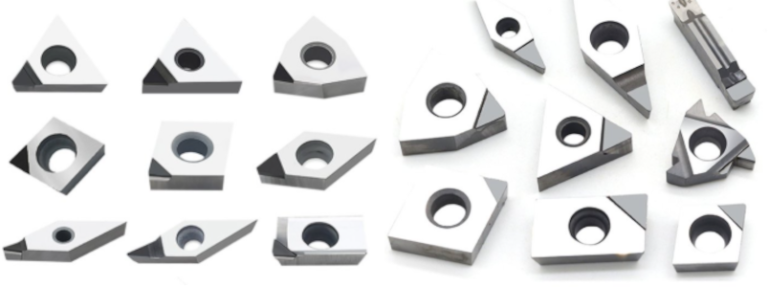
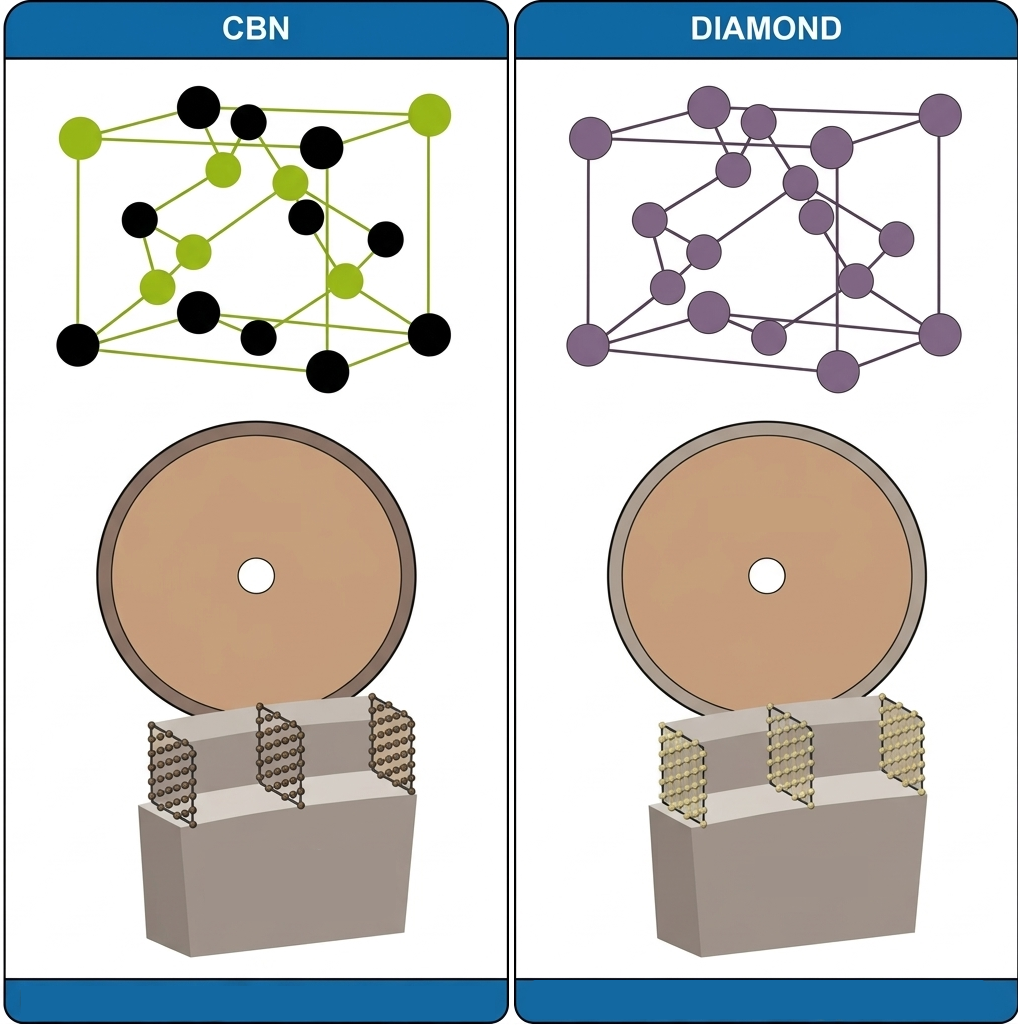
Cubic boron nitride (CBN) and diamond are superabrasives used for grinding and precision finishing1, but they are suited to different workpiece materials. CBN is commonly selected for grinding hardened steels because it is more chemically stable than diamond when working with iron at elevated grinding temperatures. Diamond, with its higher hardness and wear resistance, is widely used for grinding cemented carbides, glass, technical ceramics, and other suitable hard materials.
This guide compares their key differences, typical applications, and abrasive forms to help manufacturers select CBN or diamond for specific processing requirements.
What Are the Key Differences Between CBN and Diamond?
The main difference in abrasive selection is how CBN and diamond perform against different workpiece materials, particularly under the heat generated during grinding.
| Key difference | CBN | Diamond |
|---|---|---|
| Hardness and wear resistance | Extremely hard and wear-resistant, making it suitable for demanding grinding applications | Harder than CBN and highly wear-resistant, particularly when grinding hard, abrasive materials |
| Chemical compatibility with iron | More chemically stable than diamond when grinding hardened steels at elevated temperatures | Interaction with iron at elevated grinding temperatures can accelerate abrasive wear |
| Typical grinding applications | Hardened steels, bearing steels, hardened tool steels, and selected other ferrous materials | Cemented carbides, glass, technical ceramics, and suitable composite materials |
CBN vs Diamond: Selection by Workpiece Material
The choice between CBN and diamond abrasives depends on several factors that need to be considered together. The following compares the two abrasives across different material groups and explains where each is best suited.
Hardened Steels and Other Ferrous Materials
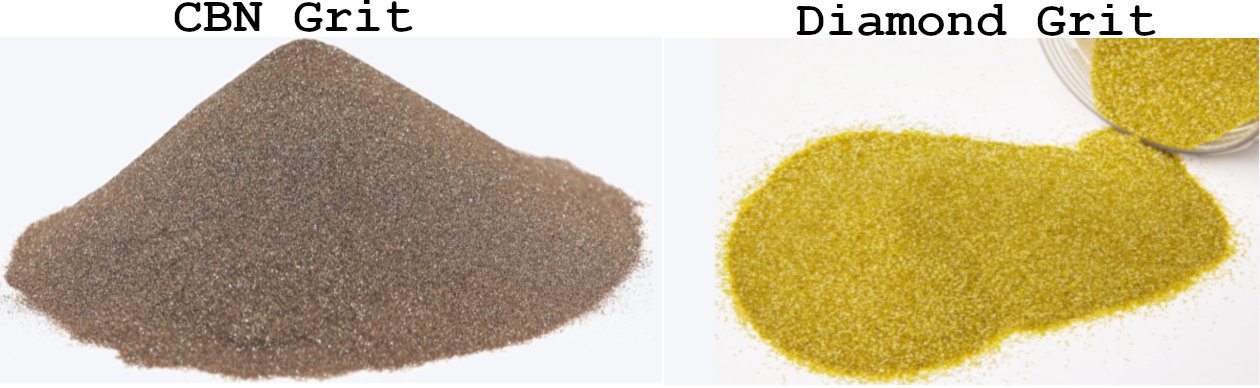
CBN abrasives is commonly selected for grinding hardened steels, including hardened tool steels and bearing steels, where abrasive wear resistance and chemical compatibility with the workpiece are important. Mesh CBN can be used in bonded grinding tools, with the grit size and grade selected according to the grinding operation and wheel design.
Diamond abrasives is generally less suitable for conventional grinding of hardened steels because interaction with iron at elevated grinding temperatures can accelerate diamond wear. For softer steels, cast irons, and other ferrous alloys, abrasive selection should also consider the material’s hardness and microstructure, the machining process, and the required performance and cost.
Cemented Carbides
Diamond abrasives are commonly used for grinding cemented carbides, which contain hard carbide grains held within a metallic binder. Diamond's high hardness and wear resistance make it suitable for grinding the hard carbide phase, although abrasive performance also depends on the carbide grade, grinding wheel design, and operating conditions.
Crushed mesh diamond can be considered for bonded grinding wheels used in cemented carbide processing. Its angular particle morphology provides cutting edges, while the appropriate grit size and diamond grade should be selected according to the material removal requirements, surface finish, and bond system.
Glass and Optical Materials
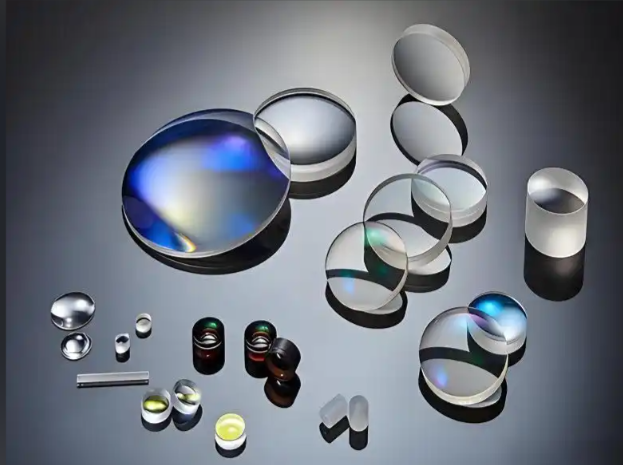
Diamond abrasives are commonly used for grinding and lapping glass and optical materials2. Their high hardness and wear resistance make them suitable for material removal and surface preparation, while the abrasive form and particle size should be matched to the processing stage.
Crushed diamond grit is suitable for glass grinding and edge processing, with the grit size and grade selected according to the material removal requirements. For fine lapping and selected polishing applications, micron diamond powder can be used to achieve the required surface finish, with particle size selected according to the glass type and finishing requirements.
Technical Ceramics
Diamond abrasives are commonly used for grinding, lapping, and polishing hard, brittle ceramics3. Their high hardness and wear resistance make them suitable for material removal and surface finishing, with the abrasive form and particle size selected according to the processing stage.
Coarser diamond abrasives are typically used for grinding and shaping, while finer diamond powders can be used for precision lapping and selected polishing applications. For more detailed guidance on abrasive selection and finishing requirements, see our diamond powder for ceramic polishing guide.
Composite Materials
Diamond abrasives are commonly used for grinding and finishing composites containing hard or abrasive reinforcements, such as ceramic particles and carbon fibres. Their hardness and wear resistance make them suitable for processing these materials, although abrasive selection also depends on the matrix material and the machining method.
Coarser diamond abrasives are generally used for grinding and material removal, while finer abrasives can be selected for precision grinding, lapping, and surface finishing. The appropriate abrasive form and particle size depend on the composite structure and the required surface quality.

CBN vs Diamond: Selection by Processing Method
After selecting CBN or diamond for the workpiece material, the processing method determines the appropriate abrasive form and particle size.
Grinding: CBN grit and diamond grit are used in bonded grinding tools. Coarser grit is generally selected for higher material removal, while finer grit may be used where a finer surface finish is required. The final specification depends on the tool design and grinding conditions.
Fine Grinding and Lapping: Micron CBN powder can be used for suitable hardened ferrous materials, while micron diamond powder is widely used for precision grinding and lapping of hard, brittle materials. Particle size should be selected according to the processing stage and target surface condition.
Polishing: Micron diamond powder can be used in selected polishing applications where fine abrasive particles are required. The choice of powder size and polishing process depends on the workpiece material and surface requirements.
For bonded tools, the abrasive grade must also be compatible with the bond system and manufacturing process.
How Do Bond Systems and Processing Conditions Affect Abrasive Selection?
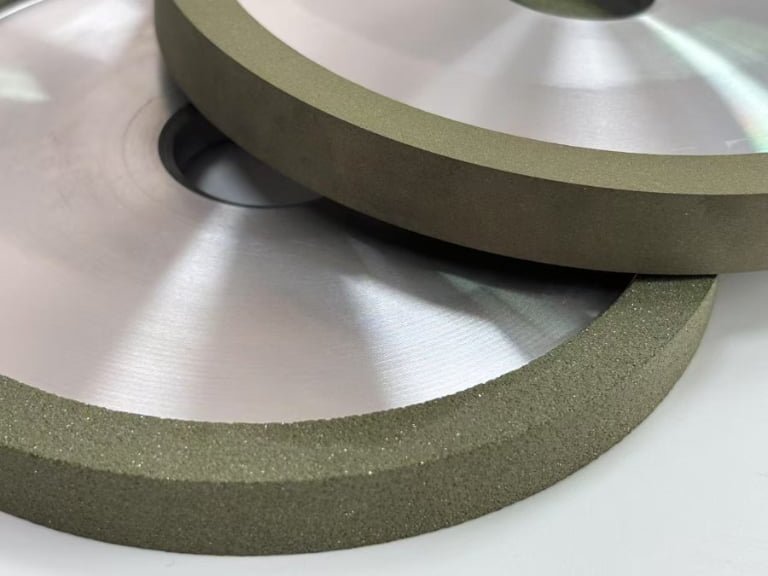
Both CBN and diamond are used in resin-bonded, vitrified-bonded, metal-bonded, and electroplated tools. The bond system affects abrasive retention, grain exposure, and wheel wear while the manufacturing process may place different requirements on the abrasive grade or coating. Selecting CBN or diamond based on the workpiece material is therefore only the first step; the abrasive specification must also be compatible with the intended tool.
Grinding load, operating temperature, coolant, and dressing conditions can further affect abrasive performance. These factors are particularly important when evaluating diamond for ferrous materials, where elevated grinding temperatures can accelerate chemical wear. For other applications, the appropriate grade and grit size should be confirmed against the actual grinding conditions.
Common Mistakes in CBN and Diamond Abrasive Selection
Selecting an abrasive based on hardness alone. Diamond is harder than CBN4, but this does not make it the preferred abrasive for every hard material. Chemical compatibility with the workpiece is particularly important when grinding hardened steels.
Treating all ferrous or non-ferrous materials as one category. Hardened steel, soft steel, cast iron, cemented carbide, and different composite materials have different machining requirements. Abrasive selection should consider the specific material and processing method rather than relying on a broad material category.
Choosing grit size without considering the tool and finishing stage. The same abrasive type may require different particle sizes for grinding, lapping, or polishing. For bonded tools, the bond system and operating conditions must also be considered.
Crownkyn CBN and Diamond Abrasive Solutions
Crownkyn supplies CBN grit, micron CBN powder, diamond grit, and micron diamond powder for grinding, lapping, and finishing applications.We help customers select a suitable abrasive type, particle size, and grade based on the workpiece material, processing method, and tool requirements.
To recommend a suitable starting specification, please provide the following information:
| Information | Details to Provide |
|---|---|
| Workpiece material | Material type and grade; hardness, if known |
| Processing method | Grinding, honing, lapping, or polishing |
| Tool or bond system | Resin, vitrified, metal, electroplated, or other tool type, if applicable |
| Current abrasive specification | CBN or diamond type, grit size, and grade, if known |
| Target requirements | Material removal rate, surface finish, tool life, or the problem to be improved |
For new applications or grade replacement, we can recommend candidate specifications for sample testing. Available particle-size and PSD data can also be provided to support product comparison and evaluation.
Contact Crownkyn to request an abrasive recommendation or sample for your application.
Frequently Asked Questions About CBN vs Diamond Abrasives
Is diamond harder than CBN?
Yes. Diamond is harder than CBN, but hardness alone does not determine which abrasive is suitable for a workpiece. CBN is commonly selected for hardened steel grinding because of its greater chemical stability in contact with iron at elevated grinding temperatures.
Why is CBN used instead of diamond for grinding hardened steel?
CBN is generally preferred for hardened steel grinding because it has better chemical compatibility with iron under elevated grinding temperatures. Diamond can undergo accelerated chemical wear under these conditions, despite being harder than CBN.
Is CBN or diamond better for grinding carbide?
Diamond is generally preferred for grinding cemented carbides because its high hardness and wear resistance make it suitable for processing the hard carbide phase. The diamond grit size and grade should be selected according to the carbide material, grinding wheel design, and required surface finish.
Can diamond abrasives be used on steel?
Diamond can be used on steel in certain specialized or low-temperature processes, but it is generally not preferred for conventional grinding of hardened steels. At elevated grinding temperatures, chemical interaction with iron can accelerate diamond wear, making CBN a more suitable choice for many hardened steel grinding applications.
Which abrasive is suitable for grinding ceramics, CBN or diamond?
Diamond is commonly selected for grinding hard, brittle technical ceramics because of its high hardness and wear resistance. Coarser diamond abrasives are used for grinding and shaping, while finer diamond powders can be used for precision lapping and selected polishing applications.
Reference
Drafted by: Gareth Bayley
Technical Review & Editing: Ashley Wei
ASM Handbook, "[Superabrasives](https://dl.asminternational.org/handbooks/book/33/chapter-abstract/447129/Superabrasives)." Reference for the classification and industrial use of diamond and CBN as superabrasives. ↩
"[Fine Grinding Mechanism Using Bound Diamond Abrasives](https://opg.optica.org/abstract.cfm?uri=ao-26-21-4670)." Research on diamond abrasives used in optical glass fine grinding. ↩
"[Material Removal Mechanism of SiC Ceramic by Porous ...](https://pmc.ncbi.nlm.nih.gov/articles/PMC11173562/)." Research on diamond abrasive machining of SiC ceramics. ↩
"[Vickers Hardness of Diamond and cBN Single Crystals](https://www.mdpi.com/2073-4352/7/12/369)." Research comparing the hardness of diamond and cubic boron nitride. ↩