Introduction
Selecting the right Cubic Boron Nitride (CBN) micron powder requires matching particle size, PSD, purity, morphology, and crystal characteristics to the intended grinding or manufacturing process. These factors influence material removal, abrasive wear, surface finish, and the consistency of the finished product.
This guide explains the key CBN micron powder characteristics that should be evaluated during grade selection and provides practical guidance for matching specifications to manufacturing requirements.
What Is CBN Micron Powder?
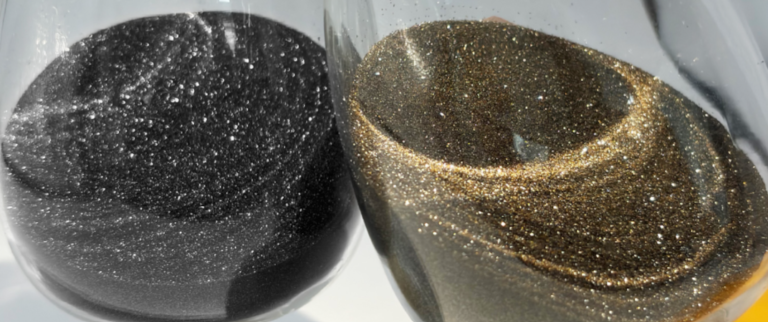
Cubic boron nitride (CBN) is a synthetic superhard material composed of boron and nitrogen, with hardness second only to diamond among commonly used superabrasives[^1]. CBN combines high hardness with strong thermal stability and greater chemical stability toward ferrous materials than diamond[^2], making it particularly suitable for processing hardened steels and similar alloys.
CBN micron powder is produced by processing and classifying CBN into controlled micron and sub-micron particle-size ranges. Different specifications are defined by particle size and PSD, purity, morphology, and crystal characteristics to meet different processing requirements.CBN micron powder is used in precision grinding, lapping, honing, and fine finishing of hardened ferrous materials, as well as a raw material for PCBN manufacturing.
Which CBN Micron Powder Characteristics Affect Performance?
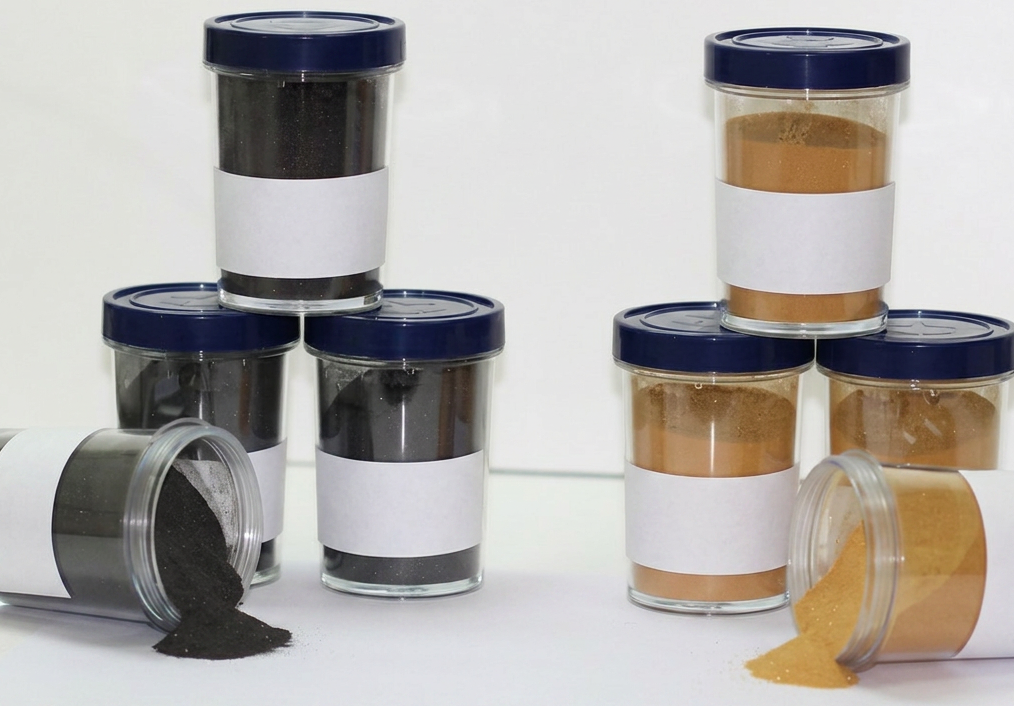
CBN micron powder should be selected according to the processing method and target performance rather than by particle size alone. Key specification parameters include particle size and PSD, purity, morphology, crystal strength and friability, and batch consistency.
Particle Size and PSD
Particle size affects material-removal capability, surface finish, and processing precision[^3]. Larger particles generally provide stronger cutting action, while finer particles are selected as surface-finish and dimensional requirements become more demanding.
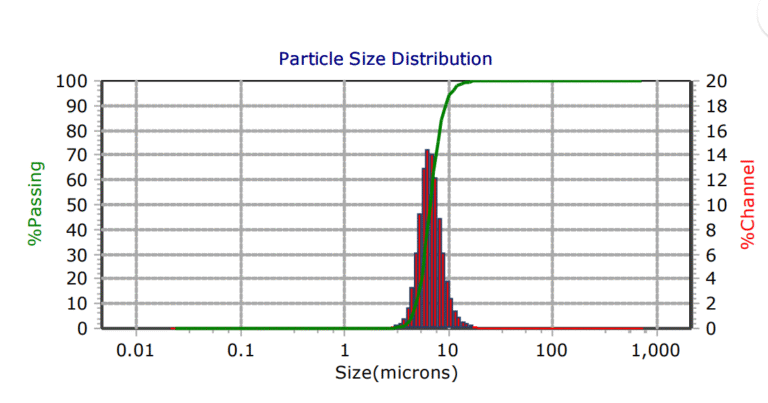
Particle size distribution (PSD) determines how tightly the abrasive population is controlled around the specified size. Parameters such as D10, D50, and D90, together with oversize control where required, help define the usable particle-size distribution. A controlled PSD supports predictable cutting behaviour and reduces the risk of isolated coarse particles affecting the finished surface.
Purity
Purity is particularly important where residual hBN, catalyst-related impurities, oxides, or other contaminants may affect abrasive performance or downstream manufacturing.
The required purity level depends on the application. Precision finishing may prioritize surface cleanliness and process stability, while CBN powder used for PCBN manufacturing may require tighter control of impurities that could affect sintering and the properties of the finished compact.
Morphology
Blockier particles generally provide greater mechanical stability, while more angular or irregular particles provide more active cutting edges. The preferred morphology depends on the required balance between cutting efficiency, particle durability, and surface finish.
Crystal Strength and Friability
Crystal strength determines resistance to mechanical breakdown, while friability describes the tendency of the abrasive to fracture and renew its cutting edges during use.
Higher-strength particles provide greater resistance to breakdown, whereas more friable particles promote abrasive renewal through controlled fracture. Excessive strength can reduce self-sharpening as cutting edges wear, while excessive friability may cause premature breakdown. The optimum balance depends on the workpiece, process conditions, and tool system.
Batch Consistency
For production applications, lot-to-lot consistency is as important as the nominal specification. Variations in particle size distribution, purity, morphology, or crystal characteristics can change cutting behaviour, surface finish, tool performance, and downstream manufacturing results.
Stable manufacturing and quality control therefore help ensure that a qualified CBN micron powder specification performs consistently across repeated production batches.
How to Select CBN Micron Powder by Application
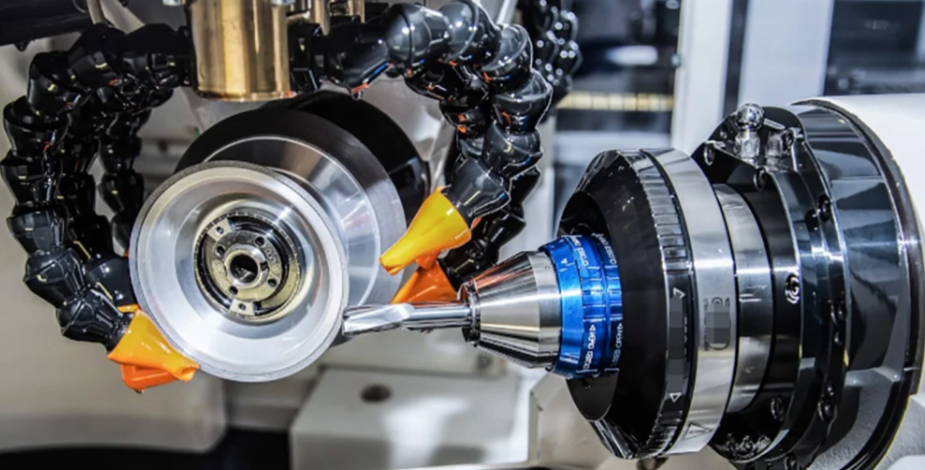
CBN micron powder should be selected first by processing method, then by particle size and PSD, crystal characteristics, purity, and process compatibility. Unlike coarser CBN mesh grit used in general grinding wheels and electroplated tools, micron CBN is mainly used where finer abrasive control is required, including fine grinding and honing, lapping and finishing, specialized fine-grit bonded tools, and PCBN manufacturing.
A practical selection sequence is:
Application → Particle Size & PSD → Crystal Characteristics → Purity / Surface Requirements → Process Testing
Fine Grinding and Honing
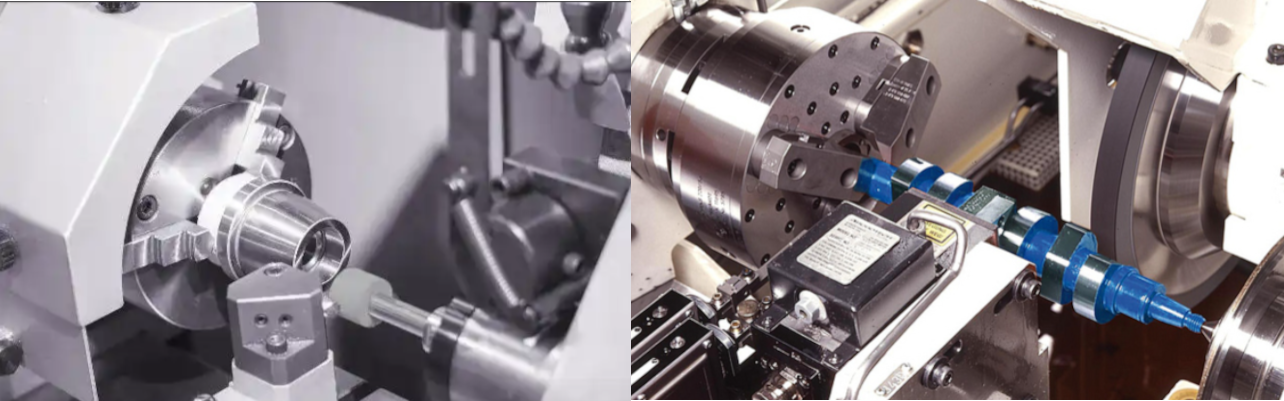
Fine grinding and honing require controlled particle size and PSD together with a suitable balance between cutting activity and abrasive durability. Crystal strength and morphology should be matched to the tool structure, bond system, grinding load, and required surface finish.
For repeat production, batch-to-batch consistency in PSD, morphology, and crystal characteristics is also important because abrasive variation can affect cutting behaviour, dimensional control, and finished surface quality.
Lapping and Fine Finishing
For lapping and fine finishing, PSD and oversize control become increasingly important. Oversize particles or agglomerates can increase the risk of isolated deep scratches, particularly as surface-finish requirements become more demanding.
When CBN micron powder is used as a loose abrasive or in a compound or dispersion, particle size, morphology, abrasive concentration, and carrier compatibility should be evaluated together. The final specification should be matched to the required removal rate and target surface condition.
Fine-Grit Bonded Abrasive Tools
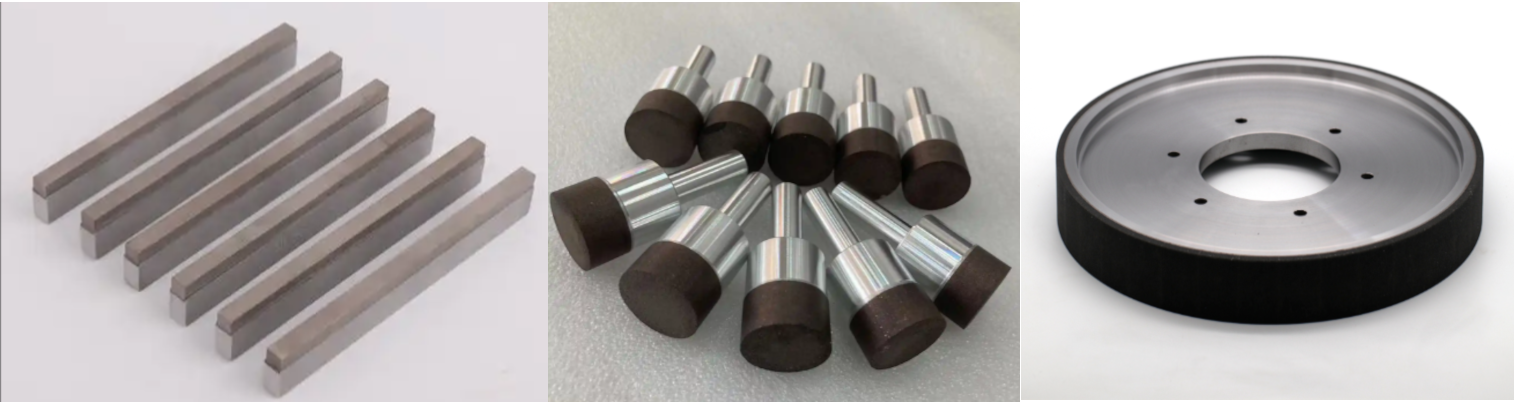
Micron CBN is also used in specialized fine-grit bonded tools for precision grinding, honing, and finishing. In these applications, abrasive properties must be matched to the bond formulation because resin, vitrified, and metal systems differ in grain retention, abrasive exposure, thermal conditions, and wear behaviour[^5].
| Bond System | Main Micron CBN Selection Focus |
|---|---|
| Resin | Cutting activity, controlled abrasive renewal, PSD, grain–bond compatibility |
| Vitrified | PSD, grain durability, abrasive renewal, thermal compatibility |
| Metal | Crystal strength, morphology, grain retention, interface compatibility |
Surface treatment or coated CBN may also be considered where improved grain–bond interaction is required, but coating selection should be matched to the specific bond formulation and manufacturing process rather than treated as a universal upgrade.
For initial grade evaluation, resin bond CBN micron powder can be considered where good cutting activity and controlled abrasive renewal are required. For applications requiring a balance between cutting performance and grain durability, CBN micron powder for vitrified and metal bond systems can provide a suitable starting point. High-strength CBN micron powder may be considered where greater crystal strength and abrasive life are required.
These grades should be treated as starting points for comparative testing rather than fixed recommendations for a specific bond system.
CBN Micron Powder for PCBN Manufacturing
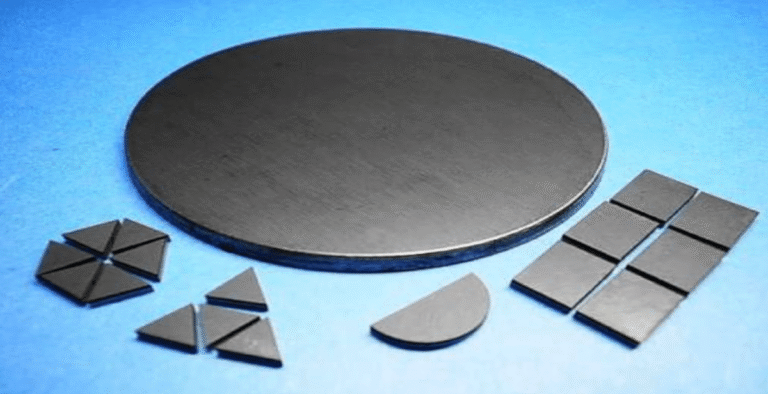
In PCBN manufacturing, CBN micron powder functions as a starting material for sintering and microstructure development rather than as a directly exposed abrasive[^6]. Selection therefore follows a different logic from grinding and finishing applications.
Particle size and PSD influence particle packing and microstructure, while purity, crystal characteristics, and thermal stability can affect behaviour during high-pressure, high-temperature processing. The binder system, CBN content, sintering conditions, and target properties of the finished PCBN material must also be considered[^7].
For grade replacement or new PCBN development, we recommend evaluating CBN micron powder against the existing formulation through comparative sintering tests rather than selecting a grade from particle size alone. Once a suitable specification is established, batch consistency becomes important for maintaining repeatable sintering and finished-material performance.
Micron CBN Powder Selection Guide
| Application | Main Selection Priorities | Process Considerations | Example Starting Grades |
|---|---|---|---|
| Fine Grinding & Honing | Particle size, PSD, cutting activity, crystal strength | Match abrasive characteristics to grinding load, tool structure, bond system, and target finish | B15M / B50M |
| Lapping & Fine Finishing | Particle size, oversize control, morphology, dispersion | Match the powder to carrier system, abrasive concentration, removal rate, and target finish | Application-dependent |
| Fine-Grit Bonded Tools | PSD, crystal strength, morphology, grain–bond compatibility | Balance abrasive renewal and grain retention according to resin, vitrified, or metal bond formulation | B15M / B50M / A80M |
| PCBN Manufacturing | Particle size & PSD, purity, crystal characteristics, thermal stability | Match the powder to binder system, CBN content, sintering process, and target PCBN properties | Application-dependent* |
*Starting grades should be confirmed through comparative grinding or sintering tests under the actual processing conditions.
Common CBN Micron Powder Selection Problems
An unsuitable CBN micron powder specification can affect material removal, surface finish, abrasive life, process stability, or finished-product consistency. Common selection problems include:
Incorrect Particle Size or PSD
Particle size that is too coarse or a PSD with excessive oversize can increase scratching and reduce surface consistency. An overly fine specification may reduce cutting efficiency or material removal. Particle size and PSD should therefore be matched to the processing stage and target finish.
Poor Grain Retention in Bonded Tools
Premature grain loss may occur when the CBN crystal characteristics, morphology, surface condition, and bond system are not well matched. For fine-grit bonded tools, abrasive selection should be evaluated together with bond formulation and grinding load.
Low Cutting Efficiency or Rapid Abrasive Wear
If the CBN is too durable for the required cutting action, cutting efficiency may decline as the abrasive wears. If it breaks down too readily, abrasive life may be shortened. Crystal strength and fracture characteristics should be balanced according to the application and processing conditions[^8].
Purity or Process Compatibility Issues
Purity becomes particularly important where contaminants can affect abrasive formulation, bonded-tool manufacturing, or PCBN sintering. The required purity should be specified according to the process rather than treated as a universal grade indicator.
Batch-to-Batch Variation
Changes in particle size, PSD, morphology, purity, or crystal characteristics can produce inconsistent processing results between production batches. For repeat manufacturing, these characteristics should be controlled against an agreed specification.
Crownkyn CBN Micron Powder Solutions
Crownkyn supplies CBN micron powder for fine grinding, honing, lapping and finishing, fine-grit bonded tools, and PCBN manufacturing. Available specifications can be selected by particle size and PSD, purity, morphology, crystal characteristics, and application requirements.
For grade selection, we evaluate the workpiece material, processing method or bond system, current CBN specification, and target performance to identify a suitable starting specification. For new projects, grade replacement, or cross-reference evaluation, sample quantities and available particle-size / PSD test data can also be provided for comparative testing before production-grade confirmation.
Contact Crownkyn with your application, current CBN specification, particle size, and target improvement to request a grade recommendation or comparative sample.
Frequently Asked Questions About CBN Micron Powder
What is CBN micron powder used for?
CBN micron powder is used where finer abrasive control is required, including precision grinding, honing, lapping, fine finishing, specialized fine-grit bonded tools, and PCBN manufacturing. The required specification depends on particle size, PSD, crystal characteristics, purity, and the processing method.
How do I choose the right CBN micron powder size?
Larger micron sizes generally provide stronger cutting action and higher material removal, while finer particles are selected as dimensional accuracy and surface-finish requirements increase. Final size selection should be matched to the processing stage, workpiece material, tool or carrier system, and target finish.
What is the difference between CBN mesh grit and CBN micron powder?
CBN mesh grit consists of coarser abrasive particles commonly used in grinding wheels and electroplated tools, while CBN micron powder is more finely classified and used where tighter particle-size control is required. Micron powder places greater emphasis on PSD, oversize control, purity, morphology, and batch consistency.
Can CBN micron powder be used for PCBN manufacturing?
Yes. CBN micron powder can be used as a raw material for PCBN manufacturing, where particle size and PSD, purity, crystal characteristics, thermal stability, and sintering compatibility become important. The final specification should be matched to the binder system, CBN content, sintering process, and target PCBN properties.
Conclusion
CBN micron powder should be selected according to the application, particle-size requirements, crystal characteristics, and manufacturing process rather than particle size alone. Fine grinding, finishing, bonded tools, and PCBN manufacturing place different demands on PSD, morphology, purity, strength, and process compatibility.
Comparative testing remains the most practical way to confirm the final specification for a specific process.
References
[1] Boron Nitride | Synthesis, Properties, Uses – Britannica
Supports CBN as a superhard material with hardness second only to diamond.
[2] Carbon-Based Wear Coatings: Properties and Applications – NASA
Supports the greater chemical stability of CBN than diamond when processing ferrous materials.
[3] Developing an Analytical Model and Computing Tool for Abrasive Processes – PMC
Supports the influence of abrasive particle size on material removal, surface finish, and processing precision.
[4] Influence of the Geometrical Features of Abrasive Cutting Edges – PMC
Supports the effect of particle morphology on cutting behaviour, wear, and surface condition.
[5] Resin Bond CBN Grinding Wheels – SuperAbrasives
Supports the different grain-retention and wear characteristics of resin, vitrified, and metal bond systems.
[6] Polycrystalline Cubic Boron Nitride Sintered Compacts – HERO / EPA
Supports the use of CBN powder as a starting material for PCBN sintering and microstructure development.
[7] Bi-layer cBN-Based Composites Reinforced with Oxide and Non-Oxide Phases – PMC
Supports the influence of binder system, CBN content, and sintering conditions on PCBN properties.
[8] Study on Preparation and Grinding Performance of Vitrified Bond CBN – PMC
Supports the relationship between crystal strength, friability, self-sharpening, and grinding performance.
Drafted by: Gareth Bayley
Technical Review & Editing: Ashley Wei