Introduction
Selecting diamond abrasives for polishing pads requires more than choosing the appropriate particle size. Different polishing stages, bond systems and operating conditions place different demands on abrasive cutting behaviour, wear resistance and surface finish. The same diamond grade may perform differently depending on the polishing pad formulation and range of materials being processed.
This guide explains how to evaluate a range of diamond abrasives, match abrasive characteristics to different bond systems and select diamond grades for surface refinement, polishing, fine finishing and specialized polishing pad requirements.
Why Are Diamond Abrasives Used in Polishing Pads?
Diamond abrasives are used in polishing pads because their high hardness, wear resistance and cutting ability[^1] allow them to process hard and abrasive materials such as concrete, granite, marble and engineered stone.
Compared with conventional abrasives, diamond abrasives can maintain effective cutting action when processing materials that cause rapid abrasive wear. This makes diamond particularly suitable for polishing systems requiring controlled material removal, progressive surface refinement and consistent finishing performance.
What Factors Affect Diamond Abrasive Selection for Polishing Pads?
When selecting diamond abrasives for polishing pads, the main factors to evaluate are:
- Crystal strength and friability: Determine resistance to particle fracture and cutting-edge renewal. Stronger grades should be considered where premature grain fracture limits abrasive life, while more friable grades may help maintain cutting efficiency when retained particles become dull. Selection must account for bond retention, abrasive exposure and operating load.
- Particle size and distribution: Influence material removal and scratch depth. Consistent sizing and control of oversized particles[^2] are particularly important for achieving repeatable polishing results.
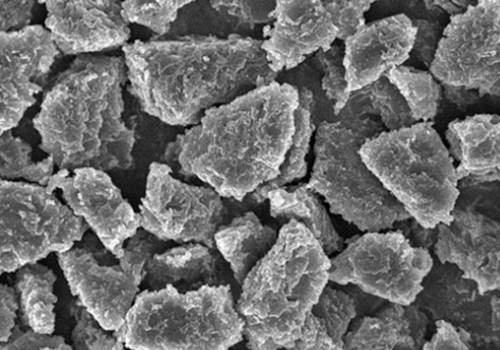
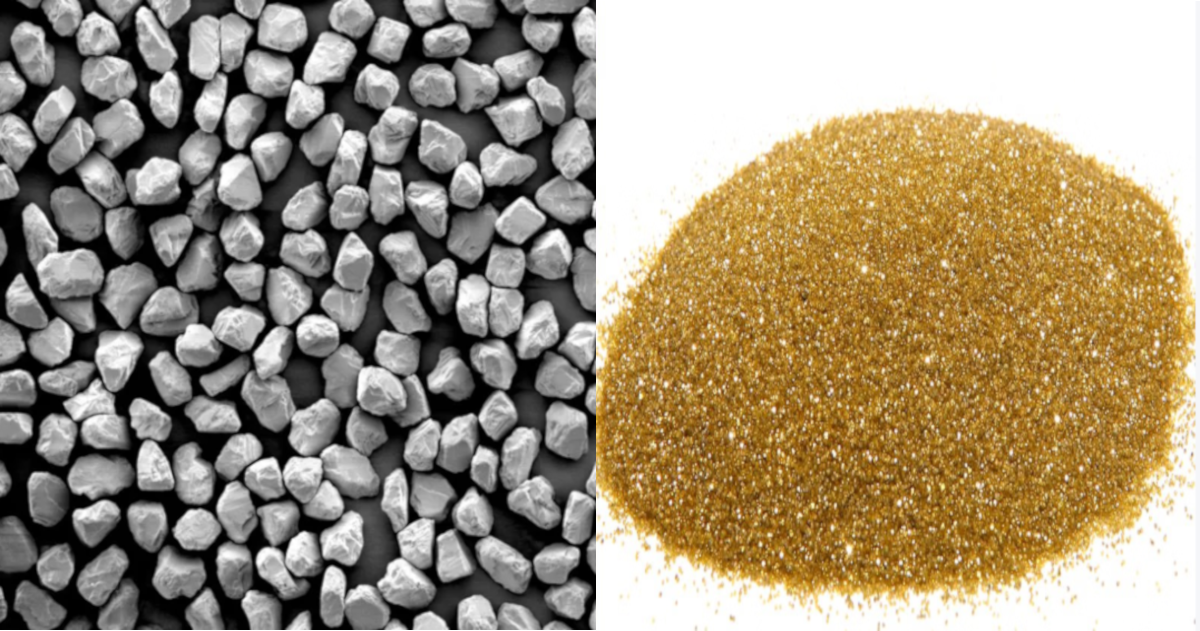
- Particle morphology: Influences cutting aggressiveness, mechanical retention and fracture behaviour. More angular particles may be considered where aggressive initial cutting is required, while regular, blocky grains may be preferable where crystal integrity and resistance to premature breakdown are priorities. Confirm morphology alongside crystal strength and bond retention.
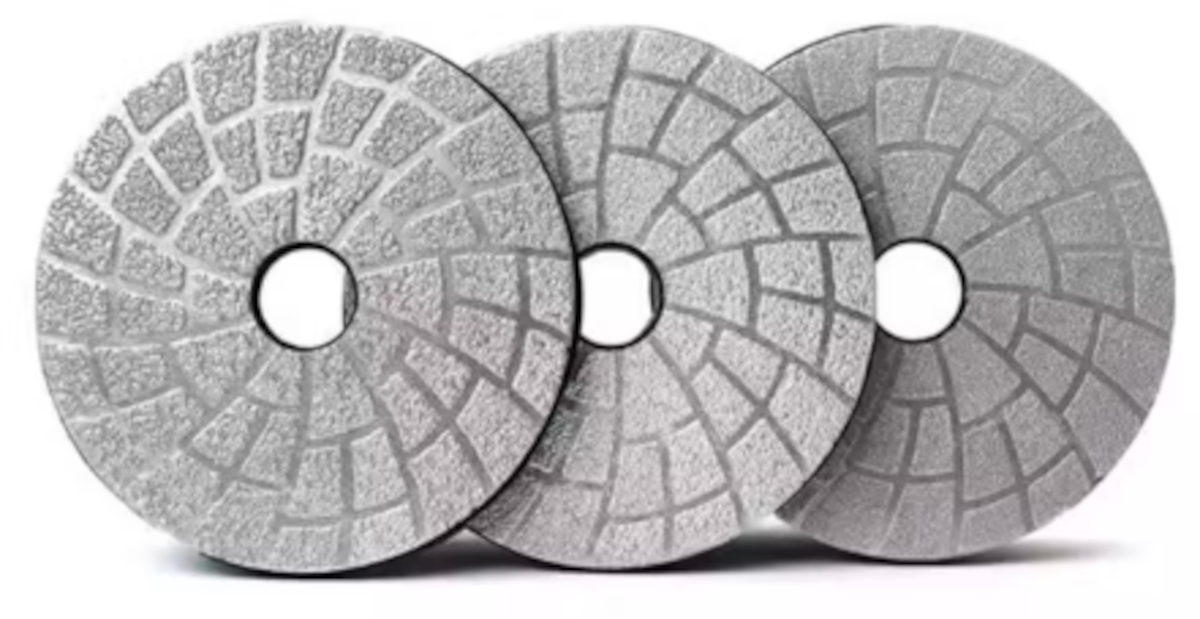
- Bond type: The bond types used in polishing pads differ in abrasive retention, diamond exposure and wear behaviour. These characteristics determine the requirements for diamond-bond compatibility, particle retention and controlled abrasive renewal.
- Surface coatings: Can modify diamond-bond adhesion and particle retention. Coating suitability depends on the abrasive grade and pad formulation.
- Diamond concentration: Influences abrasive contact, material removal and polishing pad wear. Higher concentrations do not necessarily improve polishing efficiency or pad life[^3], as excessive diamond loading can affect bond coverage, particle distribution and abrasive exposure. Diamond concentration should be evaluated together with crystal strength, particle size and bond retention, since changes in abrasive loading can affect the cutting load per grain, particle exposure and wear behaviour.
How Should Diamond Abrasives Be Selected for Different Polishing Pad Types?
Diamond abrasive selection depends on the polishing pad's bond system, intended polishing stage, operating conditions and range of materials being processed. Diamond type, particle size and grade characteristics should be selected together to achieve the required cutting performance, surface finish and abrasive life.
Metal-Bond Grinding and Refinement Pads
Metal-bond floor grinding and refinement pads require diamond grit capable of withstanding high contact loads[^4] while maintaining effective material removal. The metal matrix typically provides strong abrasive retention, making diamond strength and controlled exposure important selection considerations.
- Diamond type: Select higher-strength monocrystalline diamond grit for demanding grinding applications. Moderately friable grades may be considered where controlled fracture is required to maintain cutting efficiency[^5].
- Particle size: Select coarser mesh diamond grit according to required stock removal and allowable scratch depth before subsequent polishing stages.
- Grade selection: Prioritize crystal strength and resistance to premature fracture. Match diamond wear and fracture characteristics to the metal bond's retention strength and wear rate.
Coated diamond powder may also be considered where improved diamond–metal matrix compatibility or abrasive retention[^6] is required, depending on the coating and bond formulation.
Hybrid-Bond Transitional Polishing Pads
Hybrid-bond pads combine resin and metal bond characteristics and are often used to remove grinding marks before finer polishing stages. Diamond selection must balance abrasive durability with sufficient cutting-edge renewal.
- Diamond type: Select medium-to-high-strength diamond grit with moderate friability, depending on the hybrid bond formulation and abrasive loading.
- Particle size: Choose grit fine enough to remove previous grinding marks while retaining sufficient cutting ability for transitional polishing.
- Grade selection: Prioritize controlled diamond fracture and consistent abrasive exposure as the hybrid matrix wears, avoiding premature particle breakdown or excessive dulling.
Resin-Bond Intermediate Polishing Pads
Resin-bond intermediate polishing pads require diamond abrasives capable of progressively reducing previous-stage scratches while maintaining consistent cutting efficiency.
- Diamond type: Consider medium-strength monocrystalline diamond or selected RVD crushed diamond grit grades for controlled fracture and cutting-edge renewal.
- Particle size: Select progressively finer diamond grit with sufficient cutting ability to remove the previous stage's scratch pattern.
- Grade selection: Balance crystal durability and friability against the resin's retention and wear characteristics. The selected grade should maintain cutting efficiency without excessive abrasive consumption.
Resin-Bond Fine Polishing Pads
Resin-bond fine polishing pads require greater control over abrasive particle size and distribution to achieve consistent surface refinement.
- Diamond type: Select fine diamond grit where the pad requires a defined abrasive cutting action with sufficient grain protrusion. Consider micron diamond powder for finer surface refinement where particle size consistency and uniform abrasive distribution become increasingly important.
- Particle size: Use fine abrasive specifications with controlled particle size distribution (PSD) and strict oversized-particle limits where scratch control is critical[^7].
- Grade selection: Prioritize particle size consistency and powder dispersibility. Where agglomeration or uneven diamond distribution causes scratches[^8], evaluate tighter PSD specifications and alternative powder characteristics rather than simply reducing the nominal particle size.
Wet and Dry Polishing Pads
Wet and dry polishing conditions should be considered when confirming the diamond grades selected for each bond system and polishing stage.
- Wet polishing: Evaluate abrasive cutting efficiency, diamond wear and retention under lubricated operating conditions.
- Dry polishing: Consider higher frictional temperatures and abrasive loading. Greater crystal durability may be required where premature diamond breakdown occurs.
- Grade selection: The same diamond grade may suit both wet and dry polishing pads, but its performance must be confirmed alongside the bond formulation's thermal stability and wear characteristics.
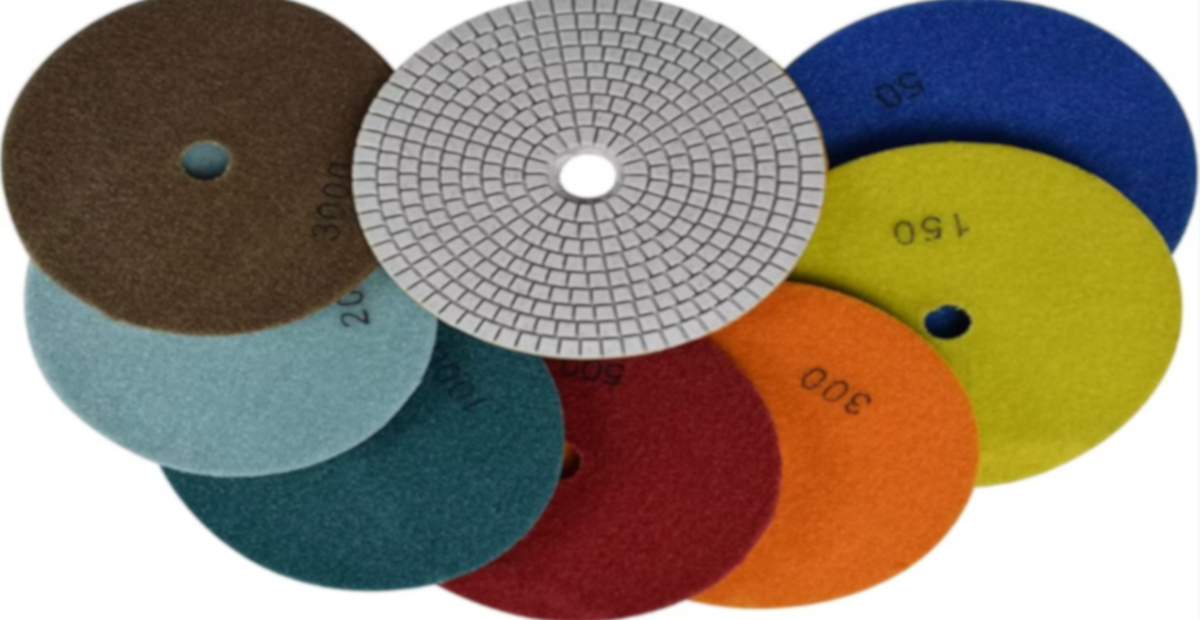
Diamond Abrasive Quick Selection by Polishing Pad Requirements
| Performance goal | Recommended diamond type & form | Key selection criterion |
|---|---|---|
| High stock removal and abrasive durability | High-strength monocrystalline diamond grit | Prioritize resistance to premature grain fracture while maintaining effective cutting as the bond wears |
| Balanced cutting and controlled wear | Monocrystalline diamond grit selected for controlled fracture rather than maximum crystal strength | Sufficient durability to resist premature breakdown while allowing cutting-edge renewal as the bond wears |
| Previous-stage scratch removal | Monocrystalline grit where grain durability is needed; RVD crushed diamond grit where easier grain fracture and edge renewal are required | Match particle size to the previous scratch depth and select fracture behaviour according to the bond's abrasive retention and wear |
| Fine surface refinement and scratch control | Fine diamond grit for pads requiring defined grain protrusion; micron diamond powder for finer, more uniformly distributed abrasive action | Controlled PSD, oversized-particle limits and uniform abrasive distribution |
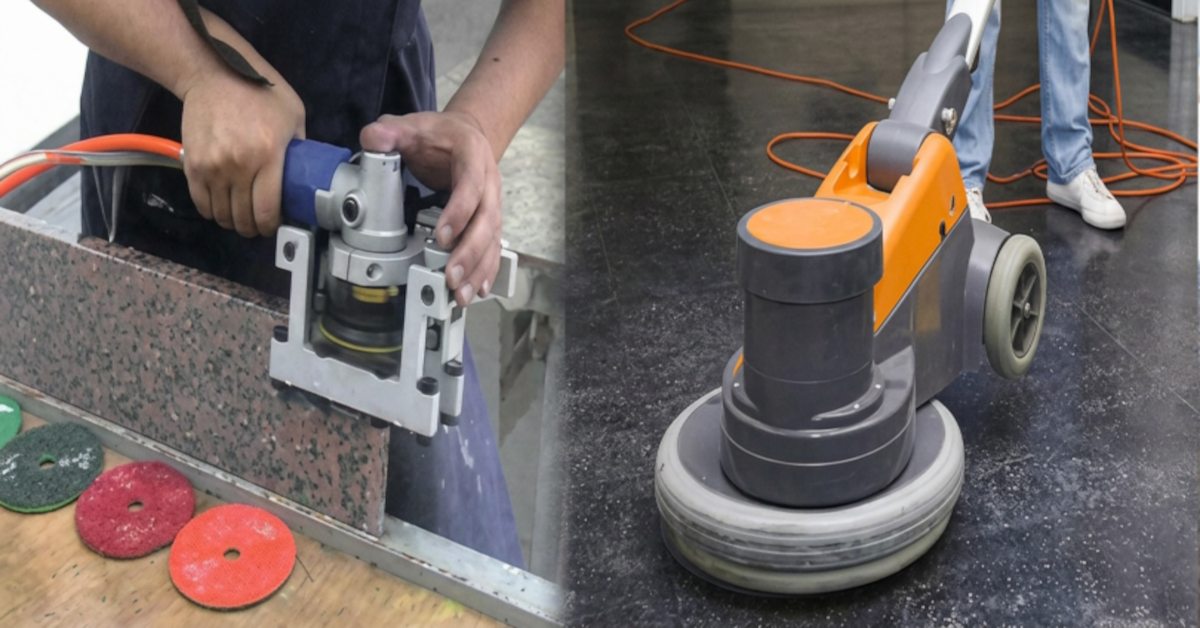
What Problems Can Incorrect Diamond Abrasive Selection Cause in Polishing Pads?
Incorrect diamond abrasive selection can reduce polishing efficiency, shorten pad life and cause inconsistent surface finishes. These problems may result from unsuitable crystal strength, friability, particle size, morphology or incompatibility with the polishing pad's bond system. Common problems include:
-
Premature Diamond Fracture
Diamond grades with insufficient crystal strength may fracture excessively under high polishing loads, particularly in metal-bond grinding and refinement pads. Rapid grain breakdown reduces effective abrasive protrusion, cutting consistency and pad life.
-
Poor Polishing Efficiency
Diamond grades with excessive fracture resistance may become dull without sufficient cutting-edge renewal, reducing material removal efficiency. Conversely, abrasive particles that are too fine for the intended polishing stage may struggle to remove scratches left by previous processing steps. Diamond strength, friability and particle size must be matched to the bond system and polishing requirements.
-
Inconsistent Surface Finish and Deep Scratches
Oversized diamond particles, broad particle size distributions or unsuitable abrasive morphology can produce scratches beyond the intended polishing specification. During fine resin-bond polishing, particle agglomeration and contamination can also cause localized defects, requiring additional polishing to achieve the desired finish.
-
Premature Diamond Loss from the Bond
Poor compatibility between diamond particles and the bond formulation can cause premature abrasive pullout. Inadequate particle retention reduces effective abrasive utilization, shortens pad life and can produce inconsistent polishing performance. Diamond morphology, surface characteristics and coating compatibility are important selection considerations.
Crownkyn Diamond Abrasives Solutions
Selecting a suitable diamond abrasive grade for polishing pads requires considering the intended polishing application, the bond system, operating conditions and performance requirements.
For grade selection, please provide:
- Workpiece material and polishing application
- Pad bond system
- Diamond concentration or loading in the pad formulation, if available
- Current diamond grade and grit size, if available
- Target performance, such as material removal, surface finish or polishing pad life
Based on these parameters, our team can recommend a suitable starting diamond grade, grit size and abrasive characteristics for testing.
For a new polishing pad formulation or an existing pad that needs optimisation, contact us with your application requirements and current diamond abrasive specifications.
Frequently Asked Questions About Diamond Abrasives for Polishing Pads
What diamond particle size should be used for different polishing pad grit grades?
The raw diamond particle size depends on the polishing pad formulation, bond system and intended polishing stage. Finished pad designations such as 400#, 800# and 1500# do not necessarily correspond directly to standardized diamond powder sizes.
Select the actual diamond particle size range and particle size distribution required for each pad formulation rather than converting finished pad grit numbers directly into raw abrasive specifications.
Is RVD diamond suitable for resin-bond polishing pads?
Yes. Selected RVD crushed diamond grades can be suitable for resin-bond polishing pads where controlled particle fracture and cutting-edge renewal are required.
RVD grades differ in crystal strength, friability and morphology. More friable grades may be appropriate where abrasive renewal is important, while more durable grades may be required under higher polishing loads.
Does higher diamond concentration increase polishing pad life?
Not necessarily. Increasing diamond concentration changes the number and distribution of abrasive particles, but does not guarantee longer pad life or greater polishing efficiency.
Excessive diamond loading can reduce effective bond coverage and affect abrasive distribution or exposure. Concentration should be evaluated alongside diamond particle size, grade characteristics and the pad's bond formulation.
Why do diamond polishing pads produce deep scratches even when fine diamond powder is used?
Oversized diamond particles, particle agglomeration and abrasive contamination are possible causes. A fine nominal particle size does not guarantee that all particles or agglomerates are within the intended size range.
Verify the powder's particle size distribution and oversized-particle limits. Also check powder dispersion within the polishing pad formulation and contamination during production.
Can the same diamond abrasive grade be used for wet and dry polishing pads?
Yes, but equivalent performance should not be assumed.
Dry polishing can generate higher operating temperatures and different abrasive loads compared with wet polishing. These conditions can influence diamond wear, fracture and retention. The selected grade should be tested in each pad formulation under its intended operating conditions.
References
[1] Improvement in Abrasive Wear Resistance of Metal Matrix - PMC. Supports: Diamond abrasives are used in polishing pads because their high hardness, wear resistance and cutting ability make them suitable for processing hard materials.
[2] Assessing the role of particle shape and scale in abrasion - Science Direct. Supports: Control of oversized particles is important for achieving repeatable polishing results and scratch control.
[3] ADS study on abrasive concentration - Harvard. Supports: Higher diamond concentrations do not necessarily improve polishing efficiency or pad life.
[4] Retention and interfacial failure mechanism - Science Direct. Supports: Metal-bond floor grinding and refinement pads require diamond grit capable of withstanding high contact loads.
[5] Influence of the Geometrical Features of the Cutting Edges - PMC. Supports: Controlled fracture of abrasive grains can maintain cutting efficiency by renewing cutting edges.
[6] Effect of Ti/Ni Coating of Diamond Particles on Microstructure - PMC. Supports: Coated diamond grit may improve diamond–metal matrix compatibility or abrasive retention.
[7] Modeling Wafer Surface Damage Caused During CMP - University of Utah. Supports: Fine polishing requires controlled particle-size distribution and strict limits on oversized particles where scratch control is critical.
[8] Study on the Polishing Mechanism of Composite - PMC. Supports: Agglomeration or uneven diamond distribution can cause scratches during fine polishing.
Drafted by: Gareth Bayley
Technical Review & Editing: Ashley Wei