Introduction
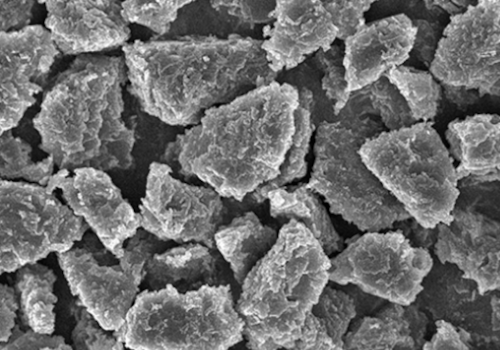
Coated CBN powder is a specialized abrasive material that is used to enhance the bonding between the CBN particles and the bond or tool matrix.
By applying a suitable coating, manufacturers can improve particle binding, particle retention, thermal stability, or processing compatibility during cutting or grinding processes.
This guide explains the main types of coated CBN powder, their typical applications, and the key factors to consider when selecting the CBN grade, particle size, coating material, and coating level.

What Is Coated CBN Powder?
Coated CBN powder is cubic boron nitride particles covered with a controlled surface coating layer[^1]. The CBN remains the functional core, while the coating modifies the outer surface that interacts with the bond or matrix.
Coatings include nickel (Ni) and titanium (Ti).[^2] A coated CBN product is normally specified by the base CBN grade, particle size, coating material, surface coverage, and the coating thickness or weight gain.
In industrial use, coated CBN powder is the general term, while coated CBN grit more commonly refers to coarser mesh-sized particles used in grinding, sawing, drilling and bonded abrasive tools.
Why is CBN Powder Coated?
Coatings modify the particle surface to improve compatibility with a specific bond or matrix[^3] without changing the function of the CBN core.
The main purposes for coating are:
- Enhanced Retention: Coatings help retain CBN grains in bonded abrasive tools, reducing premature grit pull-out and extending tool life.
- Improved Bonding: Particularly in sintered, brazed and metal-matrix systems where direct bonding or wettability is limited[^4].
- Thermal and Shock Management: Coatings can help dissipate heat, reduce thermal shock, and protect the CBN core.
The required coating depends on the bond or matrix, processing temperature, CBN specification and target performance.

Coated vs Uncoated Diamond Powder
| Factor | Coated CBN | Uncoated CBN |
|---|---|---|
| Surface | Functional Metal coating layer | Natural CBN surface |
| Bond retention | Can improve anchoring and interface bonding | Depends mainly on the bond and particle characteristics |
| Matrix compatibility | Better suited where interface control is required | Suitable where direct CBN contact is sufficient |
| High-temperature processing | Selected coatings can improve interface stability | CBN directly contacts the matrix |
| Typical use | Bonded abrasive tools where the coating provides a functional benefit | Bonded abrasive tools and free-abrasive applications where an additional coating is not required |
Coating is useful when improved retention, wettability or interface control is required, but it is not necessary for every diamond application.
What are the Main Types of Coated CBN Powder?
The appropriate coated CBN type depends on the bond or matrix, processing temperature, and required mechanical or thermal performance.
Nickel Coated CBN Powder
Nickel coated CBN powder also called Ni coated CBN Powder is a nickel-coated cubic boron nitride abrasive developed primarily for resin-bond grinding wheels. The nickel layer improves mechanical anchoring between CBN grains and the surrounding bond and supports heat distribution during grinding.
Rough or nodular nickel surfaces provide stronger mechanical interlocking with the resin matrix.[^5] Typically used for resin-bond CBN tools used in precision grinding of hardened steels.
The coating ratio should be balanced with particle size and required grit exposure, as excessive coating can reduce cutting activity.
Titanium Coated CBN Powder
Titanium coated CBN powder also known as Ti coated CBN powder is a titanium-coated cubic boron nitride abrasive developed for metal-bond and selected vitrified-bond grinding tools.
The active titanium layer supports interfacial bonding between CBN grains and the surrounding bond and can form Ti-containing nitride and boride phases under suitable thermal processing conditions[^6]
It is suitable for precision grinding of hardened steels and other demanding ferrous materials[^7].

How to Select Coated CBN Powder by Application
Coated CBN powder should be selected according to the bond or matrix, processing conditions and required interface function. Particle size, grade, morphology and coating level should then be matched to the specific application.
Quick Selection Guide: Coating Type vs Matrix and Application
| Application / Matrix | Main Requirement | Typical Coating | Key Selection Factor |
|---|---|---|---|
| Resin-bond tools | Grit retention and heat control | Ni | Coating ratio and grit exposure |
| Metal-bond / sintered tools | Interface bonding and thermal stability | Ti | Matrix chemistry and sintering conditions |
| Brazed CBN tools | Wettability and strong interface bonding | Ti | Brazing alloy and processing temperature |
For abrasive tools, coating selection should balance grit retention with sufficient diamond exposure. Ni coatings are commonly used in resin-bond systems, while Ti can be considered for metal-bond and high-temperature systems.
These recommendations are starting points rather than fixed rules. Final coating selection should be evaluated together with the base CBN, coating level, matrix composition and actual processing conditions.

How Do Coating Thickness and Weight Gain Affect Performance?
Coating thickness and weight gain describe different aspects of a coated CBN product. Thickness refers to the physical coating layer, while weight gain measures the increase in particle mass after coating.
The relationship depends on the coating material, particle size, morphology and surface area, so the same weight gain does not necessarily represent the same coating thickness.
Typical Coating Weight Gain
| Coating Type | Typical Weight Gain | Main Function |
|---|---|---|
| Nickel (Ni) | Approx. 30–60% | Grit Retention, Mechanical Anchoring, Heat Distribution |
| Titanium (Ti) | Approx. 5–15 wt% | Bond Retention, Interface Compatibility, Grain Protection |
Higher coating levels are not always better. Excessive coating may reduce grit exposure and effective diamond concentration or increase interfacial thermal resistance in thermal composites. The appropriate coating level should therefore be matched to the diamond size, bond or matrix and application.
Common Selection Mistakes with Coated CBN Powder
Assuming higher coating weight gain is always better
Higher coating levels do not necessarily improve performance. Excessive nickel coating can reduce grit exposure, while an overly thick carbide layer may increase interfacial thermal resistance in thermal composites.
Ignoring the base CBN specification
A coating cannot compensate for unsuitable CBN size, morphology or strength. The base CBN grade should be selected together with the coating system.
Using the same coating specification for different applications
Resin-bond tools, brazed tools and thermal composites require different interface behaviour. Coating material and level should therefore be matched to the actual bond, matrix and processing conditions.
Ignoring coating compatibility with processing conditions
Coatings must remain stable under the temperatures and chemical conditions encountered during tool manufacturing and use. A coating that degrades or reacts unfavourably during processing may lose its intended interfacial benefits.
Crownkyn Coated CBN Solutions
Crownkyn supplies coated CBN powder in different particle sizes, grades and coating systems. To recommend a suitable starting specification, please contact us with the following information:
- Application and bond / matrix
- Required particle sizes
- Processing method and temperature
- Performance target — bond retention, interface bonding, thermal stability or heat transfer
- Required coating and coating level, if specified
If the coating type or weight gain is not yet defined, our team can recommend a starting specification for application testing.
Frequently Asked Questions About Coated CBN Powder
Why is CBN powder coated?
Coating improves the wetability and chemical or mechanical bonding between the CBN superabrasive particles and the matrix bond (such as resin, vitrified, or metal bonds) in grinding wheels and tools. It also enhances thermal transfer and shields the grain during high-temperature manufacturing.
Can coated CBN powder be used in resin-bond and metal-bond tools?
Yes, but the coating specification should be matched to the bond system. Resin-bond, metal-bond and brazed tools have different interface requirements, so one coating specification is not suitable for every application.
Does higher coating weight gain mean better performance?
No. The appropriate coating weight gain depends on particle size, coating material and application requirements. Excessive coating can reduce grit exposure or increase interfacial thermal resistance.
How should I select a coated CBN powder grade?
Consider the base CBN particle size, morphology and strength, together with coating material, coating level, bond compatibility and processing conditions. Comparative testing under the intended application conditions can help verify grade suitability.
Can I use coated CBN for non-ferrous materials like aluminum?
No. Coated CBN is explicitly selected for ferrous materials
References
[1] 3D Characterization of Cubic Boron Nitride - UPCommons Supports: Coated CBN powder consists of cubic boron nitride particles covered with a controlled surface coating layer.
[2] Grain erosion wear properties and grinding performance - Science Direct. Supports: Nickel and titanium are among the coatings used on CBN powder.
[3] Bi-layer cBN-based composites reinforced with oxide - PMC. Supports: Coatings modify the CBN particle surface to improve compatibility with a specific bond or matrix.
[4] Active metal brazing of carbon-carbon composites to titanium - NASA. Supports: Coatings are useful in sintered, brazed, and metal-matrix systems where direct bonding or wettability is limited.
[5] Bi-layer CBN-based composites reinforced with oxide - PMC. Supports: Rough or nodular nickel surfaces provide stronger mechanical interlocking with the resin matrix.
[6] Reaction Sintering of Machinable TiB2-BN-C Ceramics - PMC. Supports: Titanium coatings on CBN can form Ti-containing nitride and boride phases under suitable thermal processing conditions.
[7] The influence of the grinding process on the structure -MIT. Supports: Titanium-coated CBN powder is suitable for precision grinding of hardened steels and demanding ferrous materials.
Drafted by: Gareth Bayley
Technical Review & Editing: Ashley Wei