Diamond Powder for Ceramic Lapping and Polishing: Selection Guide
Introduction
Selecting the right diamond powder for ceramic lapping and polishing requires matching the abrasive specification with the ceramic material, processing stage, and required surface performance.
Ceramic materials such as alumina, silicon carbide (SiC), aluminum nitride (AlN), zirconia, silicon nitride, and other advanced ceramics have different hardness, toughness, and surface finishing requirements. Therefore, ceramic manufacturers need to consider diamond particle size, diamond grade, morphology, and abrasive consistency when selecting a suitable diamond powder for their polishing process.
This guide provides practical guidance on choosing diamond powder for ceramic processing, including the diamond type comparisons, particle size selection, PSD requirements, and application recommendations for different advanced ceramic materials.
What Factors Affect Diamond Powder Selection for Ceramic Polishing?
Diamond powder selection for ceramic polishing mainly depends on the ceramic material, processing stage, particle size and abrasive behaviour.
Ceramic Material
Ceramic hardness, toughness and fracture behaviour affect the required abrasive action.[^1] Hard ceramics such as silicon carbide (SiC) require sufficient cutting capability, while brittle or surface-sensitive ceramics need more controlled abrasive behaviour to reduce scratches, chipping and surface damage.
Processing Stage and Surface Requirement
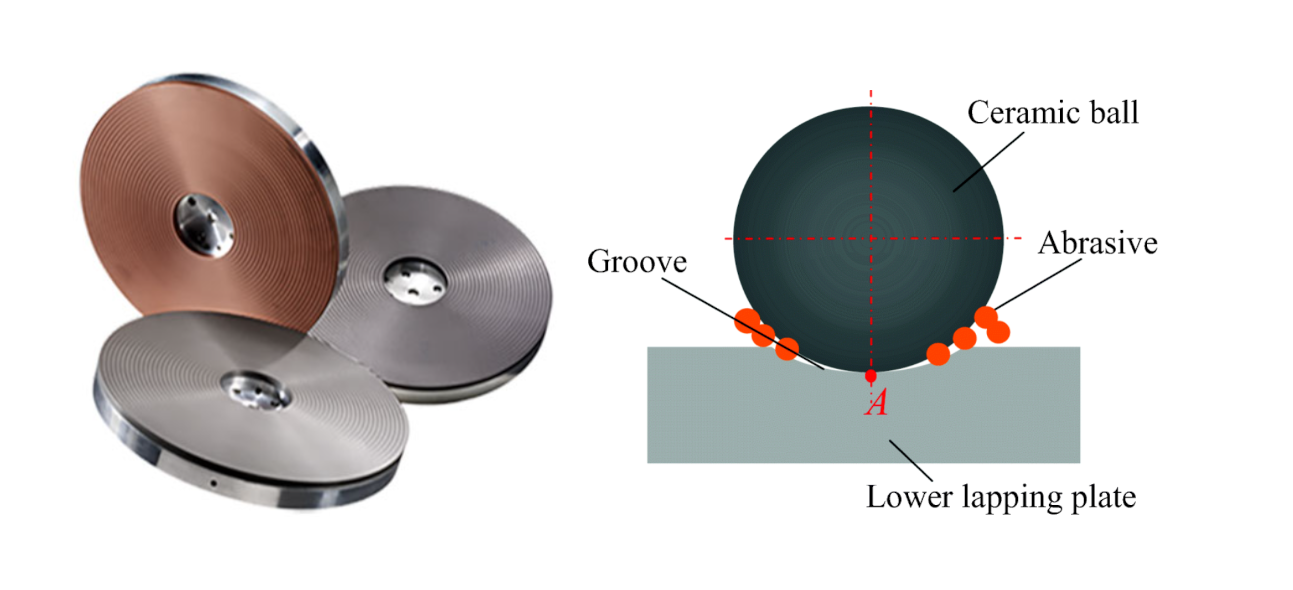
During lapping, diamond powder is selected primarily for material removal and surface correction. As the process moves toward precision polishing, finer and more controlled abrasives are required for scratch reduction and surface refinement.
Particle Size
Coarser diamond particles generally provide higher material removal, while finer grades provide greater surface control.[^2] The appropriate size should match the processing stage and target surface finish.
Diamond Morphology and Crystal Structure
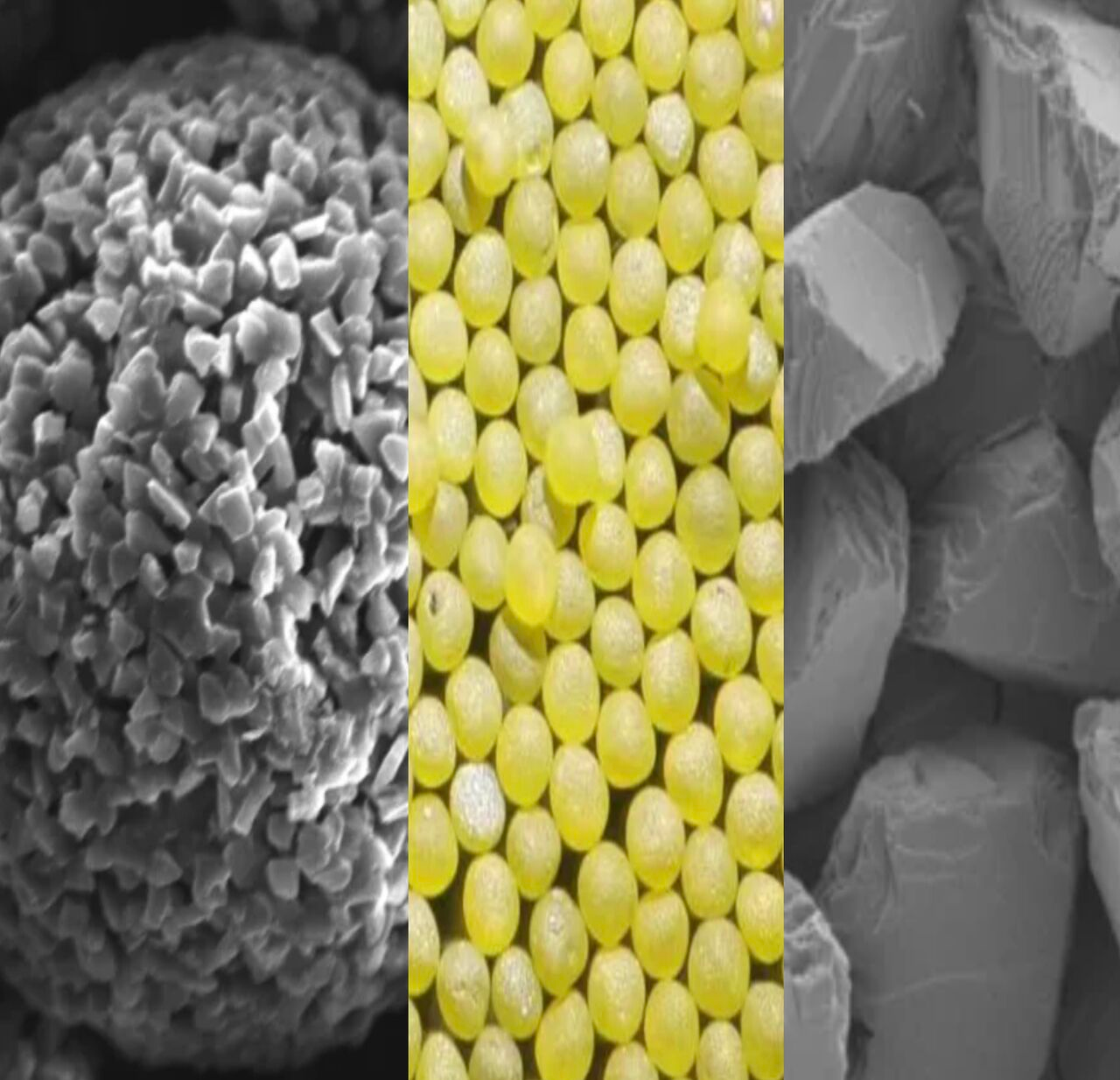
Diamond morphology and crystal structure influence cutting action and fracture behaviour.[^3] Stronger or blockier particles can provide stable cutting performance, while more controlled fracture behaviour may be preferred where abrasive renewal and surface quality are important.
Which Diamond Powder Grade Is Suitable for Ceramic Applications?
The diamond abrasive selection depends on the ceramic material, processing stage and required surface performance.
The choice between the diamond powder grade should balance material removal efficiency, abrasive behaviour and final surface quality.
Micron Diamond Powder
Micron diamond powder is widely used for ceramic lapping and polishing because it provides flexibility across different processing stages.
Ceramic applications requiring material removal and surface correction typically require abrasive characteristics that provide effective cutting performance. Coarser micron diamond grades can provide higher material removal capability, while finer micron grades are selected when surface refinement and scratch control become more important.
Because micron diamond is available across a wide range of particle sizes and characteristics, it can be selected according to the balance required between removal efficiency and final surface quality.
Polycrystalline Diamond Powder
Polycrystalline diamond powder can be considered for ceramic applications where controlled fracture and continuous abrasive renewal are beneficial.
Its multi-crystal structure provides irregular cutting edges and controlled fracture behaviour, which can help maintain abrasive activity during processing.
For precision finishing applications, the selection between polycrystalline and monocrystalline diamond should depend on the required balance between abrasive renewal, surface quality, and process stability.
Where surface generation and finishing consistency are the primary requirements, a more controlled abrasive response may be preferred. Further reading can be found in our guide to polycrystalline diamond powder
Nano Diamond Powder
Nano diamond powder is selected when the required surface finish cannot be achieved using conventional micron diamond grades.
Because ultra-fine finishing requires smaller abrasive particles and more controlled surface interaction, nano diamond is considered for applications where reducing surface variation and achieving refined surface conditions are more important than maximising material removal efficiency.
Nano diamond is therefore not selected simply because it has the smallest particle size. Its advantage is providing controlled abrasive action during final finishing stages where surface quality is the primary requirement. Further reading can be found in our guide to nano diamond powder
Typical Diamond Powder Size Selection for Ceramic Lapping and Polishing
Diamond particle size is typically selected according to the processing stage and required balance between material removal and surface quality. The following ranges provide practical starting points rather than fixed specifications.
| Processing Stage | Typical Diamond Size | Typical Diamond Type | Main Selection Objective | Typical Ceramic Applications |
|---|---|---|---|---|
| Initial lapping | 10–30 μm | Monocrystalline diamond | High material removal and surface correction | Alumina, SiC, zirconia and silicon nitride |
| Intermediate polishing | 3–10 μm | Monocrystalline or selected polycrystalline diamond | Balance removal rate and surface control | Advanced ceramic components requiring improved flatness and finish |
| Precision polishing | 1–3 μm | Fine monocrystalline or polycrystalline diamond | Scratch control and improved surface finish | AlN substrates, SiC components and precision ceramics |
| Ultra-fine finishing | <1 μm | Submicron or nano diamond | Fine surface refinement | Precision ceramic, optical and selected electronic applications |
These particle sizes should be treated as starting ranges rather than fixed specifications. The achievable surface roughness depends not only on diamond size, but also on ceramic material, PSD, particle morphology, polishing pad or lapping plate, abrasive concentration and operating conditions.
For precision polishing, PSD and oversize control can be as important as nominal particle size because a small number of oversized particles may cause isolated scratches[^4] even when the average particle size is within specification.
What Diamond Powder Quality Factors Affect Ceramic Polishing Performance?
After selecting the appropriate diamond type and particle size, abrasive quality becomes important for maintaining consistent polishing results. Key factors include PSD and oversize control, particle consistency and purity.
PSD and Oversize Control
A controlled particle size distribution helps maintain consistent material removal and surface quality. Oversized particles can cause isolated scratches, while excessive fines may reduce cutting efficiency.[^5]
For precision ceramic polishing, tight PSD and upper-size control are especially important for reducing surface defects and improving process repeatability.
Particle Consistency
Consistent particle characteristics help maintain predictable abrasive behaviour between batches. Variations in particle shape, size distribution or abrasive quality can lead to changes in removal rate and final surface finish.
Purity and Surface Cleanliness
High-purity diamond powder helps reduce contamination and unexpected surface defects, particularly in precision ceramic applications.
Stable purity and surface cleanliness also support repeatable polishing performance across production batches.
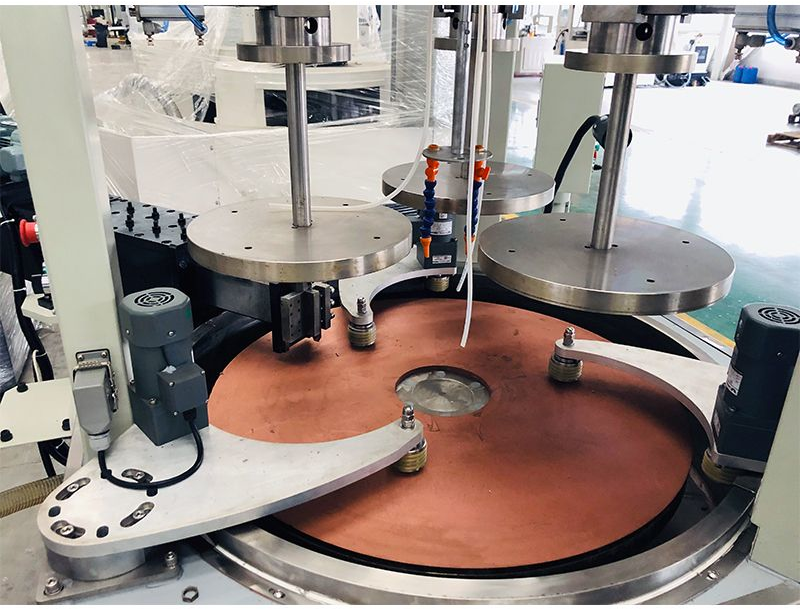
Should You Choose Diamond Powder or Diamond Slurry for Ceramic Polishing?
The choice between diamond powder and diamond slurry depends on process flexibility, abrasive control and polishing consistency.
Diamond powder allows customised abrasive selection, while diamond slurry provides pre-dispersed abrasive delivery for stable and repeatable polishing performance.
Diamond Powder
Diamond powder is selected when users need flexibility to optimise abrasive specifications for ceramic polishing.
It allows adjustment of particle size, diamond grade, morphology and concentration according to different ceramic materials and surface requirements.
Diamond powder is commonly considered when:
- Different ceramic materials require customised abrasive specifications
- Particle size and diamond grade need adjustment during process optimisation
- Existing polishing systems require specific abrasive formulations
Diamond Slurry
Diamond slurry is selected when ceramic polishing requires consistent abrasive dispersion and simplified process control.
Because diamond particles are pre-dispersed in a controlled carrier system, slurry helps reduce preparation variation and provides stable abrasive delivery during repeated polishing operations.
Diamond slurry is commonly considered when:
- Stable particle dispersion is required
- Production processes require repeatable surface results
- Simplified abrasive preparation is preferred
More information can be found in our Diamond Slurry and Paste Guide
How to Select Diamond Powder for Different Ceramic Materials?
Different ceramics respond differently to diamond abrasives because of differences in hardness, toughness, fracture behaviour and surface sensitivity. The following recommendations are practical starting points and should be adjusted according to the polishing stage and target surface quality.
Diamond Powder for Alumina Ceramic Polishing
Alumina combines high hardness with brittle fracture behaviour.[^6] Micron diamond powder is commonly used for lapping and polishing, with particle size selected according to the required balance between material removal and surface damage control.
For precision finishing, tighter PSD and oversize control become increasingly important to reduce isolated scratches and improve surface consistency.
Diamond Powder for Silicon Carbide (SiC) Ceramic Polishing
Silicon carbide is extremely hard and wear resistant, making material removal efficiency a major processing challenge.
For lapping and higher-removal stages, relatively strong monocrystalline diamond with a more blocky or well-developed morphology can be considered to maintain cutting efficiency and abrasive durability. Finer or more controlled grades are then selected as the process moves toward precision finishing and scratch control.
Diamond Powder for Aluminum Nitride (AlN) Ceramic Polishing
Aluminum nitride is brittle and commonly used in precision electronic and thermal-management substrates[^7], where dimensional accuracy and surface integrity are important.
Fine micron diamond with tight PSD and strict oversize control is preferred for precision polishing. Controlling the upper particle-size limit helps reduce the risk of isolated scratches and local surface or edge damage.
Diamond Powder for Zirconia Ceramic Finishing
Zirconia has relatively high toughness and can require stable abrasive action during finishing.
In fine polishing, good diamond dispersion becomes increasingly important. A well-dispersed slurry helps reduce particle agglomeration, improve abrasive consistency and lower the risk of random surface defects.
Diamond Powder for Silicon Nitride Ceramic Polishing
Silicon nitride combines high strength, toughness and wear resistance. Diamond powder selection should therefore balance cutting capability with controlled fracture and surface generation.
Micron diamond with suitable strength, morphology and PSD control is commonly selected for repeatable lapping and precision finishing.
Quick Selection Guide by Ceramic Material
| Application | Recommended Diamond Powder | Key Selection Factors |
|---|---|---|
| Alumina ceramic lapping and polishing | Micron diamond powder | Material removal, surface finish, and scratch reduction |
| Silicon carbide (SiC) ceramic processing | Micron diamond powder with controlled PSD | Removal efficiency, scratch control, and surface quality |
| Aluminum nitride (AlN) ceramic polishing | Fine micron diamond powder | Surface quality, dimensional accuracy, and polishing consistency |
| Zirconia ceramic finishing | Micron diamond powder | Stable abrasive performance, surface integrity, and consistent finishing |
| Silicon nitride ceramic polishing | Micron diamond powder | Material removal capability, surface finish, and abrasive consistency |
| Ultra-fine ceramic polishing | Nano diamond powder | Surface refinement, low surface variation, and final finishing requirements |
Common Ceramic Polishing Problems and Diamond Powder Adjustments
Polishing defects are not always caused by the abrasive alone. However, when diamond powder selection or dispersion contributes to the problem, the following adjustments provide useful starting points.
| Polishing Problem | Possible Diamond-Related Cause | Diamond Powder Adjustment |
|---|---|---|
| Deep random scratches | Oversized particles, agglomeration or broad PSD | Tighten PSD and oversize control; improve abrasive dispersion |
| Low material removal rate | Particle size too fine, insufficient cutting strength or unsuitable morphology | Consider a larger micron size or a stronger, more blocky diamond grade |
| Surface chipping or micro-cracks | Particle size or cutting action is too aggressive | Reduce particle size or select a less aggressive abrasive grade |
| Inconsistent surface finish | PSD variation, agglomeration or inconsistent abrasive quality | Improve PSD consistency, dispersion stability and batch control |
Other process factors such as polishing pressure, speed, pad or lapping plate condition, slurry concentration and workpiece condition should also be evaluated before changing the diamond specification.
Crownkyn Ceramic Lapping and Polishing Solutions
Crownkyn Diamond supplies synthetic diamond abrasives for ceramic lapping and polishing, including micron diamond powder, nano diamond powder and customized grades for advanced ceramic processing.
Our team helps customers match particle size, morphology, PSD and abrasive specifications to materials such as alumina, silicon carbide (SiC), zirconia and silicon nitride, supporting applications from material removal and lapping to precision and ultra-fine finishing.
If you are evaluating diamond powder for ceramic polishing, please contact us with your ceramic material, processing stage, target surface quality and current abrasive specification. Our team can recommend a suitable starting grade for testing.
Conclusion
Selecting diamond powder for ceramic lapping and polishing requires balancing material removal efficiency, surface quality and process consistency. The most suitable specification depends on the ceramic material, processing stage and final surface requirements rather than particle size alone.
Diamond type, morphology, PSD control and abrasive consistency all influence polishing performance. Matching these characteristics to the application can help improve removal efficiency, reduce surface defects and achieve more repeatable finishing results.
Reference
Reviews abrasive scratching and material-removal mechanisms in hard and brittle materials, including the influence of material properties on fracture, surface damage and machining behaviour.
[2] Developing an Analytical Model and Computing Tool for Optimizing Abrasive Finishing Processes
Provides technical background on how abrasive particle size and processing parameters influence material removal and surface generation during abrasive finishing.
[3] Morphology of Microchips in the Surface Finishing Process Utilizing Abrasive Grains
Discusses abrasive cutting and material-removal behaviour, providing useful background for understanding how abrasive characteristics influence surface generation.
[4] Modeling Wafer Surface Damage Caused During CMP
Examines surface damage during polishing and the role of abrasive particles, supporting the importance of particle-size distribution, oversized particles and agglomeration in scratch control.
[5] Modeling of Material Removal Rate for Fixed-Abrasive Polishing
Provides insight into abrasive particle interaction, material removal and surface damage, including the influence of particle-size variation on polishing behaviour.
[6] Hardness and Indentation Fracture Toughness of Slip Cast Alumina Ceramics
Provides material-property data for alumina ceramics, including hardness and fracture toughness relevant to abrasive processing and polishing.
[7] Aluminum Nitride: A Material for Thermal Management
Provides technical background on aluminum nitride (AlN), including its thermal conductivity, electrical insulation and applications in electronic substrates and thermal-management components.