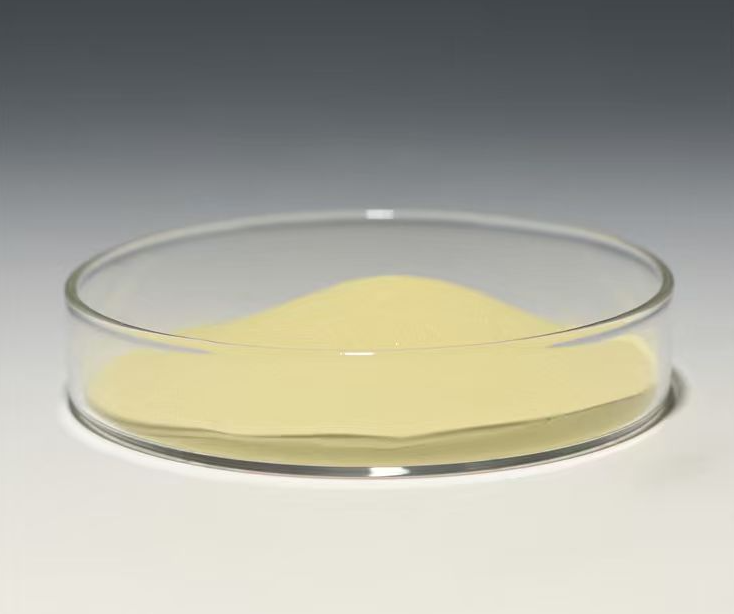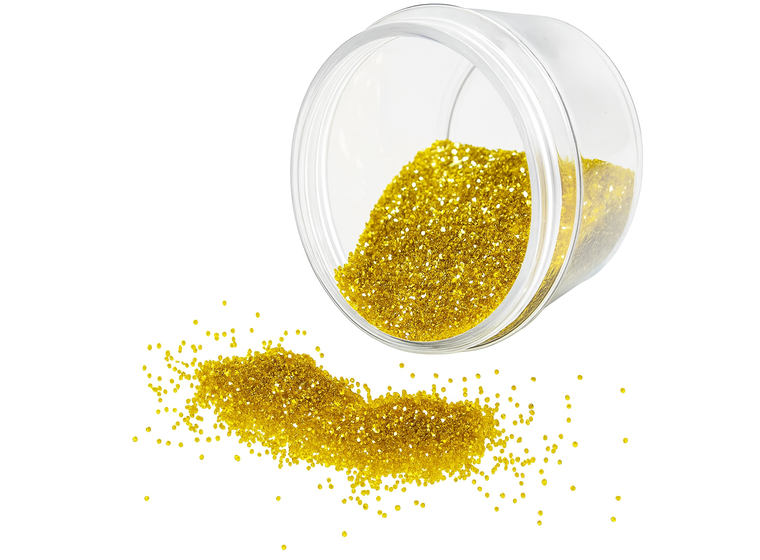
What Is Polycrystalline Diamond Powder? A Practical Guide to Structure, Applications, and Selection
Polycrystalline diamond powder is an engineered synthetic diamond abrasive used for precision polishing, fine lapping, and controlled material removal. It is especially suitable for hard and brittle materials such as sapphire, ceramics, silicon carbide, optical glass, and tungsten carbide, where both surface quality and process stability are important.
Unlike monocrystalline diamond powder, each polycrystalline particle is made from many nano-scale diamond crystallites bonded together. This multi-grain structure provides multiple micro-cutting points and supports controlled self-sharpening[^1] during polishing, helping reduce deep scratches and maintain stable surface finishing performance.
In this guide, we will explain how polycrystalline diamond powder works, how it differs from monocrystalline diamond powder, and how to choose the right particle size and product form for polishing, lapping, diamond slurry, and suspension applications.

What Is Polycrystalline Diamond Powder?
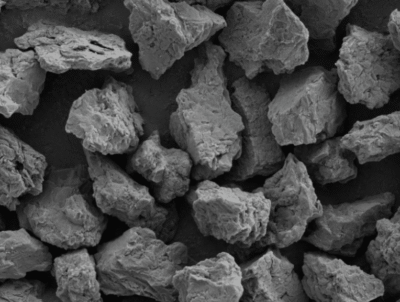
Polycrystalline diamond powder is a type of synthetic diamond powder made from many small diamond crystallites rather than one single crystal. These crystallites are bonded together into one abrasive particle with a complex, multi-directional internal structure.
In practical polishing and lapping applications, this structure is the key difference between polycrystalline and monocrystalline diamond powder. A monocrystalline particle usually has a more defined crystal shape and cutting direction, while a polycrystalline particle contains many randomly oriented micro-crystals that can generate cutting points in multiple directions.
Because of this structure, polycrystalline diamond powder is often selected when fine surface control is more important than aggressive cutting alone[^2]. It is commonly used in fine polishing, diamond slurry, and suspension systems where scratch control, dispersion stability, and repeatable results are required.
How Does the Polycrystalline Structure Improve Polishing Performance?
The polishing performance of polycrystalline diamond powder comes from its multi-grain structure. Each particle is made from many nano-scale diamond crystallites bonded together, creating a rough and multi-faceted surface with many small micro-cutting points.
During polishing, these micro-cutting points remove material in a controlled and uniform way. As the outer edges gradually wear, small micro-fragments can break away and expose fresh cutting points. This self-sharpening behavior helps maintain stable removal performance during fine polishing and lapping.
This structure is especially useful for hard and brittle materials where deep scratches or unstable removal can affect final surface quality. Its real advantage is not simply higher strength, but the balance between controlled material removal, self-sharpening, and fine surface control.
Polycrystalline vs Monocrystalline Diamond Powder: Which One Should You Choose?
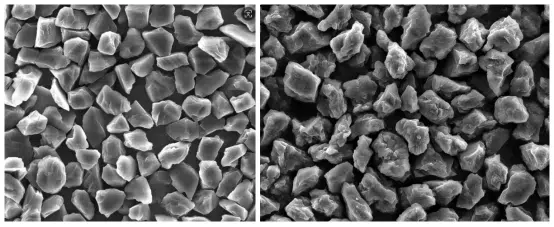
Monocrystalline diamond powder is made from single-crystal diamond particles with sharp cutting edges and strong individual particle strength. It is often used when the process requires efficient material removal, stronger cutting action, or better performance in bonded abrasive tools such as resin-bond, metal-bond, vitrified-bond, and electroplated diamond tools.
Polycrystalline diamond powder is made from many nano-scale diamond crystallites bonded into one particle. Its multi-crystal structure creates multiple micro-cutting points and supports controlled self-sharpening during polishing. It is usually preferred for fine polishing and slurry systems where scratch control and surface uniformity are more important. Typical applications include micron diamond powder for fine polishing of sapphire, ceramics, SiC, and optical glass.
| Category | Monocrystalline Diamond Powder | Polycrystalline Diamond Powder |
|---|---|---|
| Structure | Single-crystal particle | Multi-crystal particle formed by nano-scale crystallites |
| Cutting behavior | Sharp and stronger individual cutting points | Multiple micro-cutting points in different directions |
| Removal style | Faster and more aggressive material removal | Stable and controlled material removal |
| Surface finish | Efficient, but may create deeper scratches in fine polishing if not controlled | Better surface uniformity and lower deep-scratch risk |
| Main applications | Lapping, grinding, diamond tools, wire drawing dies, diamond paste, mold polishing, metallographic polishing | Precision polishing, fine lapping, diamond slurry, diamond suspension, sapphire, ceramics, SiC, optical glass |
| Best choice when | Cutting efficiency and tool performance are priorities | Scratch control and fine surface finish are priorities |
In practice, monocrystalline diamond powder is often used in earlier lapping or grinding steps, while polycrystalline diamond powder is more suitable for fine polishing stages where stable removal, self-sharpening, and high surface quality are required.
Is There a More Cost-Effective Alternative to Polycrystalline Diamond Powder?
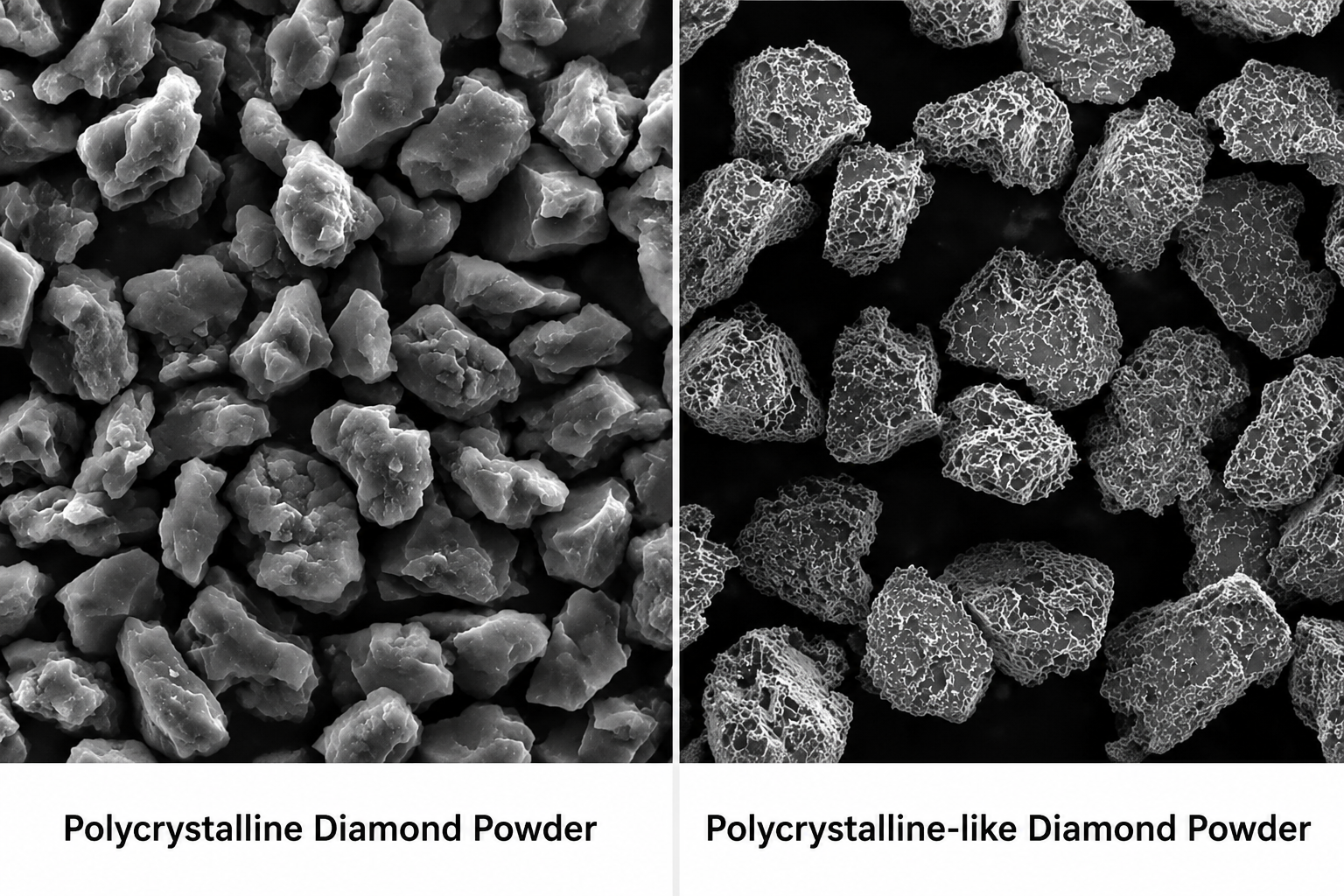
For applications that require many of the polishing characteristics of polycrystalline diamond powder but have tighter cost targets, Polycrystalline-like Diamond Powder offers an attractive alternative.
PLLM is engineered to deliver stable cutting performance, self-sharpening behavior, and good surface quality while significantly reducing material cost. Compared with conventional polycrystalline diamond powder, which price is typically available at approximately one-third to one-second of the price, making it suitable for precision grinding, lapping, and polishing applications where performance and cost need to be balanced.
| Feature | Polycrystalline Diamond Powder (PLDM) | Polycrystalline-like Diamond Powder (PLLM) |
|---|---|---|
| Structure | True polycrystalline | Polycrystalline-like engineered structure |
| Cutting Performance | Excellent | Very good |
| Self-Sharpening | Excellent | Good |
| Surface Finish | Excellent | Good to excellent |
| Cost | High | Approximately 35–50% of Polycrystalline diamond powder |
| Best For | Ultra-precision polishing | Cost-sensitive precision polishing and lapping |
PLLM is not intended to replace traditional polycrystalline diamond powder in every application. Instead, it provides a practical solution for customers seeking reliable polishing performance with better cost efficiency.
What Materials Are Suitable for Polycrystalline Diamond Powder?
Polycrystalline diamond powder for polishing is suitable for hard and brittle materials that require controlled removal, fine surface quality, and low scratch risk. Its multi-crystal structure provides many small cutting points, helping the abrasive polish more evenly in precision polishing, fine lapping, diamond slurry, and suspension systems.
For materials such as sapphire, ceramics, silicon carbide, and optical glass, surface defects can affect final performance. Polycrystalline diamond powder can be used as diamond powder for sapphire polishing when a smooth surface is required, and as diamond powder for SiC polishing when stable micro-cutting is needed.
Workpiece Materials
-
Sapphire and optical materials – Suitable for sapphire, optical glass, and quartz where fine finish and low scratch depth are required.
-
Silicon carbide and semiconductor-related materials – Suitable for SiC and hard electronic materials that require stable micro-cutting and clean finishing.
-
Advanced ceramics – Suitable for alumina, zirconia, silicon nitride, and other brittle ceramics where edge chipping or micro-cracks should be reduced[^3].
-
Tungsten carbide and hard materials – Suitable for fine lapping and polishing when consistent surface finish is more important than aggressive cutting.
-
Diamond slurry and suspension systems – Suitable for water-based or oil-based slurry systems where dispersion stability and repeatable polishing performance are important.
In general, polycrystalline diamond powder is a better choice when the polishing process requires precision, cleanliness, and consistent surface quality.

How to Choose the Right Particle Size?
Choosing the right particle size is one of the most important steps when using polycrystalline diamond powder. In most polishing applications, polycrystalline diamond powder is supplied in micron sizes rather than coarse mesh sizes. The available particle size usually goes up to around 12 μm, while the most commonly used grades are often in the middle and fine micron ranges.
Smaller particles are used for fine polishing and better surface control, while larger particles provide faster material removal in pre-polishing or fine lapping. However, not every size is a standard or frequently used grade. For most precision polishing processes, the commonly selected sizes are between 0.25 μm and 6 μm, depending on the material, polishing stage, and target surface finish.
| Particle Size | Typical Use | Selection Notes |
|---|---|---|
| 0–0.25 μm | Ultra-fine finishing | Used when very low surface roughness and strict scratch control are required |
| 0.25–0.5 μm | Mirror polishing | Suitable for optical glass, sapphire, ceramics, and high-precision parts |
| 0.5–1 μm | Fine polishing | Common choice for controlled surface finishing and stable slurry performance |
| 1–3 μm | General precision polishing | One of the most commonly used ranges, balancing removal rate and surface quality |
| 3–6 μm | Pre-polishing and fine lapping | Provides higher material removal while still maintaining good surface control |
| 6–12 μm | Faster lapping or initial polishing | Used when more removal efficiency is required before finer polishing steps |
For most applications, it is better to use polycrystalline diamond powder as part of a step-by-step polishing process. A larger size can be used first to remove surface damage or machining marks, followed by a smaller size[^4] to improve surface finish and reduce scratches.
Mesh sizes are more commonly used for coarse synthetic diamond grit, while polycrystalline diamond powder is usually described by micron size. If you need to compare mesh, micron, and nano sizes, you can refer to our Diamond Powder Particle Size Guide for a more detailed conversion reference.
Powder, Slurry or Suspension: Which Form Is Better?
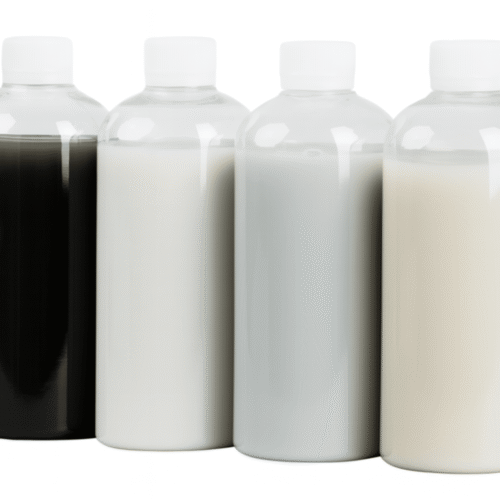
Polycrystalline diamond can be supplied as dry powder, diamond slurry, or ready-to-use suspension. The best choice depends on how the abrasive will be used, whether the customer has formulation capability, and how much control is required over concentration, carrier, viscosity, and dispersion stability.
Dry powder is usually selected by manufacturers who already have their own slurry, paste, or compound formulation process. It gives more flexibility in concentration, carrier selection, additive system, and final product design. Polycrystalline diamond slurry and suspension are better choices when the user wants easier operation, better dispersion, and more consistent polishing performance without preparing the abrasive system from the beginning.
| Form | When to Use | Main Advantages | Typical Applications |
|---|---|---|---|
| Polycrystalline diamond powder | When the customer has their own formulation or dispersion process | Flexible concentration, carrier, and additive design | Diamond slurry production, diamond paste, polishing compound, customized abrasive products |
| Diamond slurry | When the polishing process needs a prepared liquid abrasive system | Better dispersion, easier use, stable polishing concentration | Precision polishing, fine lapping, sapphire, ceramics, SiC, optical glass |
| Diamond suspension | When consistent, ready-to-use polishing performance is required | Convenient operation, stable particle distribution, good repeatability | Laboratory polishing, metallographic preparation, ultra-fine finishing, small-batch precision polishing |
In simple terms, choose powder if you need formulation flexibility, choose slurry if you need a prepared polishing liquid for production use, and choose suspension if you need a stable ready-to-use product with consistent polishing results.
How to Use Polycrystalline Diamond Powder in Polishing?
Polycrystalline diamond powder is usually used in a step-by-step polishing process. A larger particle size can be used first for initial material removal, followed by a finer size to improve surface finish and reduce scratches.
Step 1: Choose the starting particle size based on the surface condition and target finish. Use a larger size for pre-polishing and a finer size for final polishing.
Step 2: Mix the powder with a suitable water-based or oil-based carrier if it is used as dry powder. The carrier should match the material, pad, and polishing method.
Step 3: Keep the slurry or suspension evenly dispersed. Poor dispersion may cause agglomeration and random scratches[^5].
Step 4: Control concentration, pressure, and speed during polishing. A stable process helps maintain consistent removal and surface quality.
Step 5: Clean the workpiece, pad, and tools before switching to a finer particle size. This helps avoid coarse particle contamination.
In most applications, polycrystalline diamond powder performs best when particle size, dispersion, concentration, and cleanliness are controlled together.
Common Selection Mistakes to Avoid
Selecting polycrystalline diamond powder is not only about choosing a particle size. The final polishing result also depends on particle size distribution, dispersion quality, carrier system, abrasive concentration, polishing pad, and process conditions. To achieve stable surface quality, the following mistakes should be avoided.
| Mistake | Why It Can Cause Problems | Better Approach |
|---|---|---|
| Choosing only by particle size | The same nominal size may perform differently if the particle size distribution is too wide | Check both particle size and distribution control |
| Assuming finer is always better | Very fine powder may improve surface finish, but it can also reduce removal efficiency | Match particle size with the polishing stage and target roughness |
| Using polycrystalline powder for every process | Polycrystalline diamond powder is not always the best option for aggressive cutting or bonded tools | Use monocrystalline diamond powder when stronger cutting action or tool bonding performance is required |
| Ignoring dispersion quality | Poor dispersion may cause agglomeration, random scratches, and unstable polishing results[^6] | Use proper dispersion methods, carrier systems, or ready-to-use slurry/suspension |
| Skipping cleaning between steps | Coarse particles left from previous polishing stages can damage the final surface | Clean the workpiece, pad, container, and tools before switching to finer sizes |
| Using too high concentration | Excess abrasive may increase friction, scratches, or particle accumulation | Start with a controlled concentration and adjust based on removal rate and surface finish |
| Focusing only on removal rate | Fast removal may come with higher scratch risk or poor surface uniformity | Balance material removal efficiency with surface quality requirements |
| Overlooking material differences | Sapphire, SiC, ceramics, optical glass, and carbide may require different particle sizes and carriers | Select the grade according to workpiece material and polishing conditions |
In practice, the best polycrystalline diamond powder is not necessarily the finest or the most expensive one. It is the grade that matches the material, polishing stage, slurry system, and final surface requirement. For high-precision applications, small adjustments in particle size, concentration, and dispersion can make a clear difference in polishing stability and surface quality.
Crownkyn Polycrystalline Diamond Powder Solutions
Crownkyn supplies polycrystalline diamond powder for precision polishing, fine lapping, diamond slurry, and suspension applications. It is suitable for hard and brittle materials such as sapphire, ceramics, silicon carbide, optical glass, and tungsten carbide, where stable material removal and fine surface quality are required.
In our application discussions, particle size alone is rarely enough to decide the final grade. Our team usually evaluates the workpiece material, polishing stage, target surface finish, carrier system, and dispersion requirement before recommending a suitable monocrystalline or polycrystalline diamond powder.
If you are developing a polishing, lapping, slurry, or suspension process, you can share your workpiece material, target surface finish, and current abrasive size, and our team can help suggest a suitable grade.
Conclusion
Polycrystalline diamond powder is a practical abrasive choice when a polishing process requires controlled material removal, self-sharpening behavior, and lower scratch risk. Its multi-crystal structure provides many micro-cutting points, making it especially useful for precision polishing and fine lapping of hard and brittle materials.
However, polycrystalline diamond powder is not the best choice for every process. Monocrystalline diamond powder may still be more suitable for grinding, bonded diamond tools, or applications requiring stronger cutting action. The best result comes from selecting the right particle size, product form, and polishing conditions according to the actual material and surface requirement.
References
[1] Study on Self-Sharpening Mechanism and Polishing Performance of Polycrystalline Diamond Abrasives – PMC Supports the self-sharpening behavior of polycrystalline diamond abrasives, where multi-grain particles can wear or fracture to expose new cutting edges during polishing.
[2] Prediction Model and Experimental Verification of Surface Quality in Abrasive Polishing – PMC Supports the relationship between abrasive particle size, shape, fracture behavior, material removal rate, and final surface quality.
[3] Fracture Toughness of Advanced Ceramics at Room Temperature – PMC Supports the need to reduce chipping, cracking, and subsurface damage when processing brittle ceramic materials.
[4] Metallographic Specimen Preparation Basics Supports the use of step-by-step abrasive finishing, where coarser abrasives remove previous damage and finer abrasives improve surface finish.
[5] Analysis of Scratches Formed on Oxide Surface During Chemical Mechanical Polishing Supports the importance of abrasive dispersion and oversized-particle control for reducing random scratches during polishing.
[6] Slurry Abrasive Particle Agglomeration Experimentation and Modeling – MIT DSpace Supports that abrasive particle agglomeration can create larger effective particles, leading to scratches, defects, and unstable polishing performance.