Introduction
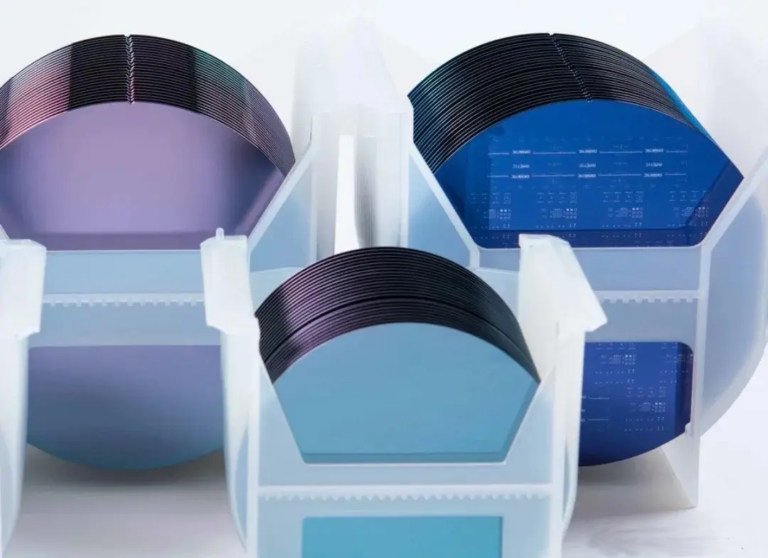
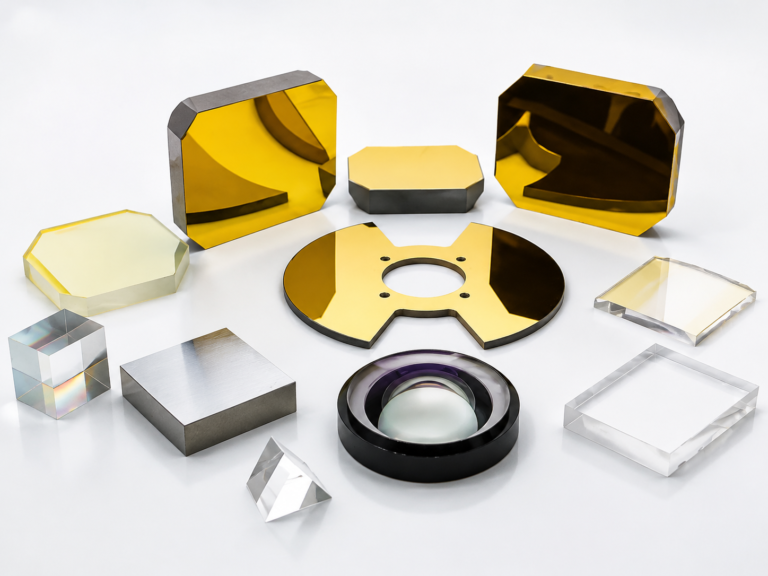
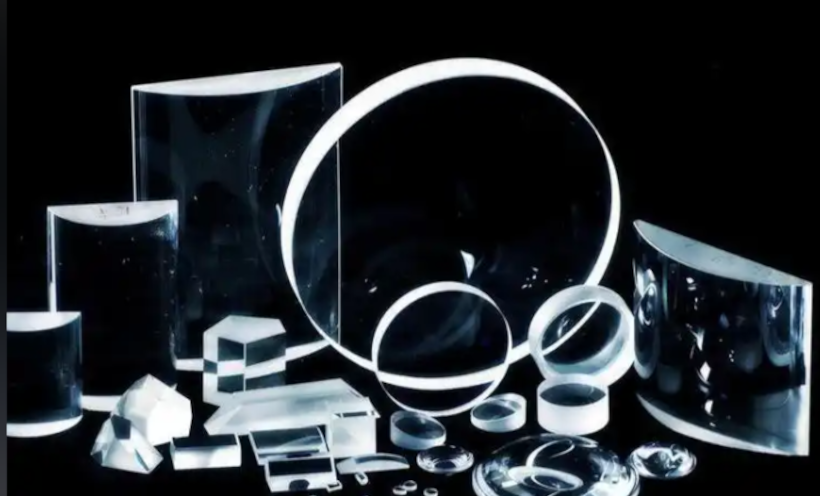
Optical glass is a specialized type of glass manufactured to provide controlled optical properties, high transparency, and consistent performance in applications. Compared with conventional glass, optical glass requires tighter control of composition, homogeneity, dimensional accuracy, and surface quality to meet the requirements of precision optical systems.
This guide explains how diamond abrasives are used throughout optical glass processing and how to select the appropriate abrasive for each stage.
Why Are Diamond Abrasives Used for Optical Glass?
Optical glass is hard and brittle, making it difficult to process without generating scratches, chipping, and subsurface damage. At the same time, optical components require tight dimensional tolerances and high-quality surfaces, so the abrasive must provide efficient material removal while maintaining control over the resulting surface condition.
Synthetic diamond abrasives are particularly suitable for optical glass processing because their exceptional hardness allows them to effectively cut and remove glass material[^1] while maintaining their abrasive characteristics under processing loads.
Compared with conventional abrasives, diamond abrasives offer higher hardness and wear resistance, supporting efficient material removal and consistent abrasive performance during precision glass processing.
Diamond Abrasives for Optical Glass Cutting and Rough Shaping
Optical glass cutting and rough shaping require a balance between cutting efficiency and damage control. Diamond selection should consider the cutting method, glass type, workpiece thickness, tool design, and the material allowance left for subsequent processing.
For metal-bonded cutting and rough-shaping tools, medium-to-coarse diamond grit is generally selected where higher stock removal and particle durability are required. Monocrystalline or controlled-strength crushed diamond can be considered depending on the bond system, cutting load, and required fracture behaviour.
For precision cutting, dicing, and thin cutting tools, finer diamond sizes are typically used to reduce cutting forces, edge chipping, and subsurface damag. Particle-size distribution and morphology become increasingly important as kerf width and surface-quality requirements become tighter.
In practice, diamond grit size should be matched to the specific tool and process rather than selected from a fixed range. Coarser grit favors material removal, while finer and more tightly controlled diamond particles are preferred as the process moves toward precision cutting and subsequent grinding or polishing.
Diamond Grit for Grinding and Shaping
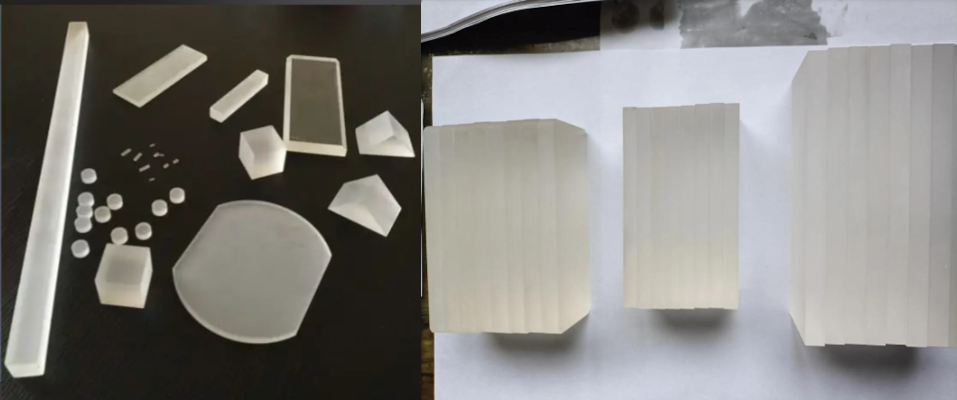
Grinding and shaping refine the geometry of the optical glass blank while removing damage left by cutting. Diamond grit should be selected according to grinding allowance, bond system, glass type, and required surface condition.
For rough grinding and higher stock removal, relatively coarse grit with sufficient crystal strength is generally preferred. More angular or crushed diamond powder can provide active cutting, while stronger and more regular monocrystalline grit may be selected where particle durability and wheel stability are priorities.
As the process moves toward finish grinding and near-net shaping, finer and more consistently graded grit is used to improve dimensional control and reduce grinding marks and subsurface damage. Particle-size consistency, morphology, and top-size control become increasingly important before lapping and polishing.
Micron Diamond Powder for Lapping and Pre-polishing
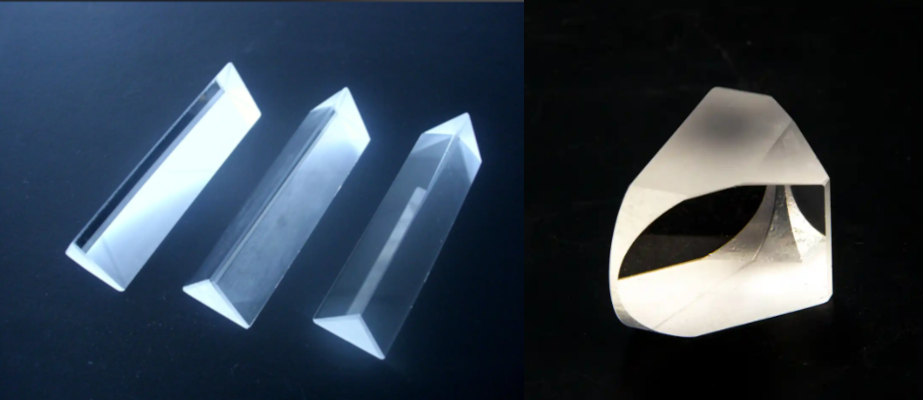
Following grinding, lapping refines surface geometry and removes residual grinding damage, while pre-polishing, where required, prepares the surface for final polishing. Micron diamond powder can be used in a suitable carrier or supplied as a formulated diamond slurry, depending on the equipment and abrasive delivery system.
Progressively finer diamond sizes are used as surface requirements increase. Particle-size distribution and top-size control become increasingly important because oversized particles can introduce deeper scratches and increase the amount of material that must be removed in subsequent polishing. In slurry-based processes, stable dispersion and abrasive concentration also help maintain consistent material removal.
Monocrystalline micron diamond powder provides relatively stable cutting particles, while polycrystalline diamond powder can micro-fracture to continuously expose fresh cutting edges during processing. For applications where multi-edge cutting and controlled micro-fracturing behaviour are desired at a lower abrasive cost, polycrystalline-like diamond powder can also be considered. The preferred type depends on the glass material, removal requirement, target surface condition, and abrasive cost.
Micron Diamond Powder for Precision Polishing
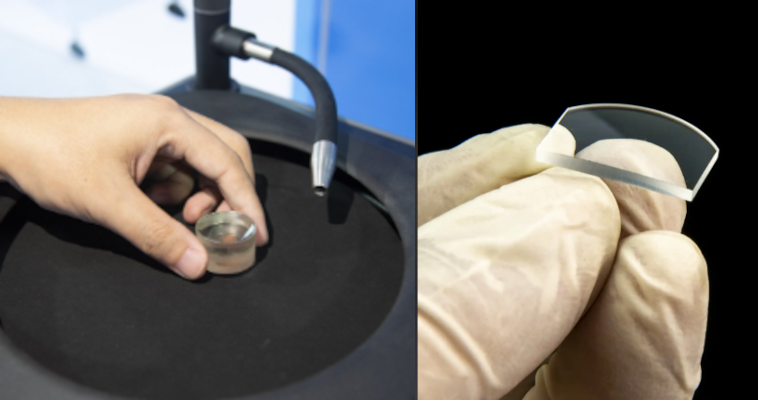
Precision polishing focuses on achieving the final surface condition rather than high material removal. Fine micron or sub-micron diamond abrasives may be selected to remove the remaining surface irregularities while minimizing new scratches and surface damage.
At this stage, particle-size distribution and top-size control are particularly important because isolated oversized particles can produce defects on an otherwise refined surface. Diamond slurry or diamond paste can provide controlled abrasive delivery, with the formulation selected according to the polishing method and surface requirements.
Particle-size control, dispersion stability, abrasive concentration, and polishing conditions must work together to minimize scratches and achieve a consistent final surface.
Diamond Slurry vs. Diamond Paste: Which Is Better for Optical Glass Polishing?
For optical glass polishing, diamond slurry is generally preferred where uniform abrasive delivery, stable dispersion, and consistent material removal across the optical surface are required.[^2] This makes diamond slurry for optical glass polishing particularly suitable for controlled lapping, pre-polishing, and precision finishing processes where scratch control and surface uniformity are important.
Diamond paste is more suitable for smaller optical components, localized polishing, manual finishing, or processes where the abrasive needs to remain concentrated at the polishing interface. Because paste is more viscous, application uniformity becomes important to avoid uneven removal or localized surface defects.
For optical glass, the choice between slurry and paste should be made after the diamond particle size and type have been defined. Slurry is usually the better option for repeatable surface-wide polishing, while paste is more useful for localized or low-volume finishing. For a broader comparison, see our Diamond Slurry vs Diamond Paste Selection Guide.
Optical Glass Processing Stage Selection Table
Diamond abrasive selection for optical glass should follow the processing stage and the amount of damage that can be tolerated before the next operation. Cutting and rough shaping prioritize controlled material removal, while grinding, lapping, and polishing progressively require finer particle sizes, tighter size control, and greater attention to surface and subsurface damage.[^3]
| Process Stage | Typical Particle Size Range | Diamond Abrasive Type | Main Selection Focus |
|---|---|---|---|
| Precision Cutting & Slicing | Tool-dependent; Range from fine mesh to micron-size diamond | Fine monocrystalline or other consistently graded diamond abrasive | Kerf control, edge chipping, cutting stability, and subsurface damage[^4] |
| Rough Shaping | Tool-dependent; generally coarser than finish grinding | Medium to coarse diamond abrasive selected for the tool and bond system | Stock removal, shape generation, and controlled edge damage |
| Rough Grinding | Medium to coarse particle range | Crushed, angular, or high-strength monocrystalline diamond depending on the wheel system | Material removal, cutting activity, and abrasive durability |
| Semi-Finish Grinding | Finer particle range than rough grinding | Consistently graded diamond abrasive with controlled morphology | Form accuracy, reduced grinding marks, and preparation for lapping |
| Pre-Lapping | Approx. 15–30 μm | Micron diamond powder | Removal of grinding marks and residual damage |
| Fine Lapping | Approx. 6–15 μm | Micron diamond powder | Surface refinement, flatness control, and reduced scratch depth |
| Precision Polishing | Approx. 1–3 μm or finer | Micron or sub-micron diamond powder | Scratch control and final surface refinement |
| Ultra-Fine Finishing | <1 μm, where required | Ultra-fine diamond abrasive, including selected polycrystalline grades | Very low roughness and defect control |
These ranges and size directions are practical starting points rather than fixed specifications. Final abrasive selection should be matched to the optical glass type, tool or pad system, removal allowance, previous surface condition, required geometry, and target surface specification.
As the process moves from cutting and grinding toward lapping and polishing, the emphasis shifts from stock removal and grit durability to particle-size consistency, top-size control, dispersion stability, and scratch prevention[^5].
What Problems Can Incorrect Diamond Abrasive Selection Cause in Optical Glass Processing?
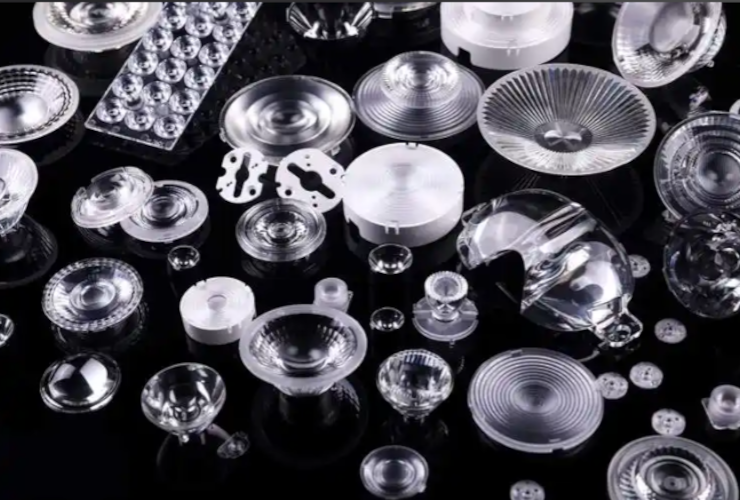
Incorrect diamond abrasive selection can affect cutting efficiency, surface quality, dimensional accuracy, and subsurface damage during optical glass processing. Common problems include:
1. Excessive Scratches and Surface Defects
An abrasive that is too coarse, too aggressive, or poorly graded for the processing stage can leave deep scratches and localized surface defects.[^6] This becomes especially critical during fine lapping and precision polishing, where oversized particles are difficult to remove without additional processing.
2. Edge Chipping and Subsurface Damage
During cutting and grinding, an overly aggressive abrasive specification can increase edge chipping, micro-fracture, and subsurface damage in brittle optical glass. Excessive damage increases the material allowance required in later lapping and polishing stages.
3. Low Material-Removal Efficiency
Diamond that is too fine or otherwise poorly matched to the process may provide insufficient material removal, increasing cycle time and making it harder to remove damage left by the previous stage. Particle size, abrasive type, concentration, and operating conditions should be considered together.
4. Uneven Material Removal and Poor Form Accuracy
Inconsistent particle size, abrasive distribution, or slurry concentration can produce non-uniform material removal across the optical surface.[^7] During lapping and polishing, this can affect flatness, geometry, and surface uniformity.
5. Abrasive Agglomeration and Contamination
Agglomerated diamond particles can behave like oversized abrasive particles, creating localized scratches or uneven removal. Foreign particles or abrasive carryover from previous processing stages can cause similar defects, making dispersion and contamination control particularly important during precision polishing.
Crownkyn Diamond Abrasive Solutions for Optical Glass
For optical glass applications, we normally select the diamond abrasive according to the glass type, processing stage, current abrasive specification, required material removal, and target surface condition. Crownkyn can supply diamond grit, micron diamond powder, polycrystalline and monocrystalline grades, as well as diamond slurry and paste for different cutting, grinding, lapping, and polishing processes.
To recommend a suitable grade, please provide:
- Glass type: BK7, fused silica, or other optical glass
- Process stage: cutting, grinding, lapping, pre-polishing, or precision polishing
- Current abrasive specification: mesh or micron size, diamond type, and delivery form
- Current issue: low removal rate, scratches, edge chipping, poor flatness, or unstable finish
- Target surface requirement: Ra, scratch specification, or other surface-quality target
- Abrasive form: loose powder, slurry, or paste
For new projects or grade replacement, sample quantities can be provided for comparative testing. Customers can evaluate material removal, scratch control, surface uniformity, and final finish before confirming the production grade. Contact us with your current specification and target performance for a recommendation.
Frequently Asked Questions About Diamond Abrasives for Optical Glass
What diamond abrasive is used for optical glass grinding?
Diamond grit and micron diamond powder are commonly selected according to the grinding stage, wheel system, removal allowance, and required surface condition. Rough grinding generally uses coarser abrasive, while finer and more tightly graded diamond is introduced as dimensional and surface requirements increase.
What diamond particle size is suitable for optical glass polishing?
Fine micron or sub-micron diamond is typically used for precision polishing, but the final size depends on the glass type, previous surface condition, polishing system, and target finish. Particle-size distribution and top-size control are especially important at this stage.
Is monocrystalline or polycrystalline diamond better for optical glass polishing?
Neither is universally better. Monocrystalline diamond provides relatively stable cutting particles, while polycrystalline diamond can micro-fracture and expose fresh cutting edges. Selection depends on removal rate, surface requirement, polishing conditions, and abrasive cost.
Is diamond slurry or diamond paste better for optical glass?
Diamond slurry is generally more suitable for uniform, repeatable polishing across larger optical surfaces, while diamond paste is useful for smaller components, localized polishing, and manual finishing.
What causes scratches during optical glass polishing?
Common causes include oversized or agglomerated abrasive particles, contamination, unstable dispersion, and an abrasive size that is too coarse for the polishing stage. Tight PSD and contamination control become increasingly important as the surface approaches its final finish.
Conclusion
Selecting the right diamond abrasive for optical glass requires matching particle size, diamond type, and PSD to each processing stage. Coarser abrasives support efficient cutting and grinding, while finer and more tightly controlled diamond powder is required as the process progresses toward lapping and precision polishing.
The final specification should be based on the glass type, processing method, material-removal requirement, and target surface quality. The goal is to achieve consistent removal with controlled surface and subsurface damage, providing a stable foundation for the next processing stage and the required final optical finish.
Reference
[1] Comprehensive Review on Precision Machining of Hard and Brittle Materials – PMC
Supports the use of diamond abrasives for precision machining of hard and brittle materials.
[2] Approaches to Sustainability in Chemical Mechanical Polishing – PMC
Supports the role of slurry dispersion, concentration, and delivery stability in polishing performance.
[3] Recent Advances in the Characterization of Subsurface Damage in Precision Machining – PMC
Supports surface and subsurface damage control during precision machining and finishing.
[4] Recent Advances in Precision Diamond Wheel Dicing Technology – PMC
Supports kerf control, edge chipping, cutting stability, and subsurface damage in precision dicing.
[5] Slurry Particle Size Evolution During the Polishing of Optical Glass – PubMed
Supports particle-size control, dispersion stability, and scratch prevention in optical glass polishing.
[6] Analysis of Subsurface Damage Based on K9 Glass Grinding – PMC
Supports the relationship between abrasive characteristics and surface or subsurface damage in glass grinding.
[7] Modeling of Material Removal Rate for Fixed-Abrasive Processing – PMC
Supports the influence of abrasive size, distribution, and concentration on material-removal uniformity.
Drafted by: Gareth Bayley
Technical Review & Editing: Ashley Wei