Introduction
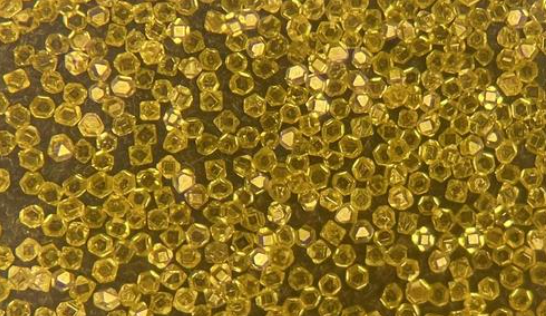
Saw grit diamond is a synthetic diamond abrasive supplied as individual grit particles in monocrystalline crystal form.[^1] It has a range of grade levels for use in diamond tooling applications.
For manufacturers of diamond tools, selecting saw grit diamond is rarely difficult when comparing completely different grades. The challenge appears when several grades appear suitable, meet the required specifications, and yet produce different results in production.
The selection process is therefore not about finding the "best" saw grit diamond grade. It is about identifying which diamond characteristics support the intended applications performance requirements.
Which Characteristics Matter When Selecting Saw Grit Diamond?
Saw grit diamond selection mainly depends on diamond strength, grit size, morphology and thermal stability[^2]. These characteristics determine cutting action, grit retention, fracture behaviour and diamond renewal inside the finished segment.
The correct grade should provide the required balance between cutting efficiency and tool life rather than maximise any single property.
Diamond Strength and Friability
Higher-strength saw grit grades are generally preferred where retention and durability are important, while more friable grades provide easier cutting-edge renewal. Excessive strength can reduce self-renewal, while insufficient strength may cause premature breakdown.
Grit Size
Grit size controls cutting aggressiveness and the number of active cutting points. Specific mesh-size recommendations for different saw blade and core drilling applications are provided below.
Diamond Morphology
Diamond morphology influences cutting edge formation, particle strength and bond interaction.
Thermal Stability and Surface Condition
Consistent surface condition and cleanliness also support stable bond interaction and segment production. These factors should be evaluated together with diamond strength, size and morphology when selecting the final grade.
How to Select Saw Grit Diamond for Different Cutting Applications
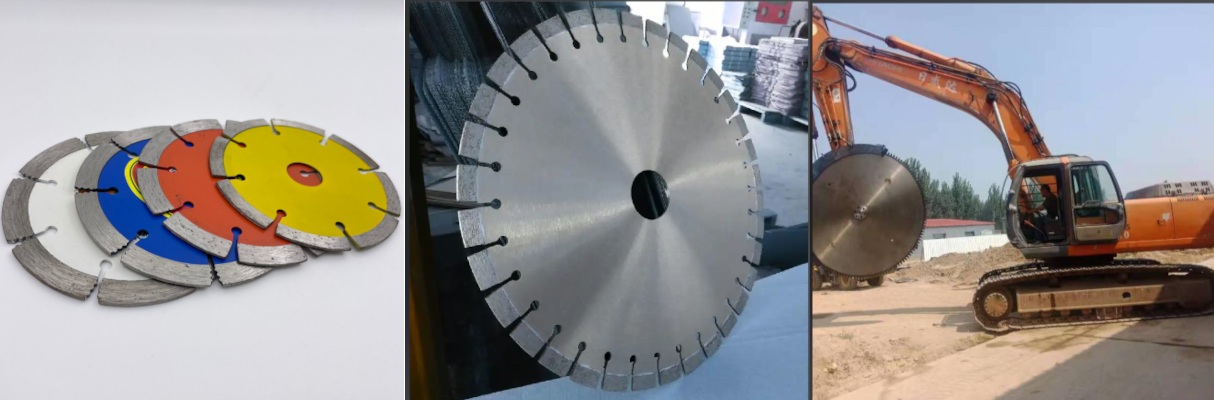
The suitable synthetic diamond grit for saw blades, core drills and wire saws depends on the material being cut, tool design, diamond segment bond and operating conditions[^6]. Diamond strength, morphology and grit size should be matched to the required balance between cutting efficiency, grit retention and tool life.
The following selection directions provide practical starting points for common diamond cutting applications.
Diamond Grit for Granite and Stone Cutting
Diamond grit for granite cutting must withstand high cutting loads while maintaining active cutting edges as the diamond segment bond wears. Hard stone applications generally require good particle strength and stable grit retention.
Higher-strength, blocky diamond grit is commonly considered for granite and other hard stone, while more friable grades may be suitable where faster cutting-edge renewal is required. The final grade should be matched to stone abrasiveness, segment bond and cutting conditions.
Diamond Grit for Reinforced Concrete Saw Blades
Diamond grit for reinforced concrete is exposed to variable loads from cement, aggregate and steel reinforcement. The abrasive therefore requires sufficient toughness to resist impact and premature fracture during heavy cutting.
High-strength diamond grit with good retention is generally preferred for demanding construction saw blades. Selection should also consider the diamond segment bond, as the bond must expose new cutting points without causing excessive grit pull-out or glazing.
Diamond Grit for Core Drilling
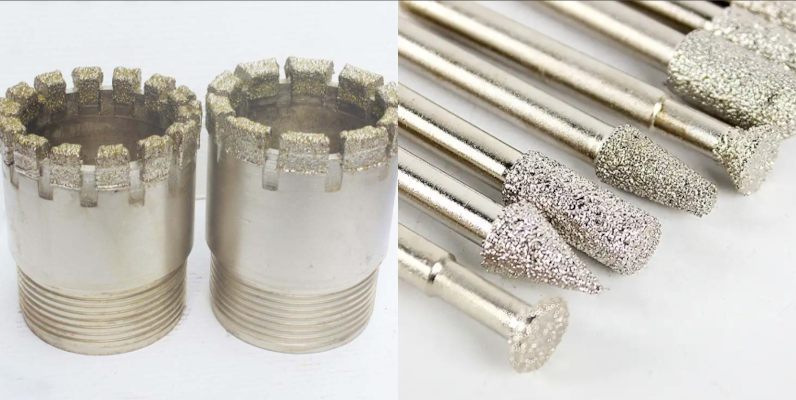
Diamond grit for core drilling must maintain cutting activity as the crown wears while resisting impact, vibration and premature diamond loss.
The appropriate diamond strength and mesh size depend on the material, crown design and drilling conditions. Hard or reinforced materials may require stronger diamond grades, while grit size and bond wear should be balanced to maintain stable exposure throughout the working life of the core drill.
Diamond Grit for Wire Saws
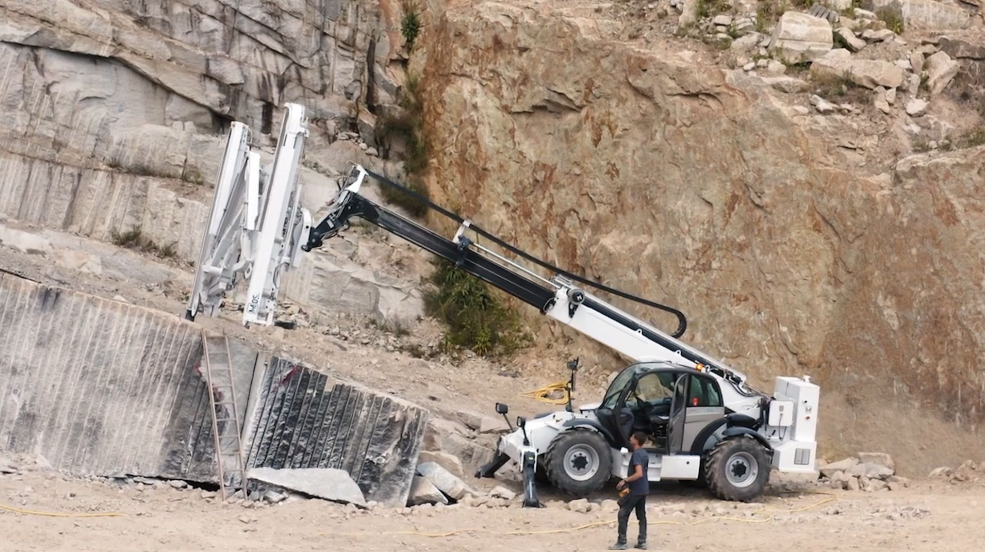
Diamond grit for wire saws used in quarrying and stone processing must maintain cutting activity under continuous cutting loads, vibration and repeated thermal exposure.
Higher-strength diamond with good TI and TTI is commonly considered where durability and grit retention are important. The final grade and mesh size should be matched to the stone type, bead bond, wire speed and required balance between cutting rate and bead life.
Quick Selection Guide for Saw Grit Diamond Applications
| Application | Main Cutting Challenge | Diamond Selection Direction |
|---|---|---|
| Granite / hard stone | High cutting load and wear | Higher-strength, blocky diamond grit with stable retention |
| Marble / softer stone | Maintain cutting activity | More active cutting behaviour and suitable friability |
| Reinforced concrete | Variable load, impact and steel contact | High-strength diamond grit with good impact resistance |
| Core drilling | Impact, vibration and crown wear | Suitable strength and mesh size with controlled grit renewal |
| Stone wire saws | Continuous cutting load, vibration and bead wear | Higher-strength diamond with good TI/TTI, stable retention and suitable mesh size |
How to Select Saw Grit Diamond Size
Saw grit diamond is commonly supplied in mesh sizes from approximately 20/25 to 60/70 mesh for saw blade, segment and core drilling applications. Grit size affects cutting aggressiveness, the number of active cutting points and the resulting cutting behaviour.
| Application | Typical Starting Size | Selection Focus |
|---|---|---|
| Heavy-duty stone cutting | 20/25 – 30/35 mesh | High cutting aggressiveness and stock removal |
| Granite / general stone saw blades | 30/35 – 40/45 mesh | Balance cutting speed, retention and tool life |
| Reinforced concrete saw blades | 30/35 – 50/60 mesh | Balance impact resistance, cutting efficiency and segment wear |
| Core drilling | 40/45 – 50/60 mesh | Stable cutting action and diamond exposure |
| Finer / controlled cutting | 50/60 – 60/70 mesh | More cutting points and smoother cutting behaviour |
These ranges are practical starting points rather than fixed specifications. The final diamond grit size should be matched with diamond strength, segment bond, diamond concentration, material being cut and operating conditions.
For mesh-to-micron conversion and standard diamond size specifications, see our Diamond Grit Size Guide.
When Should You Change the Saw Grit Diamond Grade?
A saw grit grade should be changed when the existing diamond no longer provides the required balance between cutting speed, grit retention and tool life while the segment formulation and operating conditions remain relatively stable.
Toughness Index (TI) and Thermal Toughness Index (TTI) are useful for comparing candidate grades. TI indicates resistance to mechanical impact and fracture, while TTI reflects retained toughness after thermal exposure.[^8] Higher values generally indicate stronger diamond, but the highest TI or TTI is not automatically the best choice because the required strength depends on the bond system and cutting conditions.
For more detail on TI, TTI and other diamond quality parameters, see our Diamond Powder Properties Guide.
How Should a New Saw Grit Diamond Grade Be Evaluated?
A new saw grit grade should first be compared by TI, TTI, particle morphology, mesh size and size distribution, but laboratory specifications alone cannot determine performance in the finished tool.
The new grade should then be tested against the current grade using the same segment formulation and cutting conditions. Compare cutting speed, segment wear, tool life, diamond pull-out or fracture, and overall diamond consumption. A suitable grade should provide a measurable performance improvement without reducing manufacturing or batch-to-batch consistency.
Final grade selection should therefore combine diamond property data with actual segment cutting tests rather than relying on TI or TTI values alone.
Common Cutting Problems and What to Check
Cutting problems are not always caused by the diamond grade. Before changing saw grit diamond, evaluate the diamond together with the segment bond, concentration, tool design and operating conditions.
| Cutting Problem | Possible Diamond-Related Cause | What to Check / Adjust |
|---|---|---|
| Low cutting speed / glazing | Diamond grade too strong, insufficient edge renewal, or unsuitable grit size | Check diamond strength and friability; consider a more active grade or suitable mesh size; also check whether the segment bond is too hard |
| Short tool life / rapid segment wear | Excessive grit fracture, premature diamond loss or mismatch between diamond and bond wear | Compare TI/TTI and morphology; inspect grit fracture and retention while also checking segment bond formulation |
| Premature diamond pull-out | Poor grit retention or unsuitable diamond surface characteristics | Check diamond morphology and bond compatibility; also review segment bond and manufacturing conditions |
| High diamond consumption | Premature fracture, pull-out, or unsuitable grade strength | Inspect worn segments to distinguish diamond fracture from pull-out; adjust grade only after confirming the failure mode |
| Unstable cutting performance | Inconsistent grit size, morphology or diamond quality | Check mesh size distribution, crystal consistency and batch-to-batch TI/TTI stability |
| Excessive cutting load | Grit size or diamond cutting behaviour does not match the application | Review mesh size, morphology and grade strength together with bond hardness and operating parameters |
The key is to identify the failure mode before changing the diamond grade. Diamond fracture, grit pull-out and insufficient grit renewal may produce similar cutting symptoms but require different adjustments.[^9]
Crownkyn Saw Grit Diamond Solutions
Crownkyn supplies synthetic saw grit diamond in different strength levels, mesh sizes and morphologies for saw blades, core drills and wire saw applications.
For grade selection, please provide:
- Tool type and segment/bond system
- Material being cut
- Current diamond grade and mesh size
- Main issue: low cutting speed, short tool life, glazing or high diamond consumption
- Target performance and trial quantity
Based on these conditions, Crownkyn can recommend a starting saw grit grade for comparative testing.
Conclusion
The best saw grit diamond is not simply the strongest grade. Selection should balance cutting activity, grit retention and controlled diamond renewal within the actual segment and cutting conditions.
Use TI, TTI, morphology and mesh size to compare candidate grades, then confirm the final specification through controlled segment cutting tests.
References
[1] Diamond blade
This reference provides a general definition of synthetic diamond grit used in cutting tools.
[2][6] Research Progress on Additively Manufactured Diamond Tools
This study discusses how diamond size, strength, morphology, thermal resistance and tool conditions influence diamond tool performance.
[3][5] CVD Diamond Processing Tools: A Review
This review explains the influence of diamond strength, friability, fracture behaviour and thermal stability on tool wear and cutting performance.
[4] Wear Evolution of Metal Bond Diamond Tool in Grinding
This study discusses the relationship between diamond morphology, retention, wear behaviour and cutting performance.
[7] Cutting Efficiency of Three Diamond Bur Grit Sizes
This study explains how diamond grit size affects cutting efficiency, material removal and surface quality.
[8] Industrial Diamond Research Papers
This reference explains the concepts of Toughness Index (TI) and Thermal Toughness Index (TTI) for synthetic diamond evaluation.
[9] Wear of the Blade Diamond Tools in Truing Vitreous Bond Grinding Wheels
This study discusses diamond wear mechanisms including fracture, pull-out and changes in grit exposure.
Drafted by: Gareth Bayley
Technical Review & Editing: Ashley Wei