Introduction
Cemented carbide is a composite of hard carbide particles, typically tungsten carbide, bonded with a metallic binder such as cobalt. Its high hardness and wear resistance make grinding and polishing highly dependent on abrasive type, particle size, crystal strength, and morphology.
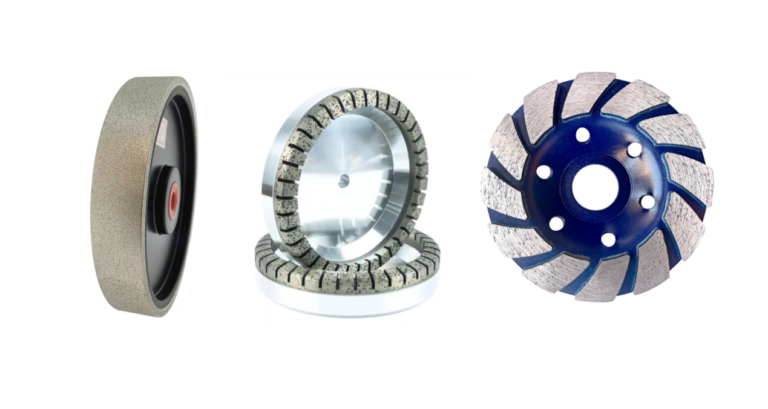
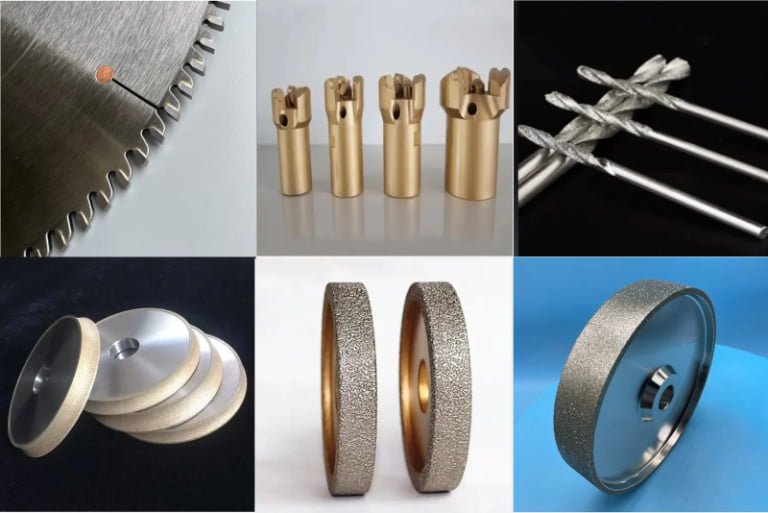
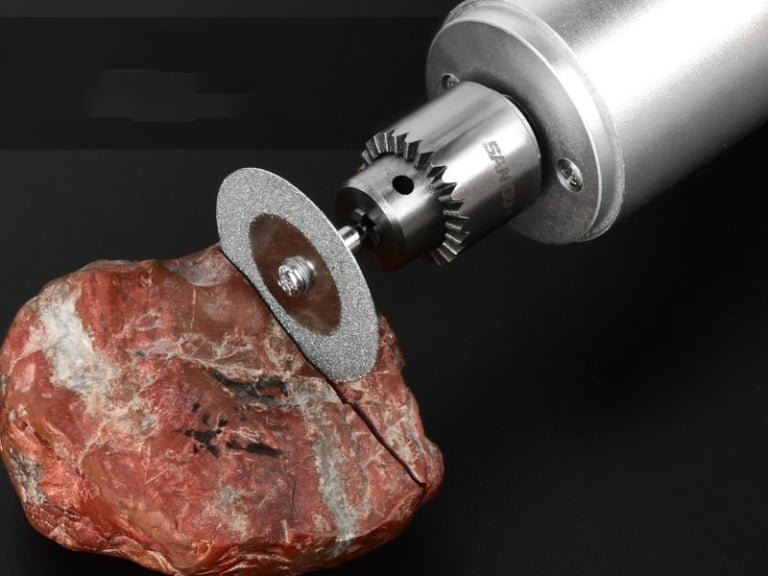
Diamond abrasives are widely used for cemented carbide grinding and polishing[^1], but the appropriate diamond specification changes from rough grinding and tool-geometry formation to edge preparation and final polishing. This guide explains how to select diamond grit, micron diamond powder, and polishing abrasives for different carbide processing stages.
Why Diamond Abrasives Are Used for Cemented Carbide
Cemented carbide combines very high hardness with high wear resistance, making it difficult for conventional abrasives to generate effective cutting action without experiencing rapid abrasive wear.
Synthetic diamond abrasive is used because diamond is significantly harder than cemented carbide and has high resistance to abrasive wear. These properties allow the abrasive particles to maintain an effective cutting interface during material removal under the mechanical loads generated during carbide grinding and polishing.
Diamond abrasive is also capable of maintaining the abrasive performance required when cemented carbide must be processed to tight dimensional tolerances and controlled surface conditions. This makes synthetic diamond suitable not only for removing carbide efficiently, but also for processes where the abrasive must provide consistent and predictable finishing performance.
Diamond Abrasive Selection by Carbide Processing Stage
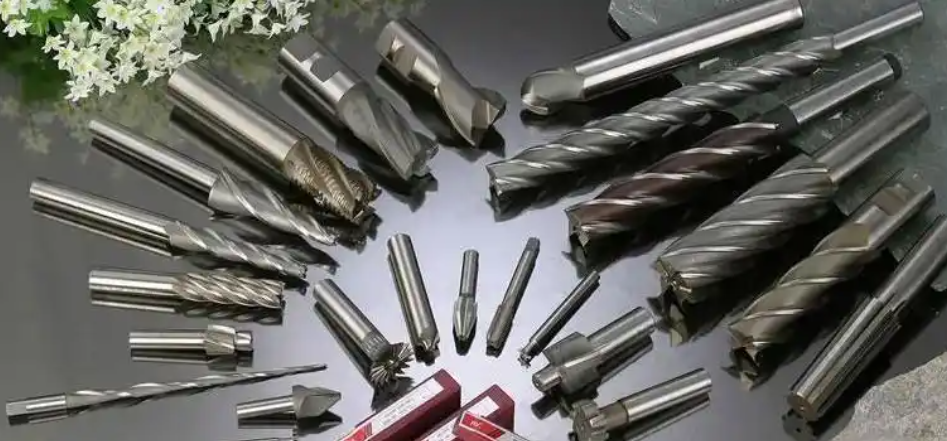
Diamond abrasive selection for cemented carbide depends on the processing stage, carbide grade, material-removal requirement, and grinding conditions. Crystal strength, particle size, and morphology should be matched to WC grain size, binder content, hardness, and toughness to balance cutting efficiency, abrasive life, dimensional control, and edge integrity.
As processing moves from rough grinding toward finishing and polishing, abrasive selection generally shifts to finer particle sizes and tighter PSD control[^2] to remove grinding marks and achieve the required surface finish.
Rough Grinding of Cemented Carbide Tool Geometry
For rough grinding of cemented carbide tool geometry, the priority is efficient carbide removal and stable abrasive performance. Coarser diamond grit is generally selected when higher stock removal is required, while crystal strength and fracture behaviour influence how long the abrasive remains effective under grinding loads.
Crushed diamond grit, with its irregular, angular particles, can provide aggressive cutting action and is suitable where high material removal is required. Diamond strength should be matched to the grinding conditions so that the abrasive does not break down prematurely.
Semi-Finish Grinding of Cemented Carbide Tool Geometry
As grinding progresses toward the required tool geometry, a finer and more controlled abrasive specification can be selected to improve dimensional accuracy and reduce excessive surface damage. Crystal strength, particle size, , and morphology should be considered together rather than selected independently.
Wheel grit diamond offers more controlled particle geometry and can be considered where the grinding operation requires a more consistent cutting profile and greater control over the finished tool geometry.

Cemented Carbide Fine Grinding
After rough or precision grinding, micron diamond powder can be used when the objective is to remove remaining grinding marks while improving dimensional and surface control. Particle-size distribution (PSD) becomes increasingly important as the required surface finish becomes finer. A controlled PSD helps maintain consistent abrasive action and limits oversized particles that could produce deeper grinding marks.[^3]
For higher material removal during fine grinding, a relatively coarser micron diamond can be selected within the required finishing range. Where the priority shifts toward surface refinement and lower roughness, a finer micron diamond should be used.
For applications where the abrasive needs to maintain a consistent cutting action throughout the fine-grinding process, monocrystalline micron diamond can be considered.
Cemented Carbide Polishing
For polishing of cemented carbide, the diamond abrasive should be selected according to the required surface finish and the amount of material that still needs to be removed after grinding or lapping.
Particle size and PSD should be considered together when selecting the polishing abrasive. Where noticeable grinding marks remain and material removal is still important, a relatively coarser micron diamond can be selected. As the required surface roughness decreases, finer diamond sizes should be used. A controlled PSD helps maintain consistent abrasive action and predictable surface refinement.
Diamond type should then be selected according to the required polishing behaviour. Monocrystalline diamond can be considered where consistent particle geometry and predictable cutting action are priorities, while polycrystalline diamond can be considered where greater abrasive renewal and continued cutting activity are beneficial[^4].
For polishing processes requiring controlled abrasive distribution, diamond slurry or paste can be used to deliver the selected micron diamond. The delivery form should be matched to the polishing equipment and process requirements rather than used as the primary basis for selecting diamond size.
Where exceptionally low surface roughness or a highly refined surface is required, the process may progress to sub-micron or nano diamond finishing. This is generally reserved for specialized cemented carbide applications where conventional micron diamond polishing cannot achieve the required surface condition.
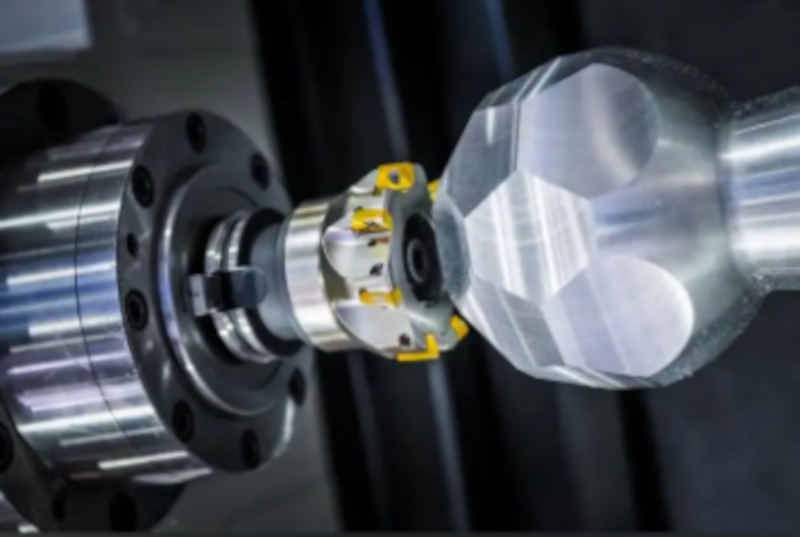
Diamond Abrasive Selection for Cutting-Edge Preparation
Once the main tool geometry and cutting edge have been established, diamond abrasive selection focuses on controlled edge refinement, removal of grinding-related damage, and achieving the required edge radius and surface condition.
Insert Edge Grinding
After the primary geometry of a cemented carbide insert has been established, diamond abrasives can be used to form and refine the cutting edge. The abrasive choice depends on whether the operation is still removing carbide to establish the edge geometry or is refining an already formed edge.
For initial edge grinding, where measurable carbide removal is still required, wheel grit diamond or crushed diamond grit can be used. Crushed diamond grit is suitable where higher cutting activity and material removal are required, while wheel grit diamond can be considered where the edge geometry needs to be established with greater control.
Cutting-Edge Preparation
After the primary cutting edge has been formed, edge preparation focuses on removing grinding-related damage, correcting minor edge defects, and preparing the edge for final honing or finishing.
Where measurable correction is still required, fine wheel grit diamond can be used. As the edge approaches the required condition, micron diamond powder can provide finer control over edge refinement. Particle size and PSD should be selected according to the required edge condition and the amount of material that must be removed.
Cutting-Edge Honing
Cutting-edge honing is the final controlled edge-refinement stage used to establish the required edge radius and surface condition. Micron diamond powder is selected according to the required edge radius and degree of refinement, with finer particle sizes used as the required edge condition becomes more refined. Monocrystalline or polycrystalline diamond can then be selected according to whether consistent cutting behaviour or greater abrasive renewal is preferred.
Where the honing process requires a controlled and uniform supply of abrasive to the cutting edge, diamond slurry or paste can be used instead of loose micron powder. The choice between these forms depends on the honing equipment and the required degree of abrasive control.
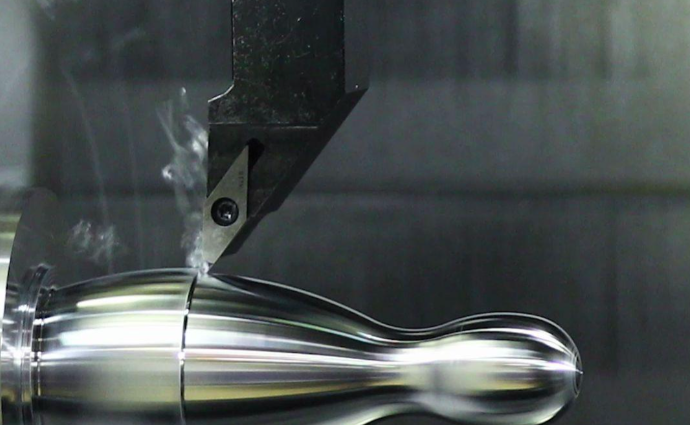
Diamond Abrasives Selection Guide
Cemented carbide grinding operations require diamond abrasives capable of removing carbide efficiently, while finer finishing and polishing operations require greater control over the abrasive interaction with the surface.
| Processing Stage | Typical Diamond Abrasive | Typical Particle Size | Primary Selection Focus |
|---|---|---|---|
| Rough grinding | Wheel grit diamond / Crushed diamond grit | 80/100 to 120/140 mesh | High stock removal and efficient carbide removal |
| Semi-finish grinding | Wheel grit diamond / Crushed diamond grit | 140/170 to 200/230 mesh | Improved dimensional accuracy |
| Fine grinding / pre-polishing | Micron diamond powder | 15–30 μm | Grinding-mark removal and surface refinement |
| Edge finishing | Micron diamond powder | 6–15 µm | Edge quality and controlled edge refinement |
| Final polishing | Micron diamond powder / Diamond slurry & paste | 1–3 µm | Final surface roughness and surface integrity |
These particle-size ranges are practical starting points rather than fixed specifications. Final diamond size should be selected according to the carbide grade, stock removal, processing method, tool design, and required edge or surface condition.[^5]
The bond system should also be considered because resin, vitrified, and metal bonds differ in abrasive retention, bond wear, and self-sharpening behaviour. For detailed mesh and micron size comparisons, refer to our diamond powder particle size guide.
Common Problems in Cemented Carbide Grinding and Polishing
Cemented carbide grinding and polishing problems are often related to a mismatch between the diamond abrasive specification and the required processing stage. Common issues include insufficient material removal, premature abrasive wear, loss of cutting activity, edge damage, and inadequate surface finish.
1. Low Material Removal Rate
Diamond grit or powder may produce insufficient material removal when the abrasive is too fine for the required stock removal or when the diamond grade does not provide sufficient cutting activity for the grinding conditions. This can increase processing time and make it difficult to achieve the required production rate.
2. Premature Diamond Wear or Breakdown
Diamond may wear or fracture prematurely when the abrasive grade is not sufficiently durable for the applied grinding load, reducing active cutting points and shortening abrasive life. Wheel speed, grinding pressure, and coolant delivery can also influence diamond wear[^6], so premature breakdown should be evaluated together with the grinding conditions rather than attributed to the diamond grade alone.
3. Wheel Glazing and Loss of Cutting Activity
The abrasive surface can become progressively less active when diamond particles do not fracture or renew at an appropriate rate for the grinding conditions. Worn or blunted cutting points can remain at the working surface, increasing grinding forces and heat generation while reducing material removal efficiency.
4. Edge Chipping and Cutting-Edge Damage
Cemented carbide cutting edges can experience chipping or micro-damage when the abrasive interaction is too aggressive for the edge-grinding or edge-preparation operation. Excessively coarse grit, unsuitable diamond morphology, or an abrasive specification that produces excessive cutting impact[^7] can affect the final edge condition and geometry.
5. Inadequate Surface Finish
The required surface finish may not be achieved when the diamond particle size, abrasive type, or finishing sequence is not appropriate for the target surface condition. Excessively coarse abrasive can leave grinding marks or surface damage that cannot be removed efficiently by the subsequent polishing stage.
Frequently Asked Questions
1. What diamond abrasive is best for cemented carbide grinding?
Synthetic diamond is the preferred abrasive for cemented carbide grinding because of its high hardness and wear resistance. The appropriate diamond grit depends on the grinding stage, carbide grade, stock removal, and required surface finish.
2. What diamond grit size is used for cemented carbide grinding?
Coarser diamond grit is generally used for rough grinding and higher stock removal, while finer grit and micron diamond powder are used as the process moves toward precision grinding, edge finishing, and polishing. Final particle size should be matched to the specific grinding operation and surface requirements.
3. Is crushed or monocrystalline diamond grit better for cemented carbide grinding?
Neither is universally better. [Crushed diamond provides sharper cutting edges and more active abrasive renewal, while monocrystalline diamond provides greater particle stability and more predictable wear. Selection depends on the grinding load, material removal requirement, bond system, and desired tool life.
4. What diamond powder is used for polishing cemented carbide?
Micron diamond powder is commonly used for cemented carbide polishing, with finer particle sizes selected as the required surface roughness decreases. Monocrystalline or polycrystalline diamond can be selected according to the required cutting behaviour and abrasive renewal.
5. Can diamond slurry be used for cemented carbide polishing?
Yes. Diamond slurry can provide controlled and uniform delivery of micron diamond during cemented carbide polishing and fine finishing. The diamond size, concentration, carrier system, and polishing process should be matched to the required surface finish.
Crownkyn Diamond Abrasives for Cemented Carbide
Crownkyn supplies synthetic diamond grit and micron diamond powder for cemented carbide grinding and polishing, including crushed diamond grit, wheel grit diamond, monocrystalline micron diamond, and polycrystalline micron diamond. Available specifications can be matched by grit size, crystal strength, morphology, PSD, and diamond type.
For grade selection, we normally review the carbide application, processing stage, current abrasive specification, material-removal requirement, and target edge or surface finish. For new projects or grade replacement, sample quantities can be provided for comparative testing before the production grade is confirmed.
Conclusion
Diamond abrasive selection for cemented carbide should follow the processing stage. Coarser grit is generally used for stock removal, while controlled wheel grit and micron diamond powder provide progressively greater control during precision grinding, edge preparation, and polishing.
The final specification should balance grit size, crystal strength, morphology, and PSD with the carbide grade and actual grinding or polishing conditions rather than relying on any single abrasive parameter.
Reference
[1] Experimental Research on Wear Mechanism of Diamond Wheels – ScienceDirect
Supports the use of diamond abrasives for grinding hard cemented carbide materials.
[2] Effects of Particle Size Distribution on Surface Finish – University of Texas
Supports the progression from coarser abrasives in grinding to finer, more controlled particle sizes in finishing and polishing.
[3] A Comprehensive Review of Nano-Abrasives – PMC
Supports the importance of PSD control and limiting oversized particles to reduce scratches and improve finishing consistency.
[4] Study on Self-Sharpening Mechanism and Polishing Performance of Polycrystalline Diamond Abrasives – PMC
Supports abrasive renewal in polycrystalline diamond through controlled micro-fracture during polishing.
[5] Grinding and Other Abrasive Processes – MSU Engineers
Supports selecting abrasive grit size according to material properties, stock removal, process conditions, tool geometry, and target surface finish.
[6] Tool Wear Mechanism and Grinding Performance for Different Cooling Conditions – PMC
Supports the influence of wheel speed, grinding load, and coolant conditions on abrasive wear and grinding performance.
[7] Influence of the Geometrical Features of Abrasive Cutting Edges – PMC
Supports the influence of abrasive size, grain geometry, and grinding aggressiveness on edge condition, micro-damage, and cutting-edge quality.
Drafted by: Gareth Bayley
Technical Review & Editing: Ashley Wei