Introduction
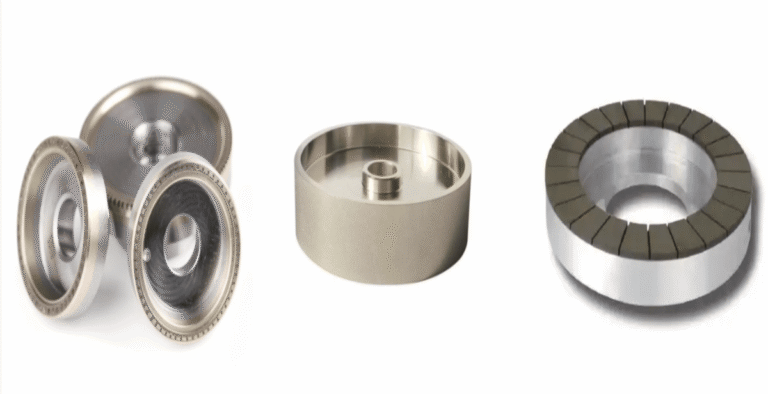
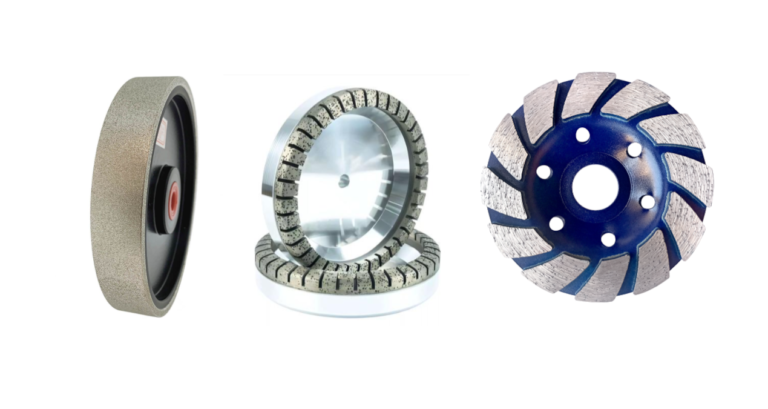
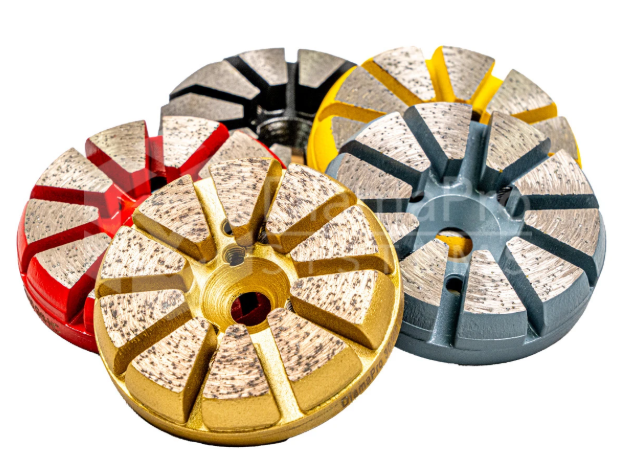
CBN is used for processing hardened steels because of its high hardness and thermal stability. However, CBN selection depends on more than the hardness of the workpiece.
Different hardened steels can generate different grinding loads and wear conditions depending on their composition, carbide content, and hardness[^1]. The processing operation also affects the required CBN grit size, crystal strength, and fracture behaviour, while the tool type determines how the CBN grains are retained, exposed, and renewed during grinding.
This guide explains how these factors influence CBN selection for hardened steel processing and provides practical guidance for matching CBN characteristics to different steel, processing, and tool requirements.
Why Is CBN Used for Hardened Steel Grinding?
CBN is widely used for hardened steel grinding due to its high hardness, wear resistance, thermal stability, and chemical stability with ferrous materials[^2]. CBN has very high hardness and good wear resistance, while maintaining its properties at elevated temperatures. It also has good chemical stability when in contact with ferrous materials at elevated temperatures and is less susceptible to chemical degradation than diamond powders in these conditions.
What Factors Affect CBN Selection for Hardened Steel?
CBN selection specifications can be determined by working through application inputs:
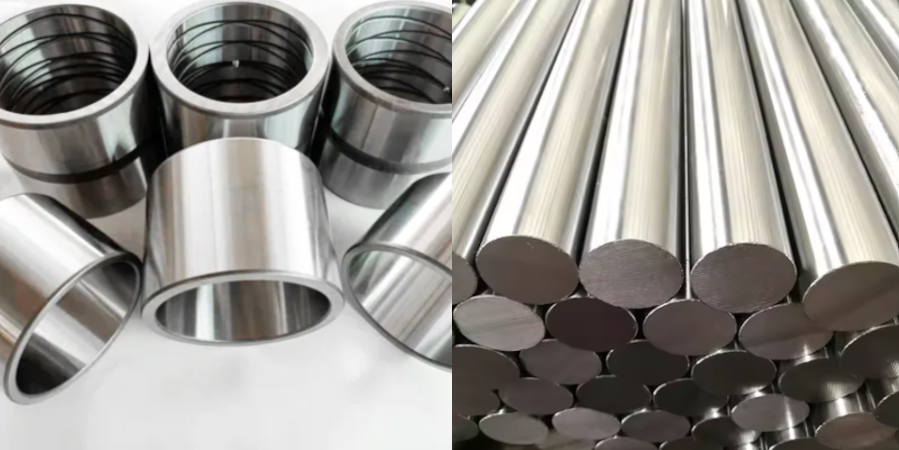
Steel type and hardness: Start with the steel grade and hardness after heat treatment. Higher-hardness hardened steels and more demanding grinding conditions generally require a CBN grade with higher crystal strength, while lower grinding loads can allow a more friable grade.
Machining allowance: Determine the amount of stock that must be removed. A larger allowance points toward coarser CBN grit for greater stock removal[^3], while a small allowance or finishing operation points toward finer grit.
Surface requirements: Determine the required surface finish. Finer surface requirements call for finer CBN grit and tighter PSD control[^4], while less demanding finishes can allow a coarser grit.
Abrasive tool type: Identify whether the hardened steel will be ground with a resin bond, vitrified bond, metal bond, or electroplated tool. This determines additional requirements such as CBN morphology, coating, crystal strength, and bond compatibility.
Combining these requirements establishes a candidate CBN grade, grit size, PSD, and other relevant specifications for the hardened-steel grinding application before final selection under the actual grinding conditions.
How Does the Bond System Affect CBN Selection?
CBN grinding wheel bond systems determine how CBN grains are retained, exposed, and renewed during grinding, directly affecting CBN selection requirements.
| Bond System | CBN Selection Requirements | Tool Manufacturing Conditions to Confirm |
|---|---|---|
| Resin bond | CBN should provide good cutting activity and controlled self-sharpening. The grain should be sufficiently durable to avoid premature breakdown, but not so tough that worn cutting points remain dull and increase grinding forces or heat. | Resin formulation, bond hardness, curing temperature, grain retention, and target grain exposure |
| Vitrified bond | CBN selection requires a balance between grain durability, cutting activity, and controlled abrasive renewal. Consistent crystal strength and morphology are especially important where profile accuracy, dimensional control, and repeatable surface finish are required. | Firing temperature, firing atmosphere, vitrified bond composition, CBN compatibility, and dressing conditions used to control grain exposure |
| Metal bond | CBN with sufficient crystal integrity is considered where wear resistance and abrasive life are important. Because strongly retained grains can eventually wear or dull, the selected grade should also provide suitable abrasive renewal for the specific matrix and grinding conditions. | Metal matrix composition, sintering temperature, pressure, CBN-matrix interaction, and conditions controlling grain exposure and retention |
| Electroplated / single-layer | Crystal strength, morphology, grit size, plating thickness, and grain projection should be considered together when selecting electroplated CBN grit. Higher-integrity grains are commonly preferred where profile retention, dimensional accuracy, and stable abrasive performance are critical. | Plating material, plating conditions, plating thickness, embedment depth, and target grain projection |
How Is CBN Selected for Different Hardened Steel Processing Stages?
Hardened Steel Grinding
Mesh CBN is designed for use on hardened steel. The combination of crystal strength, fracture behaviour, particle morphology, size characteristics, and thermal performance determine how the abrasive cuts, wears, and performs. Coarse mesh sizes are selected for early rough grinding, with progressively finer mesh sizes used as the process moves toward general grinding and greater surface-finish requirements.
Coated CBN is cubic boron nitride abrasive with a surface coating layer added that during grinding is designed to help increase grain holding strength, reduce premature grain pull-out and maintain stable abrasive performance[^5]. The actual effect depends on the coating type, base CBN grade and tool bonding system.
Ni-Coated CBN powder is developed primarily for resin-bond grinding wheels. The nickel layer improves mechanical anchoring between CBN grains and the surrounding bond and supports heat distribution during grinding
Ti Coated CBN powder is designed for metal-bond and selected vitrified-bond grinding tools. The active titanium layer supports interfacial bonding between CBN grains and the surrounding bond and can form Ti-containing nitride and boride phases under suitable thermal processing conditions[^6].
For more information on CBN abrasive selection read our CBN grit selection guide.

Hardened Steel Honing
CBN for hardened steel honing uses CBN grit in honing tools such as honing stones, sticks, and other bonded or electroplated honing tools. Because the CBN is incorporated into the honing tool, its specification should be matched to the tool design and honing conditions, including CBN grain wear and retention, honing load, required stock removal, and target surface condition.
Hardened Steel Lapping and Fine Finishing
For lapping and fine finishing of hardened steel, PSD and oversize control become increasingly important as surface-finish requirements become more demanding. Oversize particles or agglomerates can produce isolated deep scratches[^7] and affect the consistency of the finished surface.
When micron CBN powder is used as a loose abrasive or in a slurry or suspension applied between the lapping plate and workpiece, particle size and morphology should be selected according to the required balance between controlled material removal and surface finish. Abrasive concentration and carrier compatibility should also be evaluated to maintain consistent abrasive distribution and processing behaviour. The final specification should be matched to the required removal rate and target surface condition.
For more information on CBN micron powder for fine finishing properties read our CBN micron powder selection guide guide.
Quick Selection by Hardened Steel Processing Stage
| Processing Stage | CBN Form to Consider | Main Selection Focus |
|---|---|---|
| Rough grinding | Coarser grain CBN grit in bonded, or electroplated grinding tools | Grain durability and retention for high grinding loads and high stock removal |
| General grinding | CBN grit in bonded or electroplated grinding wheels | Balance grain durability, cutting activity, and bond compatibility |
| Fine grinding | Finer grain CBN grit in bonded or electroplated grinding tools | Grit size and grade for controlled stock removal, dimensional accuracy, and surface finish |
| Honing | CBN grit in honing stones, sticks, or other bonded or electroplated honing tools | Honing load, grain retention, and required stock removal |
| Lapping | CBN micron powder in loose-abrasive slurry or suspension | Particle size distribution, oversize control, abrasive concentration, and carrier compatibility |
| Fine finishing | CBN in bonded finishing tools or CBN micron powder in a compound or suspension, depending on the finishing method | Controlled cutting, scratch control, and surface-finish consistency. |
Common Problems in CBN Grinding of Hardened Steel
The following issues can indicate that the selected CBN specification is not well matched to the hardened steel, processing conditions, or performance requirements.
Insufficient Cutting Ability or Excessively Fast Grinding Wheel Wear
Insufficient cutting ability can occur when the selected CBN does not provide sufficient cutting activity for the hardened steel grinding application, while excessively fast wheel wear can result from insufficient grain durability under the grinding conditions. CBN strength, fracture behaviour, and grit size should be matched to the required balance between cutting activity and abrasive life.
Poor Surface Quality
Poor surface quality can result from an unsuitable CBN grit size or particle size distribution for the hardened steel finishing stage. Coarse particles can produce deeper scratches, while uncontrolled PSD can introduce oversized particles that affect surface consistency. Finer and more tightly controlled CBN specifications are appropriate where tighter surface-finish requirements apply.
Premature Abrasive Grain Pull-Out
Premature grain pull-out can occur when the CBN is not adequately retained by the bond during hardened steel grinding. This can reduce wheel life and alter the working surface of the abrasive before the CBN has been effectively used. CBN type, coating, and bond compatibility should therefore be considered together when grain retention is limiting wheel performance.
Crownkyn CBN Grade Selection and Technical Support
To help us recommend the most suitable CBN grade or tool system for your application, please provide the following details:
| Information | Details to Provide |
|---|---|
| Workpiece material | Hardened steel type and grade, if known |
| Processing method | Grinding, honing, lapping, or fine finishing |
| Tool or bond system | Resin, vitrified, metal, electroplated, or other tool type, if applicable |
| Current CBN specification | CBN type, grit size, grade, coating, or PSD, if known |
| Processing conditions | Material removal requirements and relevant grinding or processing conditions |
| Current problem or target | Cutting ability, abrasive wear, surface quality, grain retention, wheel life, or other performance requirement |
For new applications or CBN grade replacement, we can recommend candidate grades for sample testing. Particle-size and PSD data, grade information, and technical support can also be provided to support product evaluation and comparison.
Contact Crownkyn to discuss your CBN requirements or request a sample for testing.
Frequently Asked Questions About CBN for Hardened Steel
What is the best CBN grit size for hardened steel grinding?
For hardened steel grinding, the appropriate grit size depends primarily on the required stock removal and surface finish. Coarser CBN grits are suitable for rough grinding and higher stock removal, while finer grits are used for finishing and lower surface roughness. For fine finishing, an excessively coarse grit can leave deeper grinding scratches, so a finer grit is generally required.
Which CBN is suitable for grinding hardened steel?
For hardened steel grinding, high-strength CBN is suitable when the grinding conditions cause rapid grain wear or high abrasive loading. Where the grinding operation requires greater cutting activity and easier exposure of fresh cutting edges, a CBN grade with more controlled fracture behaviour can be considered. The appropriate choice therefore depends on whether grain wear or insufficient cutting activity is limiting the operation.
What is the difference between resin bond and vitrified bond CBN grinding wheels?
Resin bond and vitrified bond CBN wheels differ mainly in how the abrasive is supported and renewed during grinding. Resin bond wheels provide controlled grain exposure and are suitable for applications requiring cutting activity and abrasive renewal. Vitrified bond wheels provide a rigid bond structure and can be dressed to restore the working surface, making them suitable for precision grinding where wheel form and dimensional control are important.
Can CBN be used for honing hardened steel?
Yes. CBN is used for honing hardened steel, particularly where the process requires controlled removal with a fine abrasive. Fine CBN grit is appropriate when the objective is to improve the surface finish and geometry after previous grinding operations. The abrasive specification should be matched to the honing process rather than applying grinding-wheel specifications directly to honing.
Why does a CBN grinding wheel wear out quickly?
Rapid CBN wheel wear can occur when the abrasive grade is not sufficiently durable for the grinding conditions, particularly when grain wear is occurring faster than the wheel can maintain effective cutting edges. In this case, a higher-strength CBN grade can help reduce abrasive wear. If the CBN grains are being pulled out of the bond before significant wear occurs, the problem is instead related to grain retention and should be addressed through CBN coating and bond compatibility.
References
[1] Steel microstructure, hardness, and carbide phases influence grindability and abrasive wear behavior - Virginia Tech University Supports: Different hardened steels can produce different grinding loads and wear conditions depending on composition, carbide content, and hardness.
[2] Nitride | Chemical Compound, Properties & Uses - Britannica Supports: CBN is widely used for hardened steel grinding because it combines high hardness, wear resistance, thermal stability, and chemical stability with ferrous materials.
[3] Grinding and Other Abrasive Processes - MSU Supports: Larger stock removal allowances generally point toward coarser CBN grit, while finishing operations generally use finer grit.
[4] Effect of abrasive particle size distribution on the wear rate - Science Direct Supports: Finer surface requirements call for finer CBN grit and tighter particle-size-distribution control.
[5] Wear evolution and stress distribution of single CBN - Iowa State University Supports: Coated CBN can increase grain holding strength, reduce premature grain pull-out, and help maintain abrasive performance.
[6] Effects of Ti Containing Cu-Based Alloy on Sintering - PMC Supports: Titanium-coated CBN can form Ti-containing nitride and boride phases under suitable thermal processing conditions.
[7] Effect of Soft Agglomerates on CMP Slurry Performance - Science Direct Supports: Oversize particles or agglomerates in lapping or fine finishing can produce isolated deep scratches and reduce surface consistency.
Drafted by: Gareth Bayley
Technical Review & Editing: Ashley Wei