Introduction
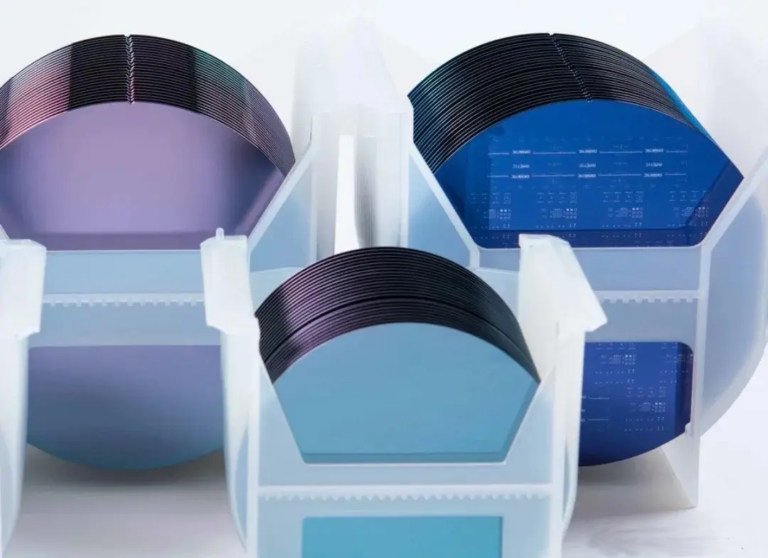
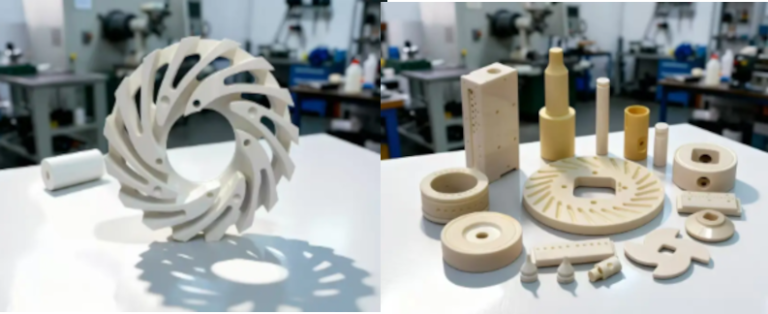
Sapphire is widely used in optical, semiconductor and precision manufacturing applications because of its high hardness, durability and optical performance. These same properties also make sapphire difficult to lap and polish[^1], requiring careful control of abrasive size, particle characteristics and polishing conditions.
Diamond powder is widely used for sapphire lapping and polishing, but the most suitable grade depends on the polishing stage, starting surface condition, target finish and process requirements.
What Determines the Right Diamond Powder for Sapphire Polishing?
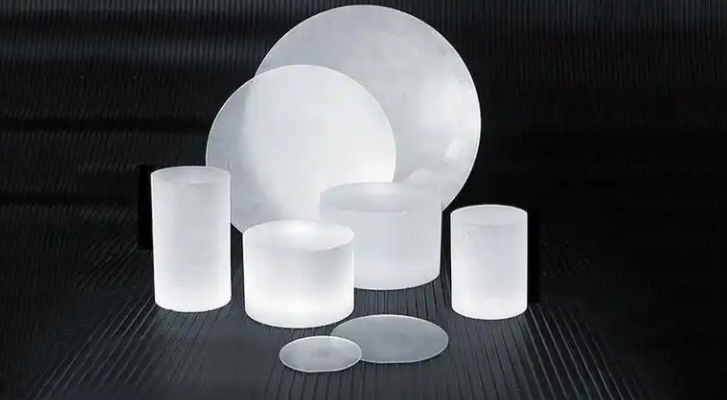
The appropriate diamond powder depends on the sapphire type, starting surface condition, polishing stage, target surface quality and process conditions.
| Selection Factor | Key Considerations |
|---|---|
| Sapphire type and orientation | Wafer, optical window or precision component; C-plane, A-plane or other orientation |
| Starting surface condition | Grinding marks, lapping damage and required stock removal |
| Polishing stage | Coarse lapping, intermediate polishing or precision finishing |
| Surface quality target | Roughness, scratch tolerance and subsurface damage |
| Process conditions | Lap/pad system, pressure, speed, concentration and slurry conditions |
These process requirements determine the required diamond characteristics. Particle size mainly controls the balance between removal rate and surface refinement[^2], while diamond structure, morphology and friability affect cutting behaviour and abrasive renewal. PSD, oversize control and dispersion become increasingly important as the process moves toward precision finishing.
Why Do PSD and Oversize Control Matter?
For precision sapphire polishing, nominal particle size alone does not define abrasive performance. Oversized or agglomerated particles can generate isolated deep scratches[^3], while an uncontrolled fine fraction can change cutting behaviour and process consistency.
Tighter PSD and upper-size control therefore become increasingly important from fine lapping through precision polishing.
How to Select Diamond Powder Size for Sapphire Polishing
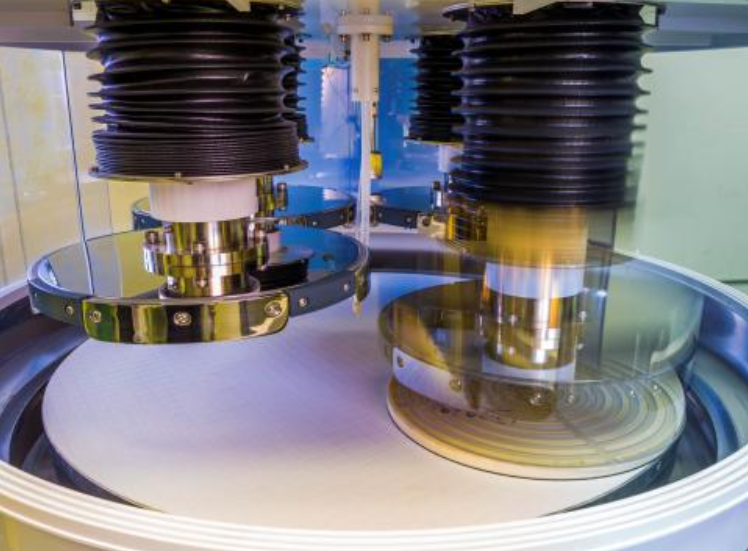
Particle size should be selected according to the polishing stage and required balance between stock removal and surface refinement.
Typical Diamond Sizes by Sapphire Polishing Stage
Different polishing stages require different balances between stock removal and surface refinement. Particle size should therefore be selected together with diamond type and abrasive characteristics rather than treated as an isolated parameter.
| Sapphire Processing Stage | Typical Diamond Size | Main Objective |
|---|---|---|
| Initial / coarse lapping | 6–12 µm (e.g., 6–10, 8–12 µm) | High stock removal |
| Intermediate lapping | 3–6 µm | Remove previous-stage damage |
| Fine lapping / pre-polishing | 1–3 µm (e.g., 1–2, 2–3 µm) | Balance removal and surface finish |
| Precision finishing | 0–1 µm (e.g., 0–0.5, 0.5–1 µm) | Scratch control and surface refinement |
These particle sizes are practical starting ranges rather than fixed specifications. Final selection should also consider the sapphire orientation, starting surface condition, diamond type, PSD and polishing system.
These ranges are general starting points rather than fixed specifications. The actual particle size and grade should be matched to the starting surface condition, required removal rate, target finish and polishing system.
How to Choose the Right Diamond Grade for Sapphire Polishing
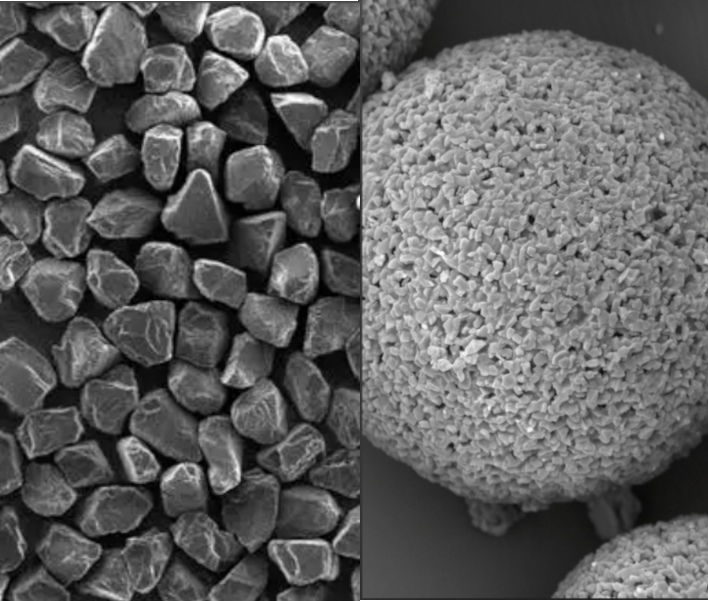
Particle size defines the polishing stage, while diamond structure, morphology and friability determine how the abrasive cuts, fractures and renews its cutting edges.
Monocrystalline Diamond
Monocrystalline diamond powder is generally selected when stable cutting performance and particle strength are important. Depending on particle morphology and grade, it can provide effective material removal during sapphire lapping and intermediate polishing.
More blocky and stronger particles tend to maintain their cutting structure for longer, while more angular or friable grades may provide a more aggressive cutting action. The appropriate grade should therefore be matched to the required removal rate and acceptable level of surface damage.
Polycrystalline Diamond
Polycrystalline diamond powder provides controlled micro-fracture and continuously exposes fresh cutting points[^4], helping balance removal efficiency with scratch control and surface consistency.
Because it is typically more expensive than conventional monocrystalline powder, polycrystalline-like diamond or selected monocrystalline grades with controlled morphology and tight PSD can be considered when cost efficiency is also important.
When Submicron or Nano Diamond Is Used
Submicron or nano diamond can be used when very fine abrasive control is required, particularly in precision lapping or selected pre-polishing processes.
At these particle sizes, PSD, oversize control, agglomeration and dispersion become increasingly important because even a small number of oversized or agglomerated particles can affect final surface quality.
For high-precision sapphire finishing, diamond is not always used through the final polishing stage. After diamond lapping or pre-polishing, some processes transition to chemical mechanical polishing (CMP), commonly using a colloidal silica-based slurry[^5], to further reduce surface damage and achieve a very smooth final surface.
How Does Sapphire Crystal Orientation Affect Diamond Powder Selection?
Sapphire polishing behaviour varies with crystal orientation[^6], so C-plane, A-plane, R-plane and M-plane materials may show different removal rates and surface responses under similar processing conditions.
Crystal orientation should therefore be considered together with the starting surface condition, polishing stage and target finish when selecting diamond powder.
A more difficult-to-remove sapphire surface does not necessarily require a larger diamond size. Particle morphology, friability, PSD and process conditions should also be considered[^7] before changing the abrasive specification.
Diamond Powder vs Diamond Slurry for Sapphire Polishing
| Factor | Diamond Powder | Diamond Slurry |
|---|---|---|
| Formulation flexibility | High | Lower |
| Concentration adjustment | User controlled | Pre-defined |
| Dispersion control | Depends on user formulation | Controlled by supplier |
| Process repeatability | Depends on preparation | Usually easier to maintain |
| Best suited for | Process development and custom formulations | Stable production polishing |
Diamond powder is suitable when the user needs greater flexibility to adjust diamond grade, concentration or formulation during process development.
Diamond slurry is generally preferred when consistent dispersion, repeatable abrasive delivery and simplified process control[^8] are more important, especially in fine sapphire polishing.
Common Problems Caused by Incorrect Diamond Powder Selection
Incorrect diamond powder selection can reduce polishing efficiency, increase surface damage and make sapphire finishing less consistent.
| Problem | Possible Abrasive Cause | What to Check |
|---|---|---|
| Deep random scratches | Oversized particles, contamination or agglomeration | PSD upper limit, cleanliness and dispersion |
| Low removal rate | Particle size too fine or unsuitable diamond grade | Size, grade, concentration and pad/lap system |
| Excessive subsurface damage | Diamond too coarse or aggressive | Reduce size or change grade |
| Poor final finish | Broad PSD or insufficient stage refinement | PSD control and polishing-stage transition |
| Inconsistent results | Dispersion or batch consistency issues | Slurry stability, PSD and lot consistency |
Crownkyn Diamond Powder Solutions for Sapphire Polishing
Crownkyn supplies synthetic diamond powder and diamond slurry for sapphire lapping, pre-polishing and precision finishing, with options in particle size, diamond type, morphology and PSD control.
For grade recommendations, please provide your sapphire type or orientation, current polishing stage, existing abrasive specification, target surface quality and any current problems such as low removal rate or random scratches.
Based on these conditions, our team can recommend a suitable starting diamond powder or slurry specification for testing. Contact Crownkyn to discuss your application and trial quantity.
Conclusion
Selecting diamond powder for sapphire polishing requires matching particle size, diamond type, morphology and PSD with the polishing stage, starting surface condition and target surface quality.
Coarser micron grades generally favour stock removal, while finer micron and submicron grades provide greater surface control. Monocrystalline or polycrystalline diamond can then be selected according to the required cutting behaviour, scratch control and process consistency.
References
[1] Research on the Preparation and Application of Fixed-Abrasive Tools for Sapphire Processing
Discusses the challenges of sapphire machining and polishing due to its high hardness and brittle material behaviour.
[2] Investigation on the Basic Characteristics of Semi-Fixed Abrasive Tools
Examines how abrasive particle size influences material removal and surface quality during precision lapping and polishing.
[3] Analysis of Scratches Formed on Oxide Surfaces During Chemical Mechanical Polishing
Explains how oversized particles, contaminants and agglomerates can contribute to isolated scratches and surface defects during precision polishing.
[4] Fabrication and Polishing Performance of Diamond Self-Sharpening Abrasives
Discusses the micro-fracture and self-sharpening behaviour of diamond abrasives and the generation of fresh cutting edges during polishing.
[5] Study on the Effect of Surface Variation of Colloidal Silica in Sapphire Polishing
Provides sapphire CMP context and discusses colloidal silica-based polishing for final surface refinement.
[6] Assessment of Defect Reduction Methods for Nonpolar A-Plane GaN Grown on R-Plane Sapphire
Provides supporting context for orientation-dependent properties of sapphire and differences among crystallographic planes.
[7] A Comprehensive Review of Nano-Abrasives
Reviews how abrasive particle size, morphology, PSD and fracture behaviour influence material removal and surface quality in precision finishing.
[8] Approaches to Sustainability in Chemical Mechanical Polishing
Discusses the importance of slurry stability, particle dispersion and controlled abrasive delivery for consistent polishing performance.
Drafted by: Gareth Bayley
Technical Review & Editing: Ashley Wei