
Saw Diamond Grit for Saw Blades, Core Drills and Wire Saws
Saw diamond grit is a high-strength HPHT monocrystalline diamond abrasive for metal-bond saw blades, core bits and wire saw beads used in stone, concrete and construction cutting.
Crownkyn supplies multiple mesh sizes and strength grades matched to bond systems, tool designs and cutting loads for stable cutting, reliable diamond retention and longer tool life.
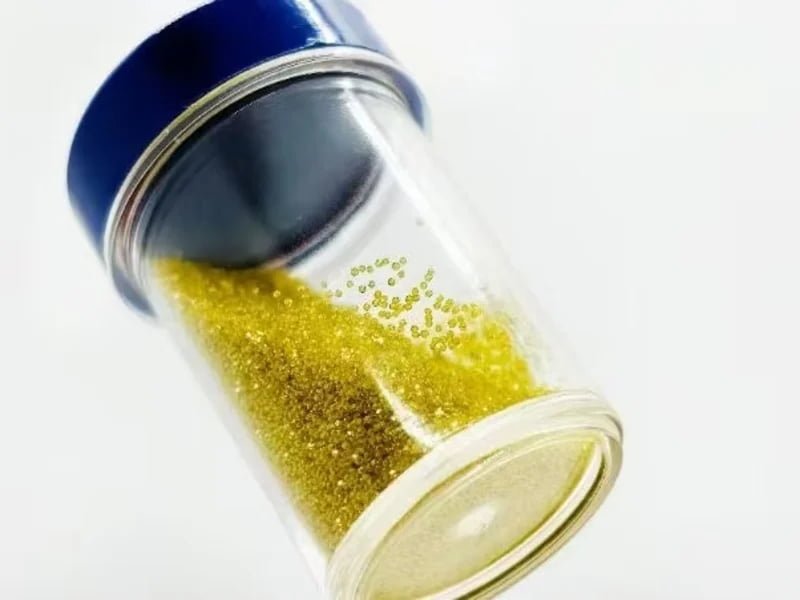
What Is Saw Diamond Grit?
Saw diamond grit consists of mesh-sized HPHT monocrystalline diamond crystals used as cutting points in metal-bond blades, core bits and wire saw beads. The crystals must resist impact, wear and premature pullout.
Cutting performance depends on mesh size, crystal shape, toughness, inclusions and fracture behavior, which influence cutting efficiency, diamond retention and tool life.
The terms saw grit diamond, synthetic saw grit, diamond saw grit and saw-size diamond grit generally refer to the same product family. Compared with wheel grit, saw grit emphasizes higher crystal integrity and impact resistance.
Saw Diamond Grit Grades
Compare Crownkyn saw diamond grit grades by crystal shape, strength, integrity and cutting-load direction. Select a grade to view available mesh sizes and application recommendations.
GSD910
Controlled fracture behavior for light-load cutting and economical diamond tools.
View Grade Details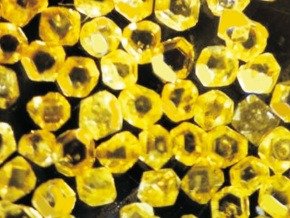
GSD915
Moderate crystal strength with free-cutting behavior for light- to medium-load tools.
View Grade Details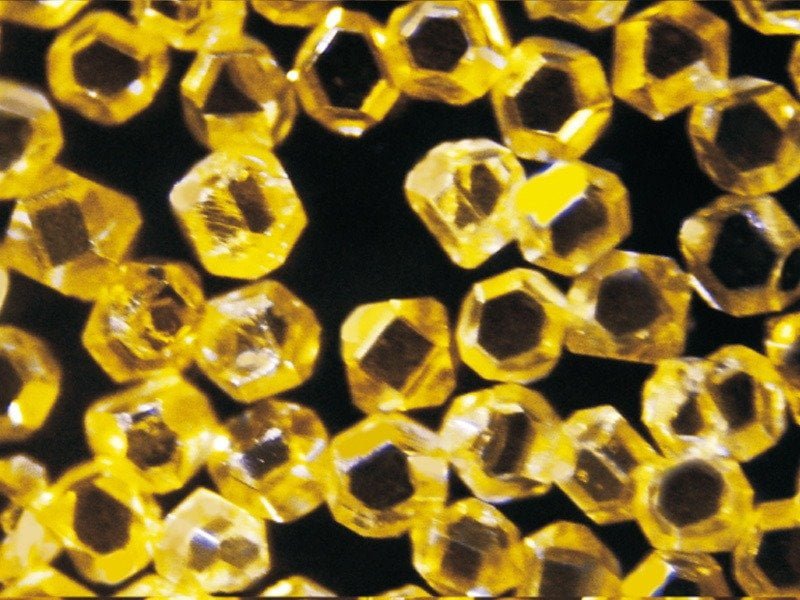
GSD920
Balanced crystal shape and strength for general-purpose diamond saw blades and cutting tools.
View Grade Details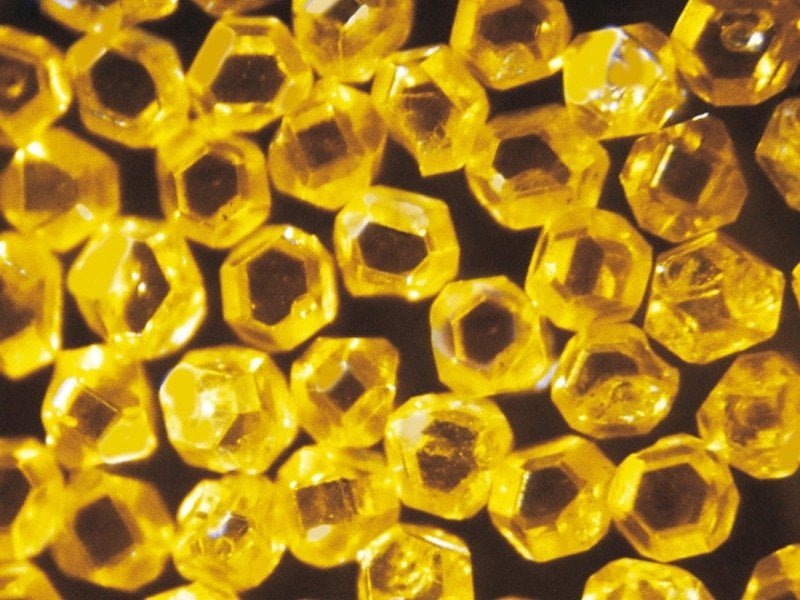
GSD930
Balanced toughness and controlled fracture behavior for versatile cutting applications.
View Grade Details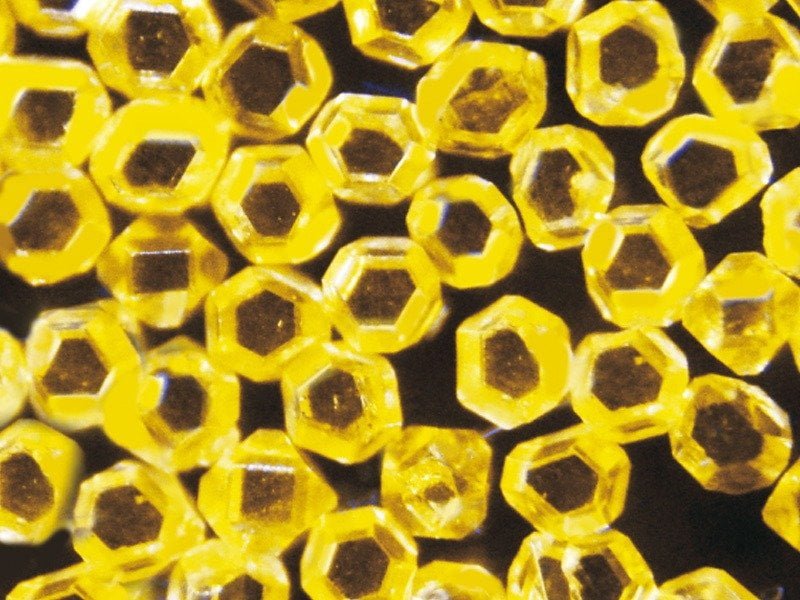
GSD940
Higher impact resistance for medium- to high-load cutting and demanding bond systems.
View Grade Details
GSD960
Strong blocky crystals engineered for high-speed and high-load saw blade performance.
View Grade Details
GSD980
Premium high-strength crystals for severe cutting conditions and extended tool life.
View Grade Details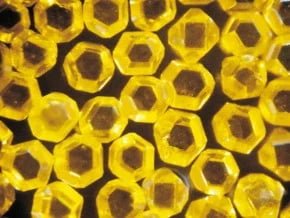
GSD990
Premium monocrystalline integrity for demanding industrial sawing and drilling operations.
View Grade DetailsSaw Diamond Grit Selection Guide
Start with the tool type, workpiece and cutting load, then match the required balance of cutting speed, impact resistance and tool life. The table below provides general grade directions for common applications.
| Tool / Application | Typical Conditions | Suggested Grade Direction | Main Selection Focus |
|---|---|---|---|
| Stone Saw Blades | Granite, marble, engineered stone and general stone cutting | General-Purpose | Cutting speed, performance consistency and segment cost |
| Large-Diameter / High-Power Saw Blades | Higher machine power, deeper cutting and intermittent impact loads | High-Performance | Impact resistance, diamond retention and segment life |
| Core Drills & Reinforced Concrete Tools | Concrete, hard aggregate, steel reinforcement and variable impact | Heavy-Duty / Premium | Penetration rate, impact resistance and reduced crystal failure |
| Diamond Wire Saws | Stone, concrete and changing cutting conditions along the cut | Free-cutting behavior, bead wear and overall service life | |
| Geological & Mining Drilling | Abrasive formations, severe loads and elevated operating heat | Heavy-Duty / Premium | Toughness, thermal stability and reliable tool life |
Selection note: Grade directions are general starting points. Final selection should be confirmed according to grit size, bond formulation, diamond concentration, segment design, machine power and actual cutting conditions.
How Grit Size Affects Sawing Performance
Saw grit size affects penetration depth, load per crystal, the number of active cutting points and overall cutting behavior.
Higher Penetration
Provides deeper penetration and higher load per crystal for aggressive cutting and heavier operating conditions.
Balanced Performance
Balances cutting rate, crystal load and tool life across many stone, concrete and construction cutting applications.
More Cutting Points
Provides more active cutting points and smoother cutting behavior for controlled cutting and finer segment designs.
Grit size should be evaluated together with diamond concentration, segment dimensions, bond wear rate and workpiece material.
How Saw Diamond Grit Properties Affect Cutting Performance
Saw grit grades differ in crystal shape, strength and toughness, which directly affect cutting performance, bond retention and tool life.
Crystal Shape & Integrity
Blocky, well-formed crystals provide higher load capacity and more consistent performance in metal-bond tools.
Impact Strength & Fracture
Suitable toughness resists premature breakage while controlled fracture renews cutting edges during use.
Thermal Stability & Bonding
Thermal stability and surface condition influence hot-pressing resistance, bond retention and grain pullout.
Performance note: The highest-strength grade is not always the best choice. Selection should balance cutting load, fracture behavior, bond retention and required tool life.
Saw Diamond Grit Key Applications
Saw diamond grit supports stone and concrete cutting, geological drilling and the manufacture of metal-bond diamond tools.

Stone & Concrete Processing
Saw grit for blades, core bits and wire saws used on granite, marble, engineered stone, concrete and masonry.

Geological Drilling & Mining
High-strength diamond grit for core bits and drilling tools used in exploration, rock coring and abrasive formations.
Superabrasive Tool Manufacturing
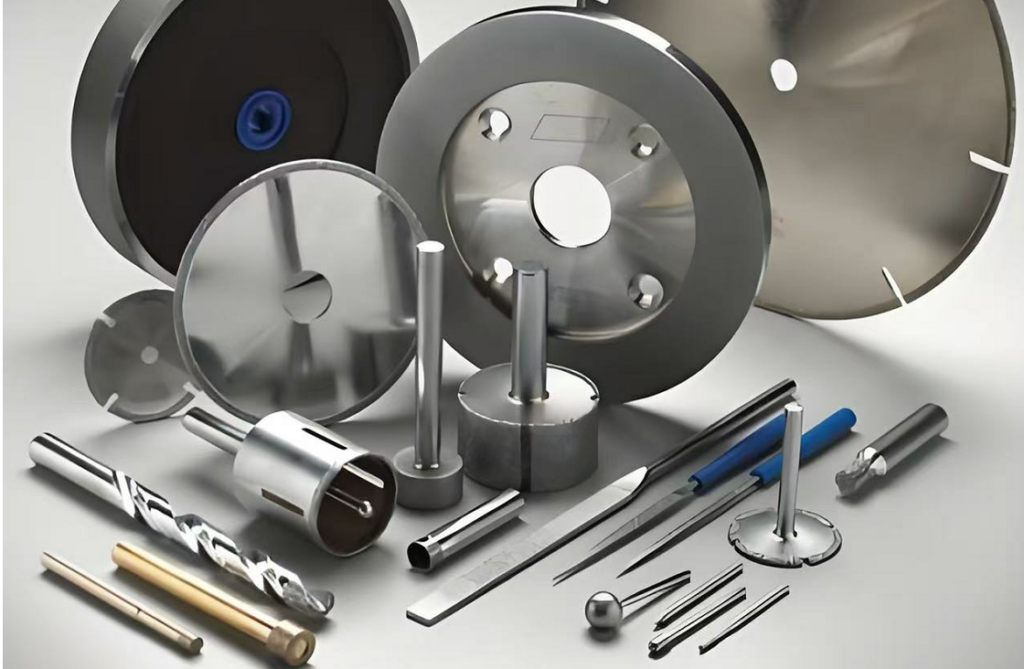
Controlled saw grit grades for manufacturing metal-bond blades, core bits, wire saw beads and other cutting tools.
Related Diamond Grit Products
Explore adjacent diamond grit products for bonded grinding, heavy-duty cutting and coated tool systems requiring different crystal sizes, fracture behavior or bond interaction.
Diamond Wheel Grit
Mesh-size synthetic diamond with controlled strength and friability for resin, vitrified and metal-bond grinding wheels. Selected more for grinding behavior and self-sharpening than for the impact loads associated with saw grit.
View Diamond Wheel GritLarge Monocrystalline Diamond
Larger high-integrity synthetic diamond crystals for demanding cutting, drilling and mechanical tools that require greater crystal size, load-bearing capacity and impact resistance than standard mesh saw grit.
View Large Monocrystalline DiamondCoated Diamond Grit
Selected metal and carbide coatings can improve thermal protection, interfacial interaction and diamond retention in metal-bond cutting and drilling tools. Availability depends on diamond grade, grit size and coating system.
View Coated Diamond ProductsTechnical Guides for Saw Grit Diamond Selection
Explore practical guidance on grade selection, saw grit and wheel grit differences, and particle size selection for sawing and core drilling tools.
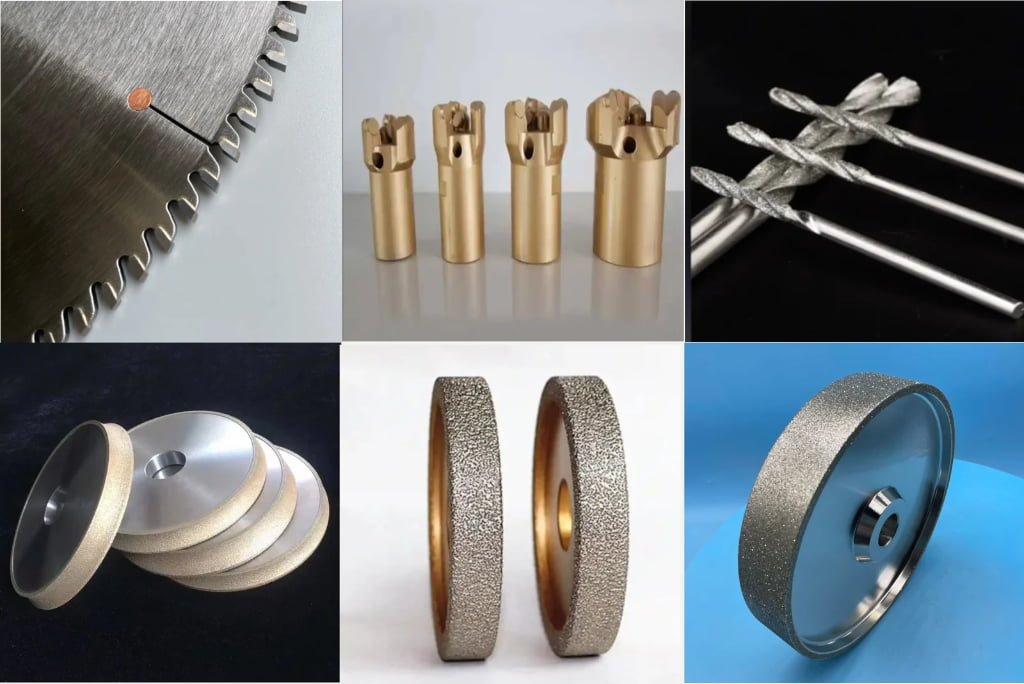
How to Choose Synthetic Diamond Powder for Cutting and Grinding
Match diamond strength, shape, friability and particle size to cutting tools, drilling tools and bonded grinding systems.
Read Selection Guide
Diamond Powder Particle Size Guide: Mesh, Micron and Nano
Understand mesh designations, particle-size ranges and how grit size influences cutting behavior and surface finish.
Read Size Guide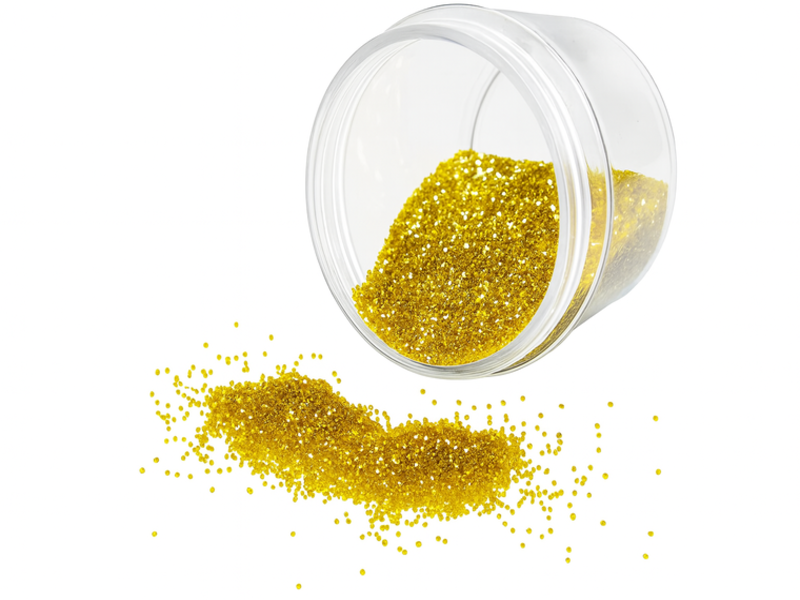
Synthetic Diamond Powder Properties and Grade Selection
Learn how crystal shape, strength, friability, TI and thermal stability influence cutting performance and tool life.
Read Technical GuideFrequently Asked Questions About Saw Diamond Grit
Find answers about saw grit diamond grades, strength, grit size, tool applications and differences from other synthetic diamond abrasives.
What is saw grit diamond?
What is the difference between saw grit and wheel grit diamond?
How do I choose the right saw grit strength?
What grit sizes are used for saw blades, core drills and wire saws?
What is the difference between saw grit diamond and crushed diamond?
Can saw grit diamond be coated?
Need Help Selecting a Saw Grit Diamond Grade?
Share your tool type, workpiece material, grit size, bond formulation, cutting conditions and target balance between cutting speed and tool life.