What Is Diamond Polishing Slurry? A Practical Guide to Lapping and Polishing
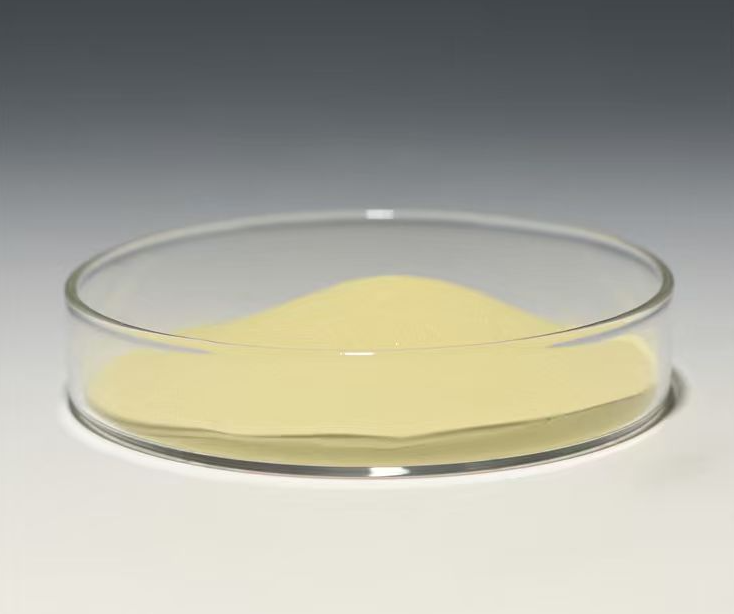
Diamond polishing slurry is a ready-to-use abrasive formulation produced by dispering synthetic diamond particles into a water or oil-soluble carrier liquid. It is used for precision lapping, polishing, and finishing of hard and/or brittle materials, including sapphire, ceramics, glass, tungsten, silicon carbide, PCD tools, and precision level metal components.
In high-precision manufacturing, the final polishing stages often determines whether a part meets its required surface finish, dimensional accuracy, and yield target. Diamond polishing slurry is not only an abrasive liquid, it is a complete polishing system that integrates controlled variables such as diamond particles size, shape, concentration, carrier chemistry, pad compatibility, and process parameters.
When the correct diamond polishing slurry is selected and used if can help manufacturers improve their product's surface quality, maintain stable and consistant material removal, greatly reduce the chances of random scratches, and achieve repeatable finishing results.
What Is Diamond Polishing Slurry?
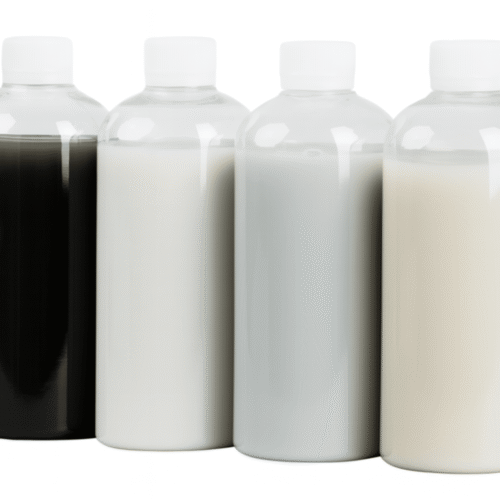
Diamond polishing slurry is a liquid abrasive product containing micron or nano sized diamond particles. These diamond particles are suspended in a water-based or oil-based carrier and are designed to be applied directly to the work-piece during lapping or polishing.
Unlike diamond powders, diamond polishing slurry provides a more convenient and controlled way to deliver abrasive particles to the polishing interface. The liquid carrier helps distribute the diamond particles evenly, improve lubrication, reduce particle agglomeration, while also removing heat and debris during processing.
The result is a high-performance polishing consumable suitable for applications where controlled material removal and fine surface finish is required.
Key Components of Diamond Slurry
| Component | Function | Why It Matters |
|---|---|---|
| Diamond abrasive | Performs micro-cutting and polishing | Controls removal rate and surface finish |
| Carrier fluid | Transports and disperses particles | Affects lubrication, cooling, and stability |
| Dispersing agents | Reduce agglomeration | Helps prevent random scratches |
| Additives | Adjust wetting, viscosity, pH, or corrosion behavior | Improves process compatibility |
| Concentration control | Defines abrasive loading | Balances cutting efficiency and surface quality |
Why Is Diamond Polishing Slurry Used for Precision Lapping and Polishing?
Diamond is the hardest commonly used superabrasive material. Compared with traditional abrasive such as aluminum oxide, silicon carbide, or cerium oxide, diamond can maintain sharp cutting edges for longer and provide efficient micro-cutting on hard materials.
For materials such as sapphire, SiC, ceramics, tungsten, and glass, traditional abrasives may polish too slowly or give inconsistent results. Diamond polishing slurry can improve the process stability due to the diamond particles maintain a more controlled cutting behavior under proper polishing conditions.
Diamond polishing slurry is an excellent choice for manufacturers that need to balance the demands of good material removal rate, surface smoothness, and scratch control, with a suitable cost per finished piece.
Main Advantages
| Advantage | Practical Benefit |
|---|---|
| High hardness | Efficient polishing of hard and brittle materials |
| Stable particle size | More predictable surface finish |
| Controlled suspension | More uniform abrasive distribution |
| Flexible carrier options | Suitable for different pads, machines, and materials |
| Adjustable concentration | Can be optimized for rough lapping, fine polishing, or mirror finishing |

How Does Diamond Polishing Slurry Improve Surface Finish?
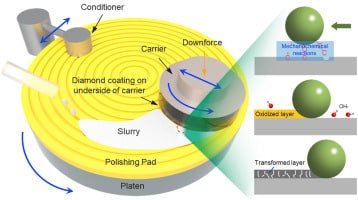
Diamond polishing slurry improves surface finish through controlled micro-cutting. Each diamond particle removes a very small amount of material from the workpiece surface. When the particle size, concentration, pad, pressure, and polishing time are properly matched, the process gradually removes previous machining marks and creates a smoother surface on the workpiece.
The key to the best results is not simply using the finest diamond particle (grit) size. A particle that is too rough or large can cause scratches, while a particle that is too small or fine will polish slowly and can create more friction than cutting/polishing action on harder materials.
A good polishing process uses a step-by-step size reduction. Coarser particle (grit) diamond polishing slurry removes previous marks or scratches and reduces surface roughness. More and more finer diamond polishing slurry is then applied to continue to reduce scratches and prepare the part for final finishing.
Typical Particle Size Selection
| Process Stage | Common Diamond Size | Typical Purpose |
|---|---|---|
| Rough lapping | 6–15 μm | Fast stock removal and flattening |
| Pre-polishing | 3–6 μm | Removing lapping marks |
| Fine polishing | 1–3 μm | Improving surface finish |
| Final polishing | 0.25–1 μm | Mirror or near-mirror finish |
| Ultra-fine finishing | Below 0.25 μm | Special optical, semiconductor, or precision applications |
The actual product chosen should always depend on workpiece material, the target smoothness, the previous process conditions,the pad type, and the polishing machines parameters. Please contact us to further discuss any information required in selecting the correct slurry product for your workpiece.
What Is the Difference Between Water-Based and Oil-Based Diamond Polishing Slurry?
The carrier fluid strongly affects polishing performance. It is not only a transport medium for diamond particles. It also influences dispersion, lubrication, cooling, cleaning, corrosion behavior, and compatibility with the workpiece and the polishing pad.
Water-Based Diamond Polishing Slurry
Water-based diamond polishing slurry is widely used for ceramics, glass, sapphire, silicon carbide, tungsten carbide, and many precision polishing applications. It is easier to clean, has good cooling ability, and can be adjusted with dispersants and additives.
Water-based diamond polishing slurry is preferred when cleaner usage, easier post usage cleaning, and a stable suspension are important to the manufacturer.
Oil-Based Diamond Polishing Slurry
Oil-based diamond polishing slurry provides stronger lubrication and can be useful for some metal polishing, mold finishing, and production where water sensitivity or corrosion is a concern. It can reduce friction and improve surface smoothness in certain applications, but it is harder to clean after usage than the water-based diamond polishing slurry.
Carrier Comparison Table
| Carrier Type | Advantages | Common Applications |
|---|---|---|
| Water-based | Easy cleaning, good cooling, stable dispersion | Ceramics, sapphire, glass, carbide, SiC |
| Oil-based | Strong lubrication, suitable for some metals | Mold polishing, metal finishing, manual polishing |
How Important Is Diamond Particle Dispersion?
Particle dispersion is one of the most important factors in diamond polishing slurry performance. Even if the nominal particle size is very fine, poor dispersion can cause particle agglomeration. Agglomerated particles behave like larger abrasive particle and can create unexpected and unwanted scratches on the workpiece surface.
For example, a diamond polishing slurry labeled as 0.5 μm may still cause visible defects if particles cluster together during storage or polishing. This is why high-quality diamond polishing slurry requires not only a quality diamond powder, but also the correct dispersing fluid, a stable formulation, and proper handling before use.
How to Reduce Agglomeration Risk
- Use diamond polishing slurry with controlled particle size distribution.
- Shake or stir the diamond polishing slurry before use according to product instructions.
- Avoid contamination from previous abrasive steps.
- Clean the operating machines tanks, tubes, pads, and fixtures regularly.
- Match diamond polishing slurry pH and chemistry with the workpiece material.
- Store the diamond polishing slurry in a sealed container and avoid extreme temperatures.
Consistent dispersion helps maintain consistent polishing action and reduces the risk of unexpected and unwanted scratching.
Monocrystalline or Polycrystalline Diamond Slurry: Which One Should You Choose?
Both monocrystalline diamond slurry and polycrystalline diamond slurry can be used for lapping and polishing, but they behave differently.
Monocrystalline diamond powders are single-crystal abrasive grains. They usually have strong cutting ability and are suitable for applications that require efficient material removal.
Polycrystalline diamond powders are made of many small diamond micro-crystals. During polishing, the multi-grain structure can expose fresh micro-cutting edges, which may help produce a smoother and more controlled finish in fine polishing applications.
Comparison Table
| Category | Monocrystalline Diamond Slurry | Polycrystalline Diamond Slurry |
|---|---|---|
| Particle structure | Single crystal | Multi-grain structure |
| Cutting behavior | Strong and direct cutting | Multi-edge micro-cutting |
| Surface finish | Good for efficient lapping and polishing | Often preferred for fine and mirror polishing |
| Scratch control | Depends on particle size and dispersion | Usually better for controlled fine finishing |
| Typical use | Hard materials, rough to fine polishing | Precision polishing, brittle materials, final finishing |
There is no single best choice for every application. The right option depends on material hardness, surface finish target, removal rate requirement, process stability, and cost considerations.
How Does The Diamond Concentration Affect Diamond Polishing Slurry Performance?
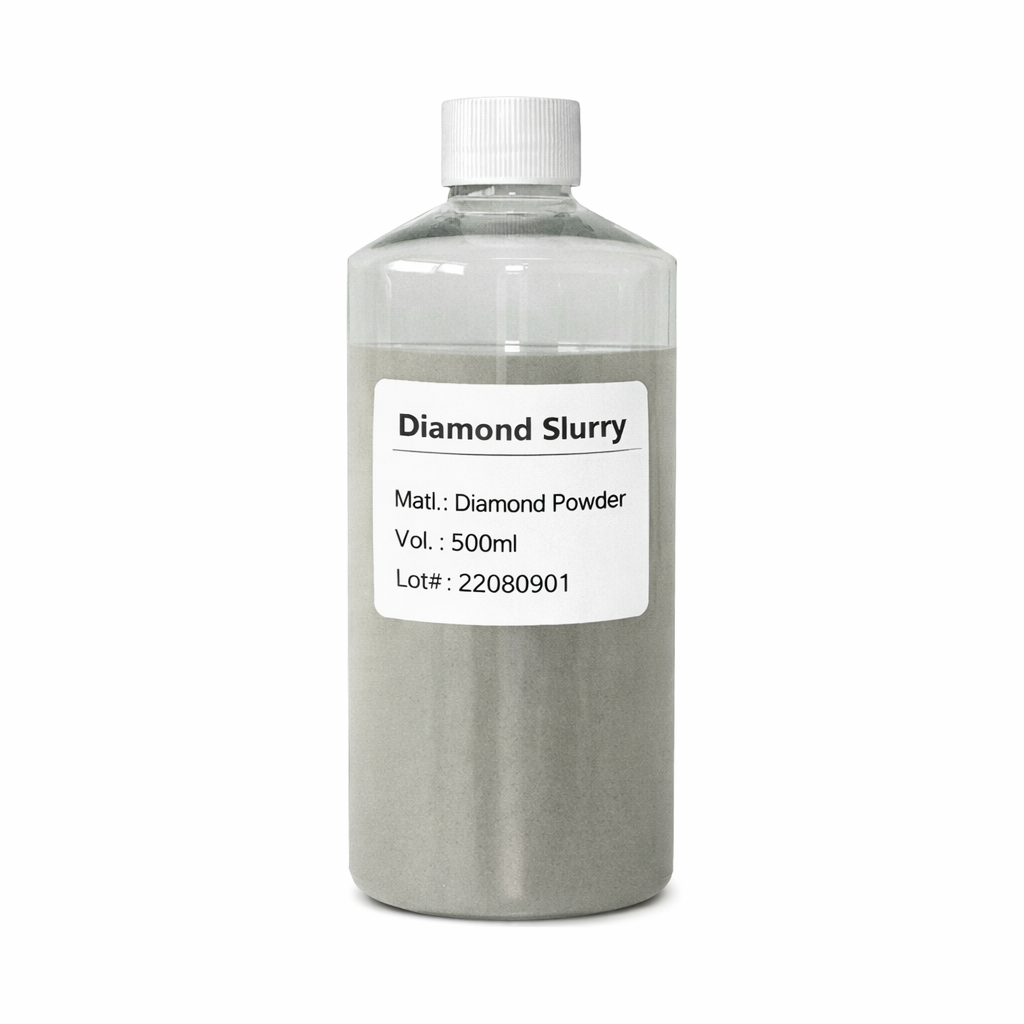
The diamond concentration in the diamond polishing slurry affects how many abrasive particles are available in the polishing zone. Higher concentrations can increase cutting activity, but more diamond powder does not always mean better results.
If the diamond concentration is too low, polishing may become slow and irregular. If the concentration is too high, the diamond particles can interfere with one another, leading to an increase in friction, the generation of heat, or causing unnecessary slurry waste.
The best diamond particle concentration should provide enough active cutting points while maintaining smooth particle movement with stabe and consistent lubrication.
Practical Selection Guide
| Requirement | Suggested Direction |
|---|---|
| Faster material removal | Use a larger particle size or slightly higher concentration |
| Better surface finish | Use finer particle size with stable dispersion |
| Fewer scratches | Improve filtration, cleaning, and dispersion control |
| Lower cost per part | Optimize concentration instead of simply increasing abrasive loading |
| Better repeatability | Control slurry flow, pad condition, and polishing time |
For industrial use, it is better to test several concentrations under the same machine conditions instead of assuming the highest concentration will perform best.
What Materials Can Be Polished with Diamond Polishing Slurry?
Diamond polishing slurry is usually used on hard, brittle, and wear-resistant materials, especially where ordinary abrasive cannot provide enough efficiency or give the surface control required.
Common Application Materials
- Sapphire substrates and sapphire components
- Silicon carbide wafers and ceramics
- Alumina and zirconia ceramics
- Tungsten carbide tools and parts
- Glass and optical lenses
- PCD, PCBN, and hard tool materials
- Stainless steel molds and precision metal parts
- Fiber optic connectors
- Semiconductor and electronic components
- Mechanical seals and aerospace precision parts
Application Table
| Industry | Typical Workpiece | Polishing Purpose |
|---|---|---|
| Optics | Glass, pptical lenses, sapphire | Improve transparency and surface quality |
| Electronics | SiC, sapphire, ceramic | Achieve flatness and fine surface finish |
| Tooling | Carbide, PCD, PCBN | Improve edge quality and tool surface |
| Mechanical parts | Seals, molds, precision metal parts | Reduce friction and improve wear performance |
| Research and laboratory | Small test samples | Controlled polishing and material preparation |
How Should Diamond Polishing Slurry Be Used in a Polishing Process?
A consistant polishing result depends on the complete process, not only the diamond polishing slurry itself. The type of pad used, the operators skill and the pressure, speed, slurry flow applied will all affect the results. Outside of the actual polishing process the production facilties ambient temperature, and the machinery cleaning process all affect the final result.
Basic Polishing Method
- Select the correct diamond particle (grit) size based on the previous surface condition.
- Choose a water-based or oil-based carrier according to the workpiece material.
- Shake or stir the diamond polishing slurry before use to ensure uniform suspension.
- Apply diamond polishing slurry evenly to the polishing pad or plate.
- Keep enough diamond polishing slurry flowing to avoid dry polishing and the possibilty of overheating.
- Clean the workpiece thoroughly between the different particle (grit) size changes.
- Monitor the surface roughness, scratch levels, and removal rates during testing.
- Adjust the pressure, speed, and polishing time based on actual results.
Common Process Problems and Causes
| Problem | Possible Cause | Adjustment Direction |
|---|---|---|
| Random deep scratches | Agglomeration or contamination | Improve filtration and cleaning |
| Low removal rate | Particle size too fine or concentration too low | Use coarser size or adjust concentration |
| Poor surface uniformity | Uneven slurry distribution or pad wear | Improve flow control and pad conditioning |
| Workpiece heating | Insufficient lubrication or excessive pressure | Increase slurry flow or reduce pressure |
| Unstable results between batches | Slurry settling, pad glazing, or inconsistent cleaning | Standardize mixing, pad maintenance, and cleaning steps |
Why Is The Polishing Pad Condition and Slurry Flow Important?
The polishing pad holds the diamond polishing slurry and transfers the mechanical action onto the workpiece. If the polishing pad surface becomes glazed or filled with debris, fresh slurry cannot contact the workpiece effectively. This can reduce material removal rate and increase the risk of scratches.
The slurry flow is equally important. Proper flow helps deliver fresh diamond particles, remove swarf, carry away heat, and maintain lubrication. Not enough diamond polishing slurry can cause dry polishing, while excessive amounts of diamond polishing slurry can cause wastage without improving the polishing result.
During production, the correct and consistent amount of diamond polishing slurry dispensing along side regular polishing pad conditioning or replacement is often more important than simply changing to a more expensive product to achieve the required results.
Can Diamond Polishing Slurry Be Used for Chemical Mechanical Polishing (CMP)?
Diamond slurry can be used in some polishing and planarization processes, but not every diamond slurry is a CMP slurry. Chemical Mechanical Polishing (CMP), also known as chemical mechanical planarization combines mechanical abrasion with a chemical reaction. In semiconductor and advanced material processing, the CMP slurry may include oxidizers, pH regulators, corrosion inhibitors, or other chemical components designed for a specific material system.
Standard diamond polishing slurry provides mechanical micro-cutting and polishing. If the process requires Chemical Mechanical Polishing (CMP), the slurry formulation must be matched carefully with the workpiece material, polishing pad, equipment, and the required surface chemistry.
This distinction is important because using an ordinary diamond polishing slurry in a CMP process may not achieve the intended planarization, selectivity, or defect control.
For further information on Chemical Mechanical Polishing (CMP) and CMP slurry please contact us.
How to Select the Right Diamond Polishing Slurry For Your Needs
Selecting the right diamond polishing slurry requires matching the abrasive system with the material and process target. The most important information includes what the workpiece material is , its current surface condition, the target smoothness, what polishing equipment is being used, what polishing pad type is being used, and whether the polishing process requires the use of a water-based or oil-based polishing slurry.
Key Selection Factors
| Factor | Why It Matters |
|---|---|
| Workpiece material | Determines required cutting strength and carrier compatibility |
| Particle size | Controls removal rate and final smoothness |
| Diamond type | Affects cutting behavior and surface finish |
| Carrier type | Influences lubrication, cleaning, and dispersion |
| Concentration | Balances efficiency, finish quality, and cost |
| Pad type | Affects slurry retention and polishing uniformity |
| Process target | Decides whether the polishing slurry needs to prioritize speed, finish, or defect control |
Information to Provide When Requesting a Quotation
Here at Crownkyn Diamond the following information will us allow us to recommend the most suitable diamond polishing slurry for your production needs.
- Workpiece material
- Current surface smoothness or previous processing step
- Target surface smoothness or finish requirements
- Required diamond particle (grit) size, (if known)
- If there is a water-based or oil-based preference
- The required diamond powder concentration, (if known)
- Quantities needed for both testing and production
- The polishing machine and pad type used in production (if available)
- What the application purpose is, such as lapping, fine polishing, mirror finishing, or laboratory testing
The more information provide the more exact we are able to be when providing quotations,
Recommended Diamond Polishing Slurry Options by Application
| Application | Common Slurry Type | Typical Particle Size |
|---|---|---|
| Sapphire polishing | Water-based diamond slurry | 0.25–3 μm |
| Ceramic polishing | Water-based diamond slurry | 0.5–6 μm |
| Tungsten carbide polishing | Water-based or oil-based slurry | 1–6 μm |
| Optical glass polishing | Fine diamond slurry | 0.1–1 μm |
| Mold polishing | Oil-based diamond slurry or diamond paste | 1–9 μm |
| PCD/PCBN finishing | Diamond slurry or diamond paste | 1–15 μm |
| Laboratory sample preparation | Water-based slurry | 0.25–9 μm |
These ranges are only for general references and final product selection should be based on the actual material and polishing needs. We welcome you to contact us to discuss the application requirements beforehand.
How Can Diamond Polishing Slurry Reduce Cost Per Part?
A diamond polishing slurry purchase cost can appear to be more expensive than the traditional abrasive at first, but the real cost should be measured by the finished part quality, length of polishing time, rejection / failure rate, and process consistency.
A properly applied diamond polishing slurry can reduce the cost per piece by improving removal efficiency, reducing rework, lowering scratch-related rejection, and making the polishing process quicker and with easier repeatable results.
Practical Ways to Improve Cost Efficiency
- Use the correct particle size sequence instead of over-polishing with one grade.
- Avoid excessive diamond concentration when it does not improve performance.
- Keep slurry clean and prevent contamination between steps.
- Maintain or replace polishing pads regularly.
- Standardize slurry type, dispensing, and storage.
- Record polishing time, surface smoothness, and defect rate for each test.
A stable and consistent production process saves more time and cost less in the long run than choosing a cheaper and lower quality alternative.
Conclusion - Why Diamond Polishing Slurry Matters in Precision Manufacturing
Diamond polishing slurry is more than a diamond abrasive particle in suspension. It is a precision polishing system that combines synthetic diamond powder, carrier chemistry, dispersion control, and polishing process management.
For manufacturers working with sapphire, ceramics, tungsten carbide, silicon carbide, glass, PCD tools, and other hard materials, the right diamond polishing slurry can improve surface finish, material removal consistency, and process repeatability.
The best results come from matching diamond particle size, diamond type, carrier fluid, concentration, pad condition, and machine parameters. When these factors work together, diamond polishing slurry becomes a fantastic product for improving overall polishing quality, reducing defects and rejections, and supporting a stable and consistent production.
For more information please contact our team at Crownkyn Diamond info@crownkyn.com