Round and Spherical Diamond Powder: Features, Differences, and Applications
Round micron diamond powder and spherical thermal conductive diamond are two specialized diamond powder products used in precision polishing and thermal management applications.
In industrial use, “round diamond” or “spherical diamond” usually refers to two product types:
- Round micron diamond powder – for precision grinding, lapping, and polishing
- Spherical thermal conductive diamond (e.g., Crownkyn STCD) – for heat dissipation and thermally conductive composites
Although both materials have rounded particle features, their applications are different. Round micron diamond powder focuses on ultra-precision surface finishing, while spherical thermal conductive diamond focuses on thermal management and composite performance.
1. What Is Round Micron Diamond Powder?
Round micron diamond powder is a specially shaped monocrystalline diamond powder with rounded or near-spherical particles, mainly used for precision grinding, lapping, and polishing.
Crownkyn GCDMZ – Round Micron Diamond Powder is made from high-strength HPHT synthetic diamond and refined through proprietary shaping technology. Its regular near-spherical crystal shape helps achieve smooth polishing action, controlled material removal, and stable surface quality.
Compared with ordinary diamond powder, GCDMZ has:
- Fewer sharp edges and corners
- Ultra-narrow particle size distribution
- Low impurity content
- Good dispersibility
These features help reduce scratches, chipping, and contamination risks in sensitive polishing processes.
It is suitable for diamond slurry, polishing paste, lapping compounds, precision grinding wheels, and fine abrasive tools. Typical workpiece materials include silicon wafers, sapphire, optical glass, SiC, ceramics, and other high-precision materials.
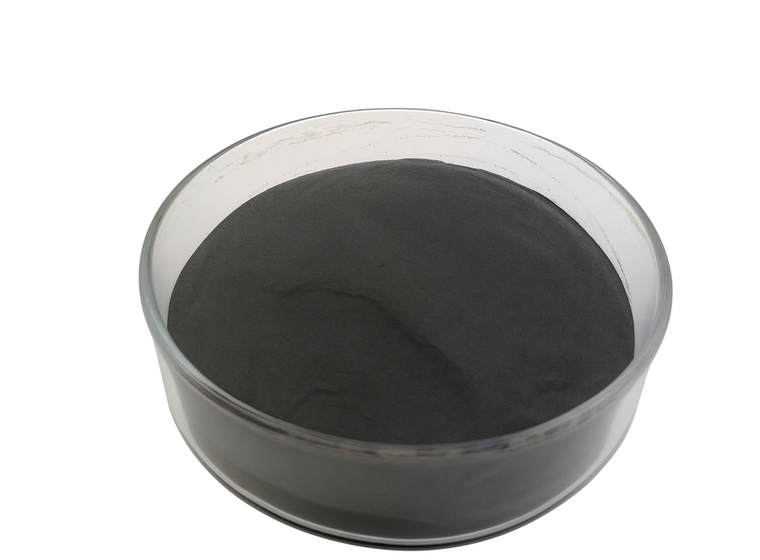
 Figure: Crownkyn GCDMZ – Round Micron Diamond Powder with near-spherical particles
2. How Is Round Micron Diamond Powder Different from Regular Diamond Powder?
The main difference is particle shape and polishing behavior. Regular diamond powder is usually more angular, while round micron diamond powder has smoother and more regular particles.
Regular diamond powder is suitable for general grinding and lapping where stronger cutting ability is needed. However, in precision polishing, sharp particles may cause scratches, micro-cracks, or edge chipping.
Round micron diamond powder is designed to reduce these risks. Its rounded particle shape helps distribute pressure more evenly, making the polishing process smoother and more stable.
| Item | Regular Micron Diamond Powder | Round Micron Diamond Powder |
|---|---|---|
| Particle Shape | Irregular or angular | Rounded or near-spherical |
| Processing Style | Strong cutting action | Smooth polishing action |
| Surface Risk | Higher scratch risk | Lower scratch risk |
| Main Use | General grinding and lapping | Precision polishing and fine finishing |
| Typical Materials | Carbide, ceramics, glass, stone | Silicon wafers, sapphire, optics, SiC, ceramics |
For applications where surface finish, process stability, and low defect rate are more important than fast material removal, round micron diamond powder is usually the better choice.
3. Why Is Rounded Particle Shape Important in Precision Grinding and Polishing?
Rounded particle shape helps reduce aggressive scratching, improve pressure distribution, and support stable surface finishing.
Hard and brittle materials such as sapphire, silicon wafers, optical glass, SiC, and advanced ceramics have high hardness but are sensitive to scratches, chips, and micro-damage.
If abrasive particles are too sharp, they may create local stress on the workpiece surface. This can cause deeper scratches, uneven polishing marks, or surface defects.
Round micron diamond powder makes the polishing process gentler and more controllable. The particles move more smoothly between the workpiece and polishing system, helping achieve a more uniform and low-defect surface.
Rounded particles do not mean weak performance. Diamond still provides excellent hardness, wear resistance, and polishing ability. The purpose of particle shaping is to make diamond powder more suitable for ultra-precision polishing and fine surface processing.
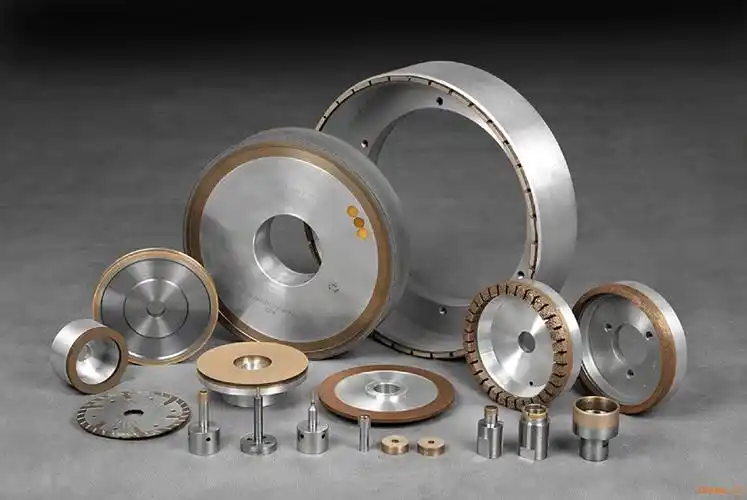
 Figure: Stable and low-defect polishing using round micron diamond powder
4. Where Is Round Micron Diamond Powder Commonly Used?
Round micron diamond powder is widely used in precision polishing, fine grinding, lapping, and fine diamond tool manufacturing.
Crownkyn GCDMZ is especially suitable for optical, semiconductor, ceramic, and high-end finishing applications.
Common applications include:
- Optical glass and lens polishing
- High-accuracy surface finishing of optical elements
- Sapphire substrate polishing
- Silicon carbide surface finishing
- High-integrity wafer preparation
- Technical ceramic surface finishing
- Diamond slurry, polishing paste, and lapping compounds
- Precision grinding wheels and fine diamond tools
Crownkyn GCDMZ round micron diamond powder is available in the following grit ranges:
| Grit Range | Typical Use |
|---|---|
| 0–1 μm | Ultra-precision polishing for optical, semiconductor, and high-end finishing |
| 1–10 μm | Fine polishing and lapping of hard and brittle materials |
| 10–40 μm | Precision grinding and controlled polishing |
| 40–50 μm | Pre-polishing and efficient material removal with controlled surface quality |
5. What Is Spherical Thermal Conductive Diamond?
Spherical thermal conductive diamond is a spherical or near-spherical diamond material developed for advanced thermal management applications.
Crownkyn STCD – Spherical Thermal Conductive Diamond is designed for applications requiring high heat dissipation, good dispersion, and stable composite performance.
Unlike round micron diamond powder used for polishing, STCD is mainly used as a thermally conductive filler or functional diamond particle in composite materials.
Crownkyn STCD can be supplied in a particle size range of 20–600 μm, with customized particle sizes available according to customer requirements.
Diamond has excellent intrinsic thermal conductivity. In real composite systems, final performance also depends on particle shape, particle size distribution, packing density, interface bonding, and matrix compatibility.
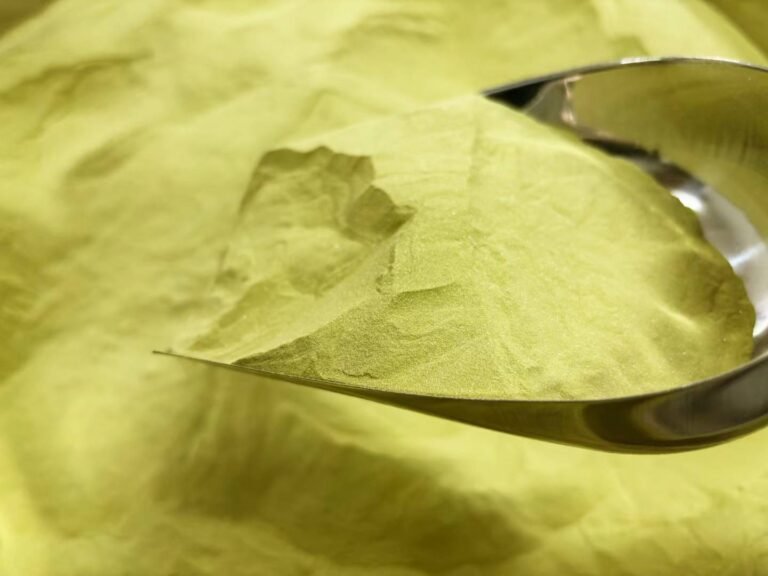
 Figure: Crownkyn STCD – spherical diamond for thermal management
6. Why Is Spherical Diamond Suitable for Thermal Management Applications?
Spherical diamond is suitable for thermal management because its regular particle shape supports uniform dispersion, efficient packing, good flowability, and stable composite processing.
In power electronics, semiconductor packaging, and high-frequency devices, heat dissipation is critical. Poor thermal control can reduce device performance, shorten service life, and affect reliability.
Spherical thermal conductive diamond helps improve heat dissipation by forming more effective thermal pathways in metal or polymer matrices. Its rounded shape supports easier dispersion, better filling, and more consistent composite performance.
Diamond also has high chemical and thermal stability, allowing it to perform under high-temperature and high-power operating conditions.
In diamond-based composites, interfacial thermal resistance is also important. Spherical diamond can improve packing and contact, but surface treatment, matrix selection, and processing method remain key factors.
7. What Are the Main Applications of Spherical Thermal Conductive Diamond?
Spherical thermal conductive diamond is mainly used in high-performance thermal management systems, including diamond-metal heat sinks, heat spreaders, thermal substrates, and electronic cooling components.
In power electronics, spherical diamond can be used in diamond/copper or diamond/aluminum composites to improve heat dissipation. In semiconductor packaging, it can be used for thermal substrates and heat spreaders. In optical and optoelectronic systems, it helps maintain stable temperature control for laser modules and optical components.
| Application Field | Typical Uses | Main Benefit |
|---|---|---|
| Thermal Management | Diamond/copper heat sinks, diamond/aluminum heat spreaders | Efficient heat dissipation |
| Semiconductor | Thermal substrates, power device cooling | Better temperature control |
| Electronics | High-power cooling components | Improved thermal stability |
| Optical & Optoelectronic | Laser module heat spreaders | Stable thermal control |
| Advanced Composites | Metal or polymer matrix composites | Better thermal pathways |
8. How to Choose Between Round Micron Diamond Powder and Spherical Thermal Conductive Diamond?
- Choose round micron diamond powder for precision grinding and polishing.
- Choose spherical thermal conductive diamond for heat dissipation and thermally conductive composite applications.
| If your application is... | Recommended product |
|---|---|
| Polishing, lapping, fine grinding, surface finishing | Crownkyn GCDMZ – Round Micron Diamond Powder |
| Heat sinks, thermal substrates, electronic packaging, thermal composites | Crownkyn STCD – Spherical Thermal Conductive Diamond |
For polishing applications, consider:
- Workpiece material
- Required surface roughness
- Particle size
- Slurry or paste system
- Scratch control requirements
For thermal management applications, consider:
- Matrix material
- Target thermal conductivity
- Particle size and distribution
- Filler loading ratio
- Interface bonding
- Processing method
9. What Round and Spherical Diamond Products Does Crownkyn Provide?
Crownkyn provides both GCDMZ round micron diamond powder for ultra-precision polishing and STCD spherical thermal conductive diamond for advanced thermal management.
- For optical, semiconductor, ceramic, and high-end polishing applications – Crownkyn GCDMZ offers regular near-spherical crystals, ultra-narrow particle size distribution, ultra-low impurity content, and strong surface finish capability.
- For electronics, semiconductor packaging, and thermal management industries – Crownkyn STCD provides spherical or near-spherical particles with good flowability, high stability, and customizable particle sizes from 20–600 μm. It is suitable for diamond/copper heat sinks, diamond/aluminum heat spreaders, thermal substrates, and thermally conductive composite systems.
📌 To recommend the right product, Crownkyn typically needs to know:
- Application field
- Workpiece or matrix material
- Required particle size
- Target surface finish or thermal conductivity
- Current process method
- Trial quantity
Contact Crownkyn for product specifications or sample requests →
Conclusion
Round and spherical diamond materials are designed for different advanced applications.
- Crownkyn GCDMZ round micron diamond powder is mainly used for precision grinding, lapping, and polishing, where surface quality and scratch control are important.
- Crownkyn STCD spherical thermal conductive diamond is mainly used for thermal management, where heat dissipation, dispersion, and composite performance are the key requirements.
By selecting the right particle shape, particle size, and product grade, customers can achieve better results in semiconductor, optics, electronics, ceramics, and advanced composite applications.