What Is Polycrystalline Diamond Powder?A Practical Guideline
Polycrystalline diamond powder is a highly engineered Synthetic Diamond Powder1 designed for high precision polishing and fine Material Removal2. Its strength comes from a unique multi-grain structure3 that offers stable Cutting Edges4 and excellent surface control. With reliable particle size classification5 and strong performance on hard and brittle materials, it has become an essential material for advanced Diamond Tools6 and modern manufacturing processes.

What Is the Structure of Polycrystalline Diamond Powder?
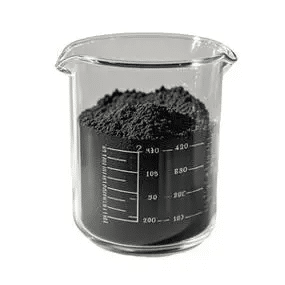
Polycrystalline diamond powder is composed of countless nano-level diamond crystals7 fused together during synthesis. Unlike single-crystal diamond particles, its internal structure contains no dominant cleavage plane. This multi-directional grain arrangement creates Cutting Edges4 in all directions, improving stability and polishing control.
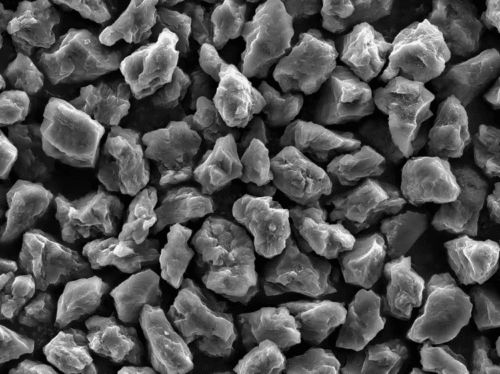
The result is a High Quality abrasive with consistent performance across different materials and applications where high precision and fine Material Removal2 are required.
Microstructure: Nano-Crystals Fusion
During formation, nano-diamond grains ranging from 3–10 nm cluster into a larger particle. These interconnected micro-grains create a porous, multi-faceted structure that supports multiple Cutting Edges4 at once. This structure prevents sudden cracking and improves the powder’s mechanical strength.
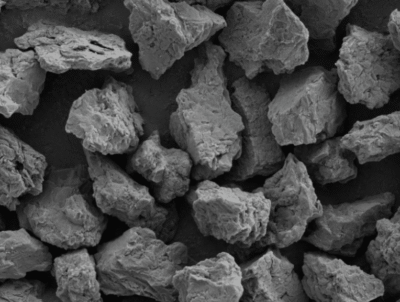
Key Microstructural Benefits
| Feature | Description | Advantage |
|---|---|---|
| Multi-grain clusters | Billions of fused nano-crystals | Stable Cutting Edges4 |
| Random orientation | No cleavage planes | High toughness |
| Porous grain network | Micro-gaps between grains | Strong self-sharpening |
| Uniform particle size | Narrow distribution | High precision finishing |
Monocrystalline vs. Polycrystalline Diamond Powder
Monocrystalline diamond powder contains a single crystal with a clear cleavage direction. During polishing, this can lead to surface scratches or micro-chipping. Polycrystalline diamond powder, however, provides multiple micro-cutting points due to its fused-grain design, offering superior control and smoother surface quality.
Comparison Table
| Category | Monocrystalline | Polycrystalline |
|---|---|---|
| Structure | Single crystal | Multi-grain clusters |
| Cutting Edges4 | Limited | Multi-directional |
| Particle strength | Lower toughness | High durability |
| Surface quality | Risk of scratches | More uniform, High Quality |
| Best use | Hard uniform materials | Mixed or brittle materials |

How Polycrystalline Diamond Powder Is Made?
Most polycrystalline diamond powders are produced through detonation synthesis8. This method generates extremely high pressure and temperature in microseconds, forming nano-scale diamond grains that bond into clusters.
Detonation Synthesis: Creating Diamond from an Explosion
During detonation, carbon-based materials transform into diamond particles through shock compression. After cooling and purification, these particles are separated into different particle size grades. The final product is a highly stable Synthetic Diamond Powder1 suitable for Diamond Tools and precision finishing.
What Are the Primary Applications of Polycrystalline Diamond Powder?
Polycrystalline diamond powder is widely used because of its High Quality performance and stable Material Removal2 behavior. Its grain structure supports high precision polishing9 with consistent Cutting Edges4.
Mirror Polish Surface Quality
The multi-edge structure allows simultaneous micro-cutting, resulting in minimal scratching and extremely smooth finishes. This makes it ideal for high precision components in optics, semiconductors, and ceramics.
High Toughness and Durability Against Micro-Chipping
The random grain orientation reduces the risk of fracture. Even under heavy load, the powder maintains performance without deep damage to the work surface.
Self-Sharpening Cutting Edges4
As micro-grains break off during polishing, new Cutting Edges4 appear naturally. This keeps the abrasive sharp throughout the process, ensuring stable Material Removal2 and predictable polishing results.
How Do You Select the Right Polycrystalline Diamond Powder?
Polycrystalline diamond powder10 is used across industries requiring uniform, High Quality surface finishing. Its stable particle size control makes it ideal for high precision work.

Ultra-Precision Polishing Uses
Applications include:
- Optical lenses
- Sapphire substrates
- Silicon carbide (SiC) wafers
- Ceramic components
- Hard disk substrates
- Tungsten carbide tools
Its micro-cutting action improves the speed and uniformity of Material Removal2.
Advanced Dispersions and Suspensions
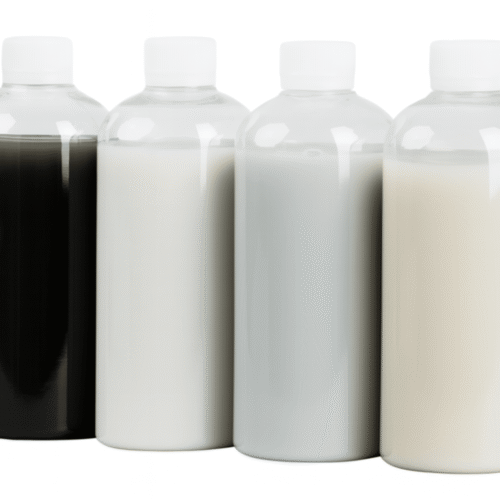
Due to its porous grain structure, polycrystalline diamond disperses easily in both oil-based and water-based carriers. This makes it suitable for:
- CMP slurries11
- Precision polishing liquids
- Ready-to-use abrasive suspensions
Stable dispersion ensures equal Cutting Edges4 exposure and reliable performance.
How to Select the Right Polycrystalline Diamond Powder
Choosing the correct particle size, concentration, and distribution is essential for achieving High Quality results. Selection depends on Material Removal2 rate requirements and target surface roughness.
Key Factors
| Factor | Importance |
|---|---|
| Particle size | Controls roughness and removal rate |
| Distribution width | Narrow = high precision; wide = aggressive cutting |
| Application type | Polishing, grinding, CMP slurry |
| Tool compatibility | Works with various Diamond Tools |
How to Use Polycrystalline Diamond Powder for Polishing?
Basic Polishing Method
- Select appropriate particle size based on surface finish target.
- Mix powder with a compatible carrier (water or oil).
- Apply slurry evenly to polishing pad or tool.
- Maintain steady lubrication during operation.
- Clean the surface between steps to prevent contamination.
Recommended Particle Size for Common Tasks
| Application | Particle Size |
|---|---|
| Pre-polishing | 3–6 μm |
| Fine polishing | 1–3 μm |
| Mirror finishing | 0.25–1 μm |
This ensures controlled Material Removal2 and smooth surfaces.
Conclusion: The Unmatched Value of a Multi-Faceted Abrasive
Polycrystalline diamond powder delivers reliable performance across demanding polishing and finishing tasks. Its multi-grain design supports steady Cutting Edges4, precise Material Removal2, and consistent results across a wide range of materials. With controlled particle size and High Quality finishing capability, it remains a key material for Synthetic Diamond Powder1 products and advanced Diamond Tools6 used in high precision manufacturing.
Learn about the production process of Synthetic Diamond Powder and its applications in various industries. ↩
Find out the best practices for enhancing Material Removal efficiency during polishing. ↩
Learn how a multi-grain structure enhances the performance of diamond powders in various applications. ↩
Discover how Cutting Edges are formed and their importance in polishing and machining. ↩
Learn about the significance of particle size classification for optimal performance in polishing. ↩
Explore the features and uses of advanced Diamond Tools in various industries. ↩
Explore the advantages of nano-level diamond crystals in creating high-quality abrasives. ↩
Understand the detonation synthesis process and its role in creating high-quality diamond powders. ↩
Understand the significance of high precision polishing in manufacturing and its impact on product quality. ↩
Explore the advantages of Polycrystalline diamond powder for high precision polishing and material removal. ↩
Understand the role of CMP slurries in semiconductor manufacturing and precision polishing. ↩