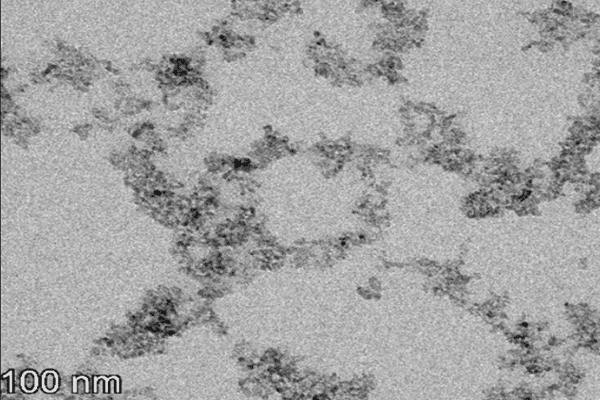
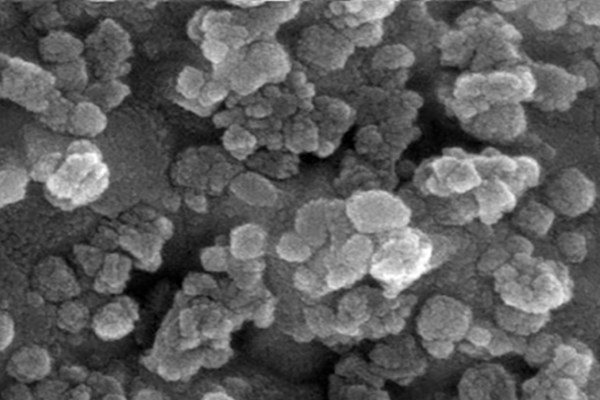
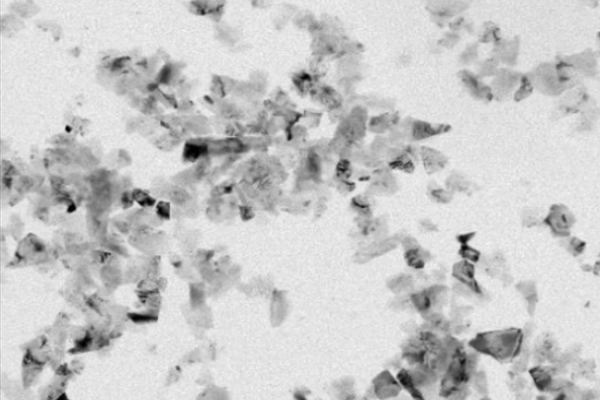
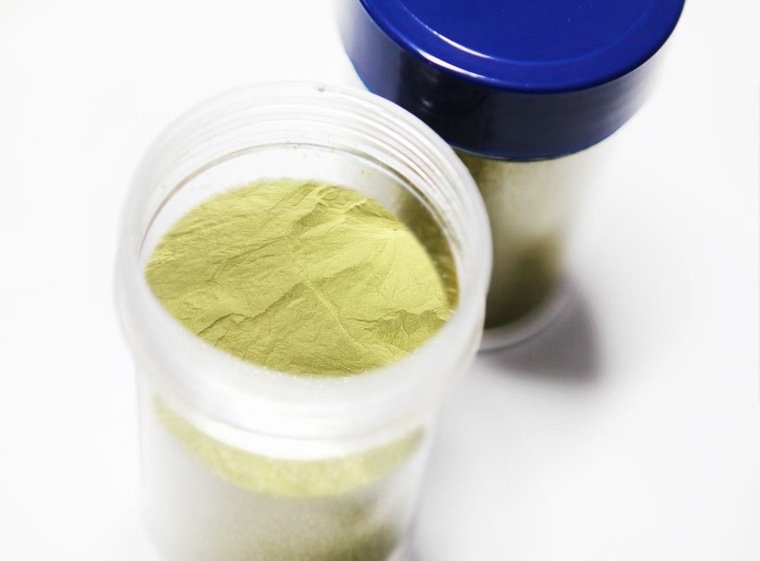
- Ultra-Fine Primary Nanocrystals: Primary diamond crystallites are typically around 4–5 nm in size.
- Very High Specific Surface Area: Nanoscale dimensions provide extensive surface area for interfacial and functional applications.
- Rich Surface Chemistry: Purification and oxidation can introduce oxygen-containing surface groups that enable further surface modification.
- Deagglomeration & Dispersion Control: Processing can reduce strongly bound aggregates and improve dispersion in selected liquid and composite systems.
- High Nanoscale Hardness: Provides fine abrasive action for ultra-fine polishing and surface treatment.
- Surface Functionalisation Capability: Surface chemistry can be modified according to dispersion, composite and specialty functional requirements.
DND-Detonation NanoDiamond
20+ Years Experience
Consistent Batch Quality
Customized Solutions
Product Overview
DND is an ultra-fine nanodiamond produced by controlled detonation synthesis, with primary diamond crystallites typically around 4–5 nm. Its extremely small primary size, high specific surface area and tunable surface chemistry make it suitable for ultra-fine polishing, surface modification, tribological formulations and functional nanocomposites where nanoscale interfacial interaction is important.
Features
Specifications
| Material Type | Detonation Nanodiamond |
|---|---|
| Grade | DND |
| Production Route | Controlled Detonation Synthesis + Purification |
| Primary Crystallite Size | Typically Approx. 4–5 nm |
| Available Nominal Grades | 5 nm / 10 nm / 30 nm / 50 nm* |
| Particle Structure | Nanodiamond Primary Crystals with Aggregate / Agglomerate Structures |
| Surface Characteristics | High Surface Area / Tailorable Surface Chemistry |
| Surface Treatment | Purified / Deagglomerated / Functionalized Options Available |
| Selection Focus | Primary size, aggregate size, dispersion state, surface chemistry and medium |
| Typical Applications | Ultra-Fine Polishing / Surface Modification / Functional Nanocomposites |
*For DND, reported particle size depends strongly on whether primary crystallite size, aggregate size or hydrodynamic size is measured. Particle-size specifications should therefore be confirmed together with the measurement method and dispersion condition.
| Item | 5nm | 10nm | 30nm | 50nm | 100nm | 250nm | 500nm |
|---|---|---|---|---|---|---|---|
| HND | ✓ | ✓ | ✓ | ✓ | |||
| DND | ✓ | ✓ | ✓ | ✓ | |||
| Note: Particle size and nano-diamond properties can be customized according to customer requirements. | |||||||

Applications
Semiconductor
Used in ultra-fine abrasive and surface-treatment formulations for hard electronic materials.
- Ultra-fine SiC and hard substrate polishing
- Nano-abrasive slurry formulations
- Surface conditioning and finishing
Optical & Optoelectronic
Used in deagglomerated polishing systems requiring very fine abrasive action.
- Sapphire and crystal finishing
- Optical material ultra-fine polishing
- Low-roughness surface finishing
Composite Materials
Used as a high-surface-area functional nanofiller in polymer, coating and tribological systems.
- Polymer nanocomposites
- Wear-resistant and functional coatings
- Lubricant and tribological additives