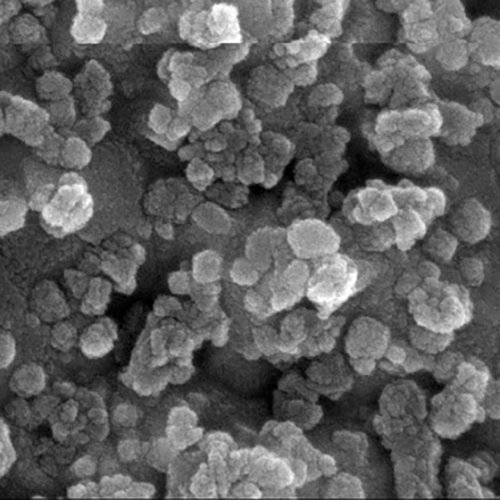
In the world of precision finishing, there is a simple hierarchy: everything else scratches the surface; diamond defines it.
Whether you are polishing a hardened steel mold for injection molding, a tungsten carbide die for wire drawing, or a delicate sapphire watch crystal, standard abrasives like aluminum oxide or silicon carbide eventually fail. They dull, fracture, or simply cannot cut the target material. This is where Diamond Paste (also known as diamond lapping paste) takes over.
As the hardest known natural material (10 on the Mohs scale), diamond based abrasive products are the only abrasive capable of economically finishing materials with Rockwell C hardness above 65 HRC or non-ferrous metals that tend to “smear.”
What is Diamond Paste?
Despite its name, diamond paste is not simply crushed diamonds suspended in hand lotion. It is a precision-engineered slurry consisting of three critical components:
The Abrasive: Monocrystalline or polycrystalline synthetic diamond particles.
The Carrier: A water or oil-based gel (vehicle) designed to keep diamonds suspended.
The Lubricant/Additives: Chemicals that prevent surface corrosion, reduce friction heat, and help “float” swarf (metal debris) away from the work surface.
Unlike loose powders, the paste consistency allows the diamonds to stay exactly where they are applied on the lap wheel or polishing cloth.
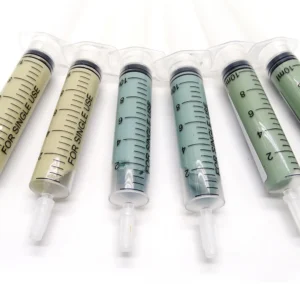
Monocrystalline vs. Polycrystalline
Not all diamond paste is equal. The crystal structure dramatically impacts the finish.
Monocrystalline Diamond Powder: These are single, sharp crystals. They break into large, jagged shards as they wear. Best for: Aggressive stock removal and lapping hard ceramics or carbide. They cut fast but leave deeper scratches.
Polycrystalline Diamond Powder: These are micron-sized diamonds fused together into a single particle. As the particle rolls across the surface, the tiny micro-crystals fracture continuously, creating more cutting edges rather than fewer. Best for: Mirror finishes (Ra < 10nm) on optics, steel molds, and medical implants
The Critical “Micron” Scale (Why Mesh Doesn’t Work)
For sandpaper, we talk about “Grit” (e.g., 320 grit). For diamond paste, we talk about Microns (µm) . A micron is one-millionth of a meter.
Here is a practical guide to the standard grading scale:
Coarse (40–90 µm): Equivalent to ~300-400 grit sandpaper. Used for rapid material removal to fix deep machine marks or correct geometry.
Medium (10–30 µm): The “pre-polishing” stage. Removes scratches from the coarse stage. Common for general tool sharpening (carbide inserts).
Fine (3–6 µm): Begins to produce a semi-reflective surface. Used for honing dies and sealing surfaces.
Super Fine (0.5–1 µm): Produces a near-mirror finish. Used for graphite molds and optical fiber ferrules.
Sub-Micron (0.1 – 0.25 µm): Used for atomic-level finishing. This produces a true “mirror” finish with roughness measured in Angstroms. Used for metallurgical sample preparation and semiconductor polishing.
*Tip: * Do not jump more than a factor of 3 in micron size. (e.g., 30 µm → 9 µm → 3 µm). If you jump from 30 µm to 3 µm, the 3 µm particles will take hours to remove the deep scratches left by the 30 µm rocks.
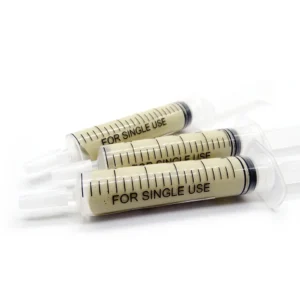
Oil-Based vs. Water-Based: Choosing the Vehicle Delivery Type
The vehicle (the paste itself) is just as important as the diamond.
Oil-Based Paste:
Pros: Better lubrication, longer working life, slower evaporation, prevents rust on steel parts.
Cons: Messy, difficult to clean off parts, can stain porous materials.
Use for: Steel dies, bearings, and general machine shop lapping.
Water-Based Paste:
Pros: Easy cleanup with soap and water, non-flammable, environmentally friendlier, does not stain.
Cons: Can rust steel if left on the surface; dries out faster.
Use for: Jewelry, medical devices, electronics, and optics where contamination is a concern.
The Art of Application: Three Critical Rules
You cannot just smear diamond paste on a rag and rub. Proper use requires “charging” the lap.
Rule 1: The Hardness Rule
Diamond will embed itself into a soft lap (copper, tin, or hard felt). It will just roll around on a hard steel lap. Use soft metal laps (cast iron or copper) for coarse diamond; these hold the crystals. Use hard felt or cloth for fine polishing; the static electricity and mechanical grip hold the micron powder.
Rule 2: Less is More
One of the most common errors beginner make is using too much paste. When you put a thick glob on a wheel, the diamonds simply float on top of the grease and never cut—they just roll under the workpiece. You only need a trace amount. The lap should look lightly stained, not caked.
Rule 3: Cross-Contamination is Death
If a 40-micron diamond particle gets into your 3-micron paste syringe, you will scratch a finished part. Use dedicated wheels and thoroughly clean the part (ultrasonically, ideally) between grit stages.

Applications Across Industries
Tool & Die (Carbide): Diamond is the only way to sharpen carbide tooling. Aluminum oxide will not touch tungsten carbide.
Jewelry: Polishing sapphire, cubic zirconia, and setting diamonds requires diamond paste to prevent “orange peel” texture on soft gold.
Metallurgy: Preparing samples for electron microscopes requires sub-micron diamond polishing to reveal grain boundaries without smearing the metal.
Mold Making: Plastic injection molds usually require that they have a mirror finish (SPI-A1), which is impossible to achieve without 1 µm and 0.25 µm diamond stages.
As manufacturing moves toward harder materials (ceramics, Inconel, tungsten carbide) to handle higher temperatures and loads, the humble diamond paste syringe becomes the most valuable tool on the bench.
Remember the mantra: Coarse to cut, Medium to clean, Fine to shine. When you master the micron scale and respect the need for absolute cleanliness, diamond paste will produce surfaces that feel like liquid glass and look like a photograph of the sky.
#diamondpaste #diamondslurry #diamondpowder #syntheticdiamond #syntheticdiamondpowder #microndiamondpowder #diamondlappingpowder