How Thermal Conductive Diamond Powder is Redefining Heat Management
Home
/
Blog /
How Thermal Conductive Diamond Powder is Redefining Heat Management
May 19, 2026
In the race to build smaller, faster, and more powerful electronic devices, engineers have hit a familiar wall: heat. As transistors shrink to the size of a few atoms and electric vehicle batteries push megawatt-level power, conventional cooling methods using copper and aluminum are reaching their physical limits.
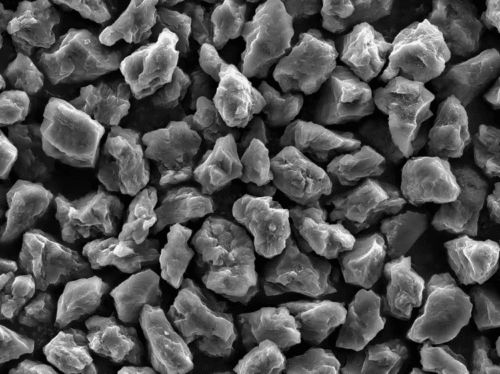
Enter diamond. Not as a gemstone, but as a fine, gray powder. While a single diamond crystal boasts the highest thermal conductivity of any bulk material (up to 2,200 W/m·K), it is Thermal Conductivity Diamond Powder—synthetic micron and sub-micron diamond grit—that is quietly revolutionizing thermal management. This article explores how this powder works, where it is used today, and the futuristic applications on the horizon.
The Physics: Why Diamond Powder Conducts Heat So Well
To appreciate the applications, one must first understand the mechanism. In metals like copper, heat travels via free electrons. This works well (copper ~400 W/m·K) but has two downsides: electrons also conduct electricity (causing shorts) and they scatter at high frequencies.
Diamond, an electrical insulator, conducts heat via phonons—lattice vibrations. The carbon atoms in diamond are light, stiff, and covalently bonded, allowing phonons to travel with almost no scattering. When diamond is crushed into powder, individual particles retain this exceptional phonon transport. The engineering challenge is to pack these particles into a continuous network (percolation) so heat can jump from one diamond particle to the next across a matrix of polymer, metal, or ceramic.
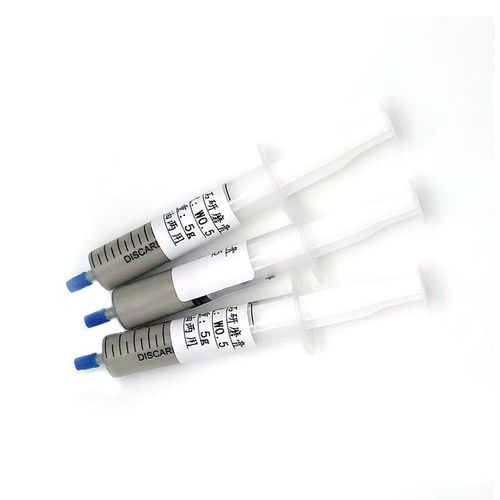
The largest current market for thermal diamond powder is in Thermal Interface Materials—the pastes, greases, and pads that sit between a hot chip and its cooler. Standard thermal greases (5-8 W/m·K) are loaded with 40-60% by weight of diamond powder (1-25 microns). The diamond particles bridge the microscopic gaps between a CPU and heat sink.
Real-world use: Overclocking PC enthusiasts, data center server farms (e.g., NVIDIA H100 GPU clusters), and high-power LED streetlights.
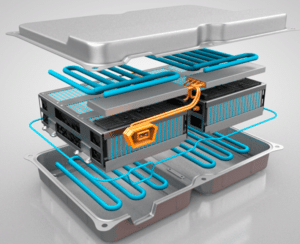
2. Electric Vehicle (EV) Battery Thermal Management
Lithium-ion batteries generate intense heat during fast charging and discharging. Uneven temperature distribution leads to reduced lifespan and, in worst cases, thermal runaway.
Application: Diamond-filled silicone gap fillers are cast between cylindrical or pouch battery cells. These materials are soft enough to accommodate swelling but conduct 10-15 W/m·K—far better than standard alumina-filled fillers (~3 W/m·K).
Real-world use: EV battery packs from premium manufacturers now use diamond-enhanced materials to shave minutes off charging times while improving safety.
3. Power Electronics Substrates (IGBTs & SiC Modules)
Electric vehicles, solar inverters, and industrial motor drives use Insulated Gate Bipolar Transistors (IGBTs) or Silicon Carbide (SiC) modules. These devices run hot (200°C+), require electrical insulation, yet need to shed heat rapidly.
Application: Diamond powder is mixed with aluminum nitride (AlN) or silicon nitride (Si₃N₄) to create ceramic substrates. By adding 20-30% diamond, thermal conductivity jumps from 170 W/m·K (pure AlN) to over 250 W/m·K.
Real-world use: The Toyota Mirai hydrogen fuel cell vehicle and ABB fast-charging stations use diamond-reinforced ceramic substrates under their power modules.
4. Diamond-Reinforced Metal Matrix Composites (DMC)
For the most extreme heat loads—think laser diodes, radar arrays, and satellite transponders—engineers use a composite of diamond powder embedded in copper or aluminum.
Application: Diamond grit (50-150 microns) is packed into a mold, then molten copper is forced in under high pressure (infiltration casting). Diamond/copper composites achieve 600-800 W/m·K—double that of pure copper—with a coefficient of thermal expansion (CTE) closely matched to silicon. This eliminates cracking during thermal cycling.
Real-world use: Raytheon (radar systems), Lockheed Martin (laser weapons), and Cree/Wolfspeed (GaN-on-diamond RF amplifiers).
5. 5G and mmWave Antenna Packaging
5G base stations and millimeter-wave radar (automotive lidar, autonomous drones) generate localized hot spots in tiny antenna-in-package (AiP) modules.
Application: Diamond powder is compounded into liquid crystal polymer (LCP) or epoxy molding compounds used to encapsulate these antennas. The diamond particles conduct heat away from the power amplifier without interfering with the radio frequency signal (diamond is RF-transparent).
Real-world use: iPhones (mmWave models) and Starlink user terminals use diamond-filled encapsulants to prevent thermal throttling during heavy data transmission.
Future Applications (Tomorrow and Beyond)
1. Direct-to-Chip Diamond Nanofluids
Today’s liquid cooling loops use water or dielectric fluids with thermal conductivity ~0.6 W/m·K. Researchers are now developing nanofluids—stable suspensions of nanodiamond particles (5-50 nm) in water or fluorocarbons.
Concept: At nanoscale, diamond particles do not settle. They enhance the fluid’s effective thermal conductivity by 20-40% and also act as dynamic phonon bridges when they collide with hot surfaces.
Possible future useage: Immersion cooling for AI data centers. Imagine servers submerged in diamond nanofluid, extracting 5 kW per rack instead of today’s 1 kW.
3D printing now allows complex, lattice-based heat sinks to be printed from diamond powder, then infiltrated with a secondary metal.
Concept: Researchers at MIT and Fraunhofer have printed gyroid-structured diamond heat sinks that outperform machined copper by 300% in heat flux density.
Possible future useage: Conformal heat sinks that wrap around irregularly shaped electronics—such as flexible phone batteries or drone flight controllers—cooling them from all sides simultaneously.
Randomly dispersed diamond powder conducts heat isotropically (same in all directions). For many applications, you want heat to move in a specific direction away from a chip and toward a heat sink.
Concept: Coat diamond particles with a thin magnetic layer (e.g., iron or nickel). Then, while the composite is still liquid, apply a magnetic field to align the diamond particles into vertical chains of heat transfer.
Possible future useage: Ultra-thin laptops where a 1mm-thick diamond-aligned thermal pad conducts heat vertically through the chassis to the keyboard deck, turning the entire surface into a heat spreader.
A holy grail of thermal management is a device that conducts heat in only one direction—a thermal diode. Diamond powder, when combined with phase-change materials (PCMs) or liquid metal, could enable this.
Concept: A composite of diamond powder and gallium (which melts at 30°C). Below 30°C, gallium is solid and phonons scatter; above 30°C, gallium melts and wets the diamond particles, creating a high-conductivity pathway.
Possible future useage: Self-regulating satellite electronics that only “turn on” cooling when a component exceeds its threshold, without any moving parts or electrical power.
5. Diamond-Enhanced Hydrogen Storage Cooling
Hydrogen fuel cell vehicles must cool the stack during operation, but also during refueling (compressing hydrogen generates heat).
Concept: Diamond powder composites, with their combination of high thermal conductivity and chemical inertness, are ideal for the heat exchangers inside Type IV hydrogen tanks.
Possible future useage: By 2030, heavy-duty hydrogen trucks may use diamond-filled polymer heat exchangers that are lightweight, corrosion-proof, and capable of shedding the 5-10 kW of heat generated during a 10-minute hydrogen fill.
6. Quantum Computing
Quantum computers operate at millikelvin temperatures (near absolute zero). They require thermal links that conduct heat away from qubits without introducing electrical noise or magnetic interference.
Possible future useage:: Sintered diamond powder thermal bushings—pressed into porous, rigid shapes—act as ultra-pure phonon conduits between dilution refrigerator stages. Unlike copper, diamond produces no Johnson noise and does not trap magnetic flux.
Challenges and the Path Forward
Despite its promise, thermal conductive diamond powder faces hurdles:
Interfacial Resistance: The gap between diamond particles and the surrounding matrix (polymer, metal, or ceramic) creates thermal resistance (Kapitza resistance). Surface coating of diamond with titanium, chromium, or silicon carbide is improving but adds cost.
Thermal conductive diamond powder has already moved from laboratory curiosity to commercial reality in EVs, 5G infrastructure, and defense electronics. It solves a fundamental problem: how to move large amounts of heat through electrically insulating materials. The next decade will see it enter nanofluids for AI data centers, 3D-printed conformal heat sinks, and even quantum computers.
As the world continues to electrify and miniaturize, the ability to manage heat will separate successful products from failures. And increasingly, that management will rely not on blocks of metal, but on billions of microscopic diamond crystals—a powder that out-conducts copper, insulates like plastic, and points the way to a cooler, faster future.
# What Is Polycrystalline Diamond Powder?A Practical Guideline Polycrystalline diamond powder is a highly engineered [Synthetic Diamond Powder](https://en.wikipedia.org/wiki/Synthetic_diamond)[^1] designed for...
# What Is Polycrystalline Diamond Powder?A Practical Guideline Polycrystalline diamond powder is a highly engineered [Synthetic Diamond Powder](https://en.wikipedia.org/wiki/Synthetic_diamond)[^1] designed for...