# What Is Polycrystalline Diamond Powder?A Practical Guideline
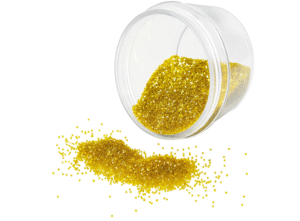
Polycrystalline diamond powder is a highly engineered [Synthetic Diamond Powder](https://en.wikipedia.org/wiki/Synthetic_diamond)[^1] designed for high precision polishing and fine [Material Removal](https://www.struers.com/en/Knowledge/Grinding-and-polishing)[^2]. Its strength comes from a unique [multi-grain structure](https://www.miaozhizhong.com/summary-of-the-differences.html)[^3] that offers stable [Cutting Edges](https://www.morecuttingtools.com/news/How_to_choose_the_right_type_of_blade_cutting_edge.html)[^4] and excellent surface control. With reliable [particle size classification](https://pmc.ncbi.nlm.nih.gov/articles/PMC11408779/)[^5] and strong performance on hard and brittle materials, it has become an essential material for [advanced Diamond Tools](https://www.zdiamondtools.com/Industry-Knowledge-Applications-and-Helps-of-Diamond-Tools/2023/1006/Diamond-Tools-A-Comprehensive-Guide-to-Cutting-and-Beyond.html)[^6] and modern manufacturing processes.

—
## What Is the Structure of Polycrystalline Diamond Powder?
Polycrystalline diamond powder is composed of countless [nano-level diamond crystals](https://en.wikipedia.org/wiki/Nanodiamond)[^7] fused together during synthesis. Unlike single-crystal diamond particles, its internal structure contains no dominant cleavage plane. This multi-directional grain arrangement creates [Cutting Edges](https://www.morecuttingtools.com/news/How_to_choose_the_right_type_of_blade_cutting_edge.html)[^4] in all directions, improving stability and polishing control.
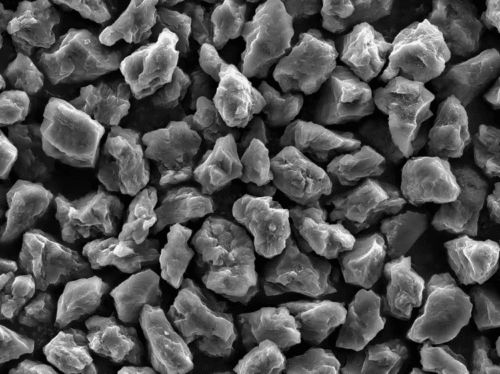
**The result is a High Quality abrasive with consistent performance across different materials and applications where high precision and fine [Material Removal](https://www.struers.com/en/Knowledge/Grinding-and-polishing)[^2] are required.**
### Microstructure: Nano-Crystals Fusion
During formation, nano-diamond grains ranging from 3–10 nm cluster into a larger particle. These interconnected micro-grains create a porous, multi-faceted structure that supports multiple [Cutting Edges](https://www.morecuttingtools.com/news/How_to_choose_the_right_type_of_blade_cutting_edge.html)[^4] at once. This structure prevents sudden cracking and improves the powder’s mechanical strength.

### Key Microstructural Benefits
| Feature | Description | Advantage |
|——–|————-|———–|
| Multi-grain clusters | Billions of fused nano-crystals | Stable [Cutting Edges](https://www.morecuttingtools.com/news/How_to_choose_the_right_type_of_blade_cutting_edge.html)[^4] |
| Random orientation | No cleavage planes | High toughness |
| Porous grain network | Micro-gaps between grains | Strong self-sharpening |
| Uniform particle size | Narrow distribution | High precision finishing |
### Monocrystalline vs. Polycrystalline Diamond Powder
Monocrystalline diamond powder contains a single crystal with a clear cleavage direction. During polishing, this can lead to surface scratches or micro-chipping. Polycrystalline diamond powder, however, provides multiple micro-cutting points due to its fused-grain design, offering superior control and smoother surface quality.
### Comparison Table
| Category | Monocrystalline | Polycrystalline |
|———-|——————|——————|
| Structure | Single crystal | Multi-grain clusters |
| [Cutting Edges](https://www.morecuttingtools.com/news/How_to_choose_the_right_type_of_blade_cutting_edge.html)[^4] | Limited | Multi-directional |
| Particle strength | Lower toughness | High durability |
| Surface quality | Risk of scratches | More uniform, High Quality |
| Best use | Hard uniform materials | Mixed or brittle materials |

—
## How Polycrystalline Diamond Powder Is Made?
Most polycrystalline diamond powders are produced through [detonation synthesis](https://en.wikipedia.org/wiki/Detonation_nanodiamond)[^8]. This method generates extremely high pressure and temperature in microseconds, forming nano-scale diamond grains that bond into clusters.
### Detonation Synthesis: Creating Diamond from an Explosion
During detonation, carbon-based materials transform into diamond particles through shock compression. After cooling and purification, these particles are separated into different particle size grades. The final product is a highly stable [Synthetic Diamond Powder](https://en.wikipedia.org/wiki/Synthetic_diamond)[^1] suitable for Diamond Tools and precision finishing.
—
## What Are the Primary Applications of Polycrystalline Diamond Powder?
Polycrystalline diamond powder is widely used because of its High Quality performance and stable [Material Removal](https://www.struers.com/en/Knowledge/Grinding-and-polishing)[^2] behavior. Its grain structure supports [high precision polishing](https://www.cdtusa.net/blog/understanding-precision-polishing-film)[^9] with consistent [Cutting Edges](https://www.morecuttingtools.com/news/How_to_choose_the_right_type_of_blade_cutting_edge.html)[^4].
### Mirror Polish Surface Quality
The multi-edge structure allows simultaneous micro-cutting, resulting in minimal scratching and extremely smooth finishes. This makes it ideal for high precision components in optics, semiconductors, and ceramics.
### High Toughness and Durability Against Micro-Chipping
The random grain orientation reduces the risk of fracture. Even under heavy load, the powder maintains performance without deep damage to the work surface.
### Self-Sharpening [Cutting Edges](https://www.morecuttingtools.com/news/How_to_choose_the_right_type_of_blade_cutting_edge.html)[^4]
As micro-grains break off during polishing, new [Cutting Edges](https://www.morecuttingtools.com/news/How_to_choose_the_right_type_of_blade_cutting_edge.html)[^4] appear naturally. This keeps the abrasive sharp throughout the process, ensuring stable [Material Removal](https://www.struers.com/en/Knowledge/Grinding-and-polishing)[^2] and predictable polishing results.
—
## How Do You Select the Right Polycrystalline Diamond Powder?
[Polycrystalline diamond powder](https://www.superabrasivespowder.com/advantages-and-applications-of-polycrystalline-diamond.html)[^10] is used across industries requiring uniform, High Quality surface finishing. Its stable particle size control makes it ideal for high precision work.

### Ultra-Precision Polishing Uses
Applications include:
– Optical lenses
– Sapphire substrates
– Silicon carbide (SiC) wafers
– Ceramic components
– Hard disk substrates
– Tungsten carbide tools
Its micro-cutting action improves the speed and uniformity of [Material Removal](https://www.struers.com/en/Knowledge/Grinding-and-polishing)[^2].
### Advanced Dispersions and Suspensions
Due to its porous grain structure, polycrystalline diamond disperses easily in both oil-based and water-based carriers. This makes it suitable for:
– [CMP slurries](https://www.qnityelectronics.com/cmp-slurries.html)[^11]
– Precision polishing liquids
– Ready-to-use abrasive suspensions
Stable dispersion ensures equal [Cutting Edges](https://www.morecuttingtools.com/news/How_to_choose_the_right_type_of_blade_cutting_edge.html)[^4] exposure and reliable performance.

—
## How to Select the Right Polycrystalline Diamond Powder
Choosing the correct particle size, concentration, and distribution is essential for achieving High Quality results. Selection depends on [Material Removal](https://www.struers.com/en/Knowledge/Grinding-and-polishing)[^2] rate requirements and target surface roughness.
### Key Factors
| Factor | Importance |
|——–|————|
| **Particle size** | Controls roughness and removal rate |
| **Distribution width** | Narrow = high precision; wide = aggressive cutting |
| **Application type** | Polishing, grinding, CMP slurry |
| **Tool compatibility** | Works with various Diamond Tools |
—
## How to Use Polycrystalline Diamond Powder for Polishing?
### Basic Polishing Method
1. Select appropriate particle size based on surface finish target.
2. Mix powder with a compatible carrier (water or oil).
3. Apply slurry evenly to polishing pad or tool.
4. Maintain steady lubrication during operation.
5. Clean the surface between steps to prevent contamination.
### Recommended Particle Size for Common Tasks
| Application | Particle Size |
|————-|—————|
| Pre-polishing | 3–6 μm |
| Fine polishing | 1–3 μm |
| Mirror finishing | 0.25–1 μm |
This ensures controlled [Material Removal](https://www.struers.com/en/Knowledge/Grinding-and-polishing)[^2] and smooth surfaces.
—
## Conclusion: The Unmatched Value of a Multi-Faceted Abrasive
Polycrystalline diamond powder delivers reliable performance across demanding polishing and finishing tasks. Its multi-grain design supports steady [Cutting Edges](https://www.morecuttingtools.com/news/How_to_choose_the_right_type_of_blade_cutting_edge.html)[^4], precise [Material Removal](https://www.struers.com/en/Knowledge/Grinding-and-polishing)[^2], and consistent results across a wide range of materials. With controlled particle size and High Quality finishing capability, it remains a key material for [Synthetic Diamond Powder](https://en.wikipedia.org/wiki/Synthetic_diamond)[^1] products and [advanced Diamond Tools](https://www.zdiamondtools.com/Industry-Knowledge-Applications-and-Helps-of-Diamond-Tools/2023/1006/Diamond-Tools-A-Comprehensive-Guide-to-Cutting-and-Beyond.html)[^6] used in high precision manufacturing.
—
[^1]: Learn about the production process of Synthetic Diamond Powder and its applications in various industries.
[^2]: Find out the best practices for enhancing Material Removal efficiency during polishing.
[^3]: Learn how a multi-grain structure enhances the performance of diamond powders in various applications.
[^4]: Discover how Cutting Edges are formed and their importance in polishing and machining.
[^5]: Learn about the significance of particle size classification for optimal performance in polishing.
[^6]: Explore the features and uses of advanced Diamond Tools in various industries.
[^7]: Explore the advantages of nano-level diamond crystals in creating high-quality abrasives.
[^8]: Understand the detonation synthesis process and its role in creating high-quality diamond powders.
[^9]: Understand the significance of high precision polishing in manufacturing and its impact on product quality.
[^10]: Explore the advantages of Polycrystalline diamond powder for high precision polishing and material removal.
[^11]: Understand the role of CMP slurries in semiconductor manufacturing and precision polishing.